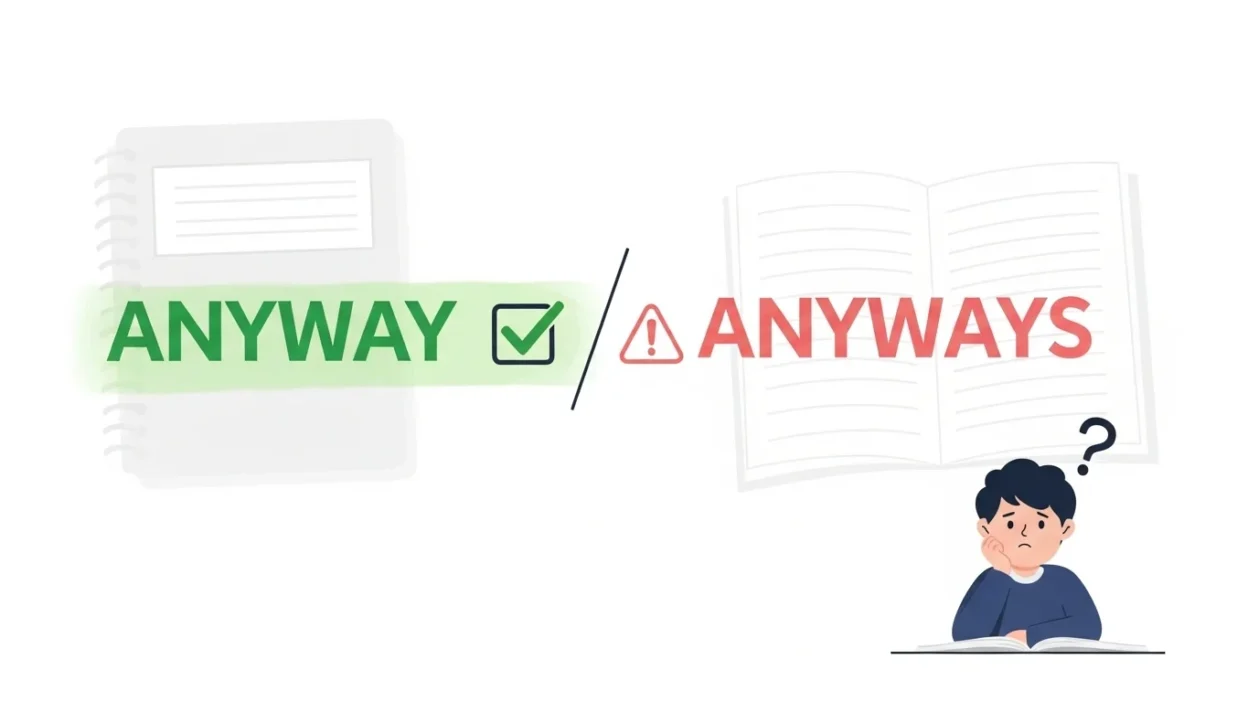
Many learners of English feel confused when they see “anyway” and “anyways.” These two words look almost the same.
They also sound very similar when people speak. Because of this, many people think they mean exactly the same thing or that both are always correct.
But here is the truth: they are not used in the same way in all situations. One is more common and accepted in formal English, while the other is more casual and sometimes considered incorrect in careful writing.
This article will explain everything in very simple English. By the end, you will know exactly which word to use and when.
Quick Answer
- “Anyway” is the correct and standard word
- It is used in both formal and informal English
- “Anyways” is informal
- Some people use “anyways” in speech, but it is often not accepted in formal writing
- When in doubt, always choose “anyway”
Simple Origin and Background
The word “anyway” has been used in English for a very long time. It comes from older forms like “any way,” which meant “in any manner” or “no matter how.”
Over time, “any way” became one word: anyway.
The word “anyways” came later. It is formed by adding an “s” at the end. In English, some words naturally end in “s,” but “anyway” does not need it. Still, people started saying “anyways” in casual speech.
Today:
- “Anyway” = standard and correct
- “Anyways” = informal and sometimes seen as incorrect
Clear Explanation of the Difference
Let’s break it down in the simplest way.
1. Meaning
Both words are often used to:
- Change the topic
- Return to the main topic
- Show that something does not matter
Example:
- Anyway, let’s start the lesson.
- Anyways, let’s start the lesson.
👉 The meaning is almost the same here.
2. Correctness
This is the most important difference:
- “Anyway” is correct in all situations
- “Anyways” is not accepted in formal English
If you are writing:
- Essays
- Exams
- Emails to teachers
- Job applications
👉 Always use “anyway”
3. Tone (Formal vs Informal)
- Anyway → neutral, correct everywhere
- Anyways → casual, informal, sometimes careless
“Anyways” is more common in:
- Casual speaking
- Friendly chats
- Social media
But many teachers and grammar experts do not recommend it.
Comparison Table
| Feature | Anyway | Anyways |
| Correctness | Fully correct | Often considered incorrect |
| Formal writing | Yes | No |
| Informal speech | Yes | Yes |
| Common usage | Very common | Less common |
| Recommended use | Always safe | Use with caution |
Which One Should You Use and When?
Use “Anyway” in these situations:
- School writing
- Exams
- Emails
- Reports
- News writing
- Professional communication
Example:
- Anyway, we need to finish this project today.
You may hear “Anyways” in these situations:
- Conversations with friends
- Casual speaking
- Social media posts
Example:
- Anyways, I’m going home now.
👉 Even here, many people still prefer “anyway.”
Best Tip
If you are unsure, just remember:
👉 “Anyway” is always correct.
Common Mistakes People Make
Mistake 1: Using “anyways” in formal writing
❌ Anyways, I would like to apply for this job.
✔️ Anyway, I would like to apply for this job.
Mistake 2: Thinking both are equal
Some learners think:
- “anyway = correct”
- “anyways = also correct”
But this is not true in formal English.
Mistake 3: Adding “s” to sound natural
Some people feel that “anyways” sounds smoother. But adding “s” is not needed.
Mistake 4: Using it too often
Using “anyway” too many times in one paragraph can sound repetitive.
Everyday Real Life Examples
1. In Emails
✔️ Anyway, I will send you the report tomorrow.
❌ Anyways, I will send you the report tomorrow.
2. In Daily Conversation
✔️ Anyway, what are you doing today?
✔️ Anyways, what are you doing today? (casual)
3. In News or Formal Writing
✔️ Anyway, the government plans to review the policy.
❌ Anyways, the government plans to review the policy.
4. On Social Media
✔️ Anyway, that was my experience.
✔️ Anyways, that was my experience. (casual tone)
5. In Class or School Work
✔️ Anyway, this shows the main idea.
❌ Anyways, this shows the main idea.
Short Learning Section for Students and Beginners
Here is a simple way to remember:
Rule:
👉 Use “anyway” in all writing
👉 Avoid “anyways” unless speaking casually
Practice Sentences
Fill in the blank:
- ______, let’s begin the lesson.
- I didn’t like the movie. ______, it was too long.
Correct answers:
- Anyway
- Anyway
Easy Memory Trick
Think of it like this:
👉 “Anyway” = clean and correct
👉 “Anyways” = extra “s” that you don’t need
FAQ Section
1. Is “anyways” a real word?
Yes, it is used in speech, but it is often considered informal or incorrect in standard English.
2. Which one is correct: anyway or anyways?
“Anyway” is correct in all situations.
3. Can I use “anyways” in exams?
No. Always use “anyway” in exams and formal writing.
4. Why do people say “anyways”?
People use it in casual speech because it sounds natural to them.
5. Is “anyways” wrong?
It is not always “wrong,” but it is not recommended in formal English.
6. Do native speakers use “anyways”?
Yes, some do in casual conversation, but many avoid it in writing.
7. Is “anyway” formal or informal?
“Anyway” can be both formal and informal. It is safe everywhere.
8. Should beginners learn “anyways”?
Beginners should focus on “anyway” first, because it is correct in all cases.
Conclusion
The difference between “anyway” and “anyways” is simple once you understand it clearly.
- “Anyway” is the standard, correct word
- It works in both formal and informal English
- “Anyways” is informal and sometimes not accepted in writing
If you want to avoid mistakes, remember this:
👉 Always use “anyway”
This small choice will make your English sound clearer, more correct, and more natural especially in school, exams, and professional situations.

Anthony Charles is the founder and lead content creator at Meanefy.com, a platform dedicated to exploring word meanings, language nuances, and everyday curiosities. With a passion for language and a keen eye for detail, Anthony aims to make complex words and concepts simple and accessible for readers around the world.