
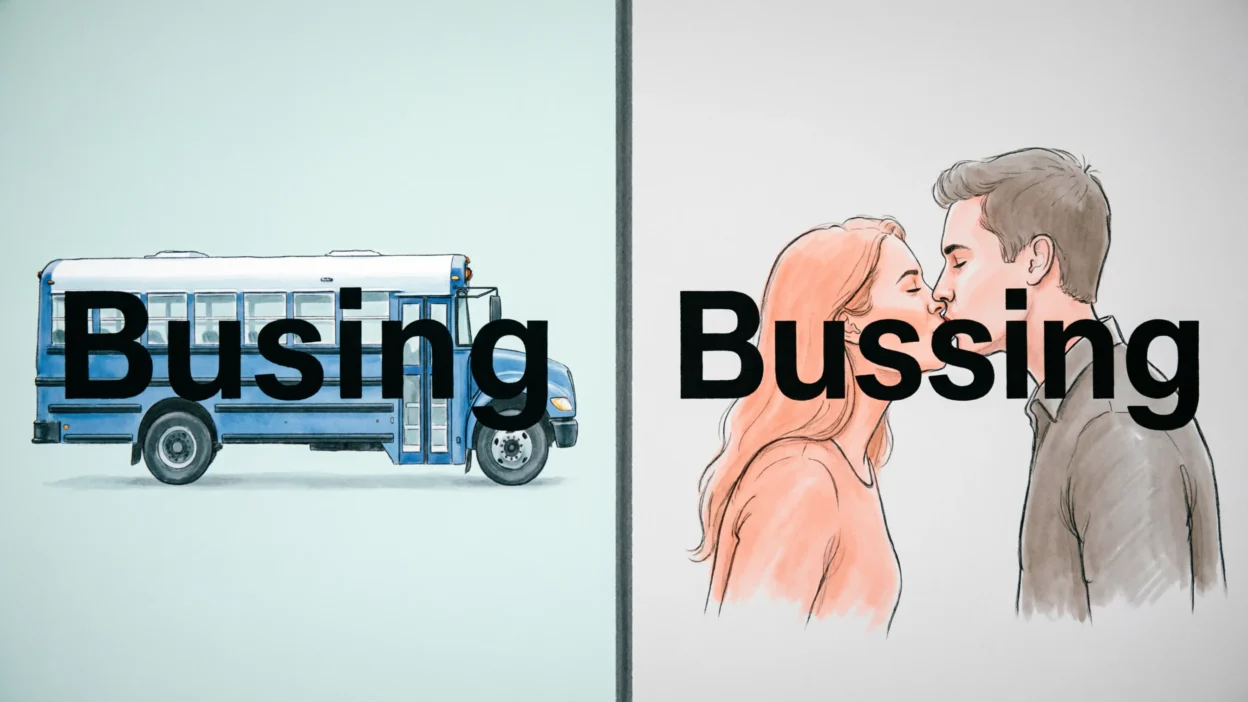
Many people feel confused when they see the words busing and bussing.
They look almost the same. They sound the same. But they are spelled differently.
The confusion happens because English spelling is not always logical.
Small changes, like one extra letter, can change meaning or usage.
This article will explain everything in very simple English.
By the end, you will understand the difference clearly—on the first read.
Quick Answer: Busing or Bussing?
Here is the simple answer:
- Busing = about transporting people by bus
- Bussing = about cleaning tables in a restaurant
Both words are correct.
They just have different meanings.
Simple Background: Where Do These Words Come From?
Both words come from the word bus.
A bus is a large vehicle that carries many people.
But over time, English used the word bus in two different ways:
- Bus as transport
- Bus as restaurant work (short for “omnibus tray”)
Because of this, English created two spellings to show two meanings.
This is why we now have:
- busing
- bussing
Clear Explanation of the Difference
Let’s look at each word slowly and clearly.
What Does “Busing” Mean?
Busing means:
- Using buses
- Transporting people by bus
It is often used when talking about:
- Schools
- Public transport
- Travel plans
- Social issues
Example ideas:
- School children traveling by bus
- City buses moving people
- Government plans using buses
What Does “Bussing” Mean?
Bussing means:
- Clearing tables in a restaurant
- Removing plates, cups, and trash
It is related to:
- Restaurants
- Cafés
- Dining work
A busser is a person who cleans tables.
The action they do is called bussing.
Side-by-Side Comparison Table
| Feature | Busing | Bussing |
| Main meaning | Transport by bus | Cleaning restaurant tables |
| Used in | Schools, travel, news | Restaurants, cafés |
| Related word | Bus (vehicle) | Busser (restaurant worker) |
| Common topic | Transport systems | Food service jobs |
| Correct spelling | One “s” | Two “s” letters |
Which One Should You Use and When?
Use busing when you talk about transport.
Examples:
- School busing
- City busing
- Busing students to another area
Use bussing when you talk about restaurant work.
Examples:
- Bussing tables
- A bussing job
- Bussing after customers leave
A simple trick to remember:
- Bus + people = busing
- Bus + tables = bussing
Common Mistakes People Make
Many people make the same mistakes. Let’s fix them.
Mistake 1: Using “bussing” for buses
❌ The school is bussing students every morning.
✅ The school is busing students every morning.
Mistake 2: Using “busing” for restaurant work
❌ I am busing tables at my job.
✅ I am bussing tables at my job.
Mistake 3: Thinking one spelling is wrong
Both spellings are correct.
They just mean different things.
Everyday Real-Life Examples
Let’s see how these words appear in daily life.
Emails
- The school sent an email about new busing rules.
- I work part-time bussing tables after school.
News
- The city plans to improve public busing next year.
- Restaurants are hiring more workers for serving and bussing.
Social Media
- I’m tired of long busing times to campus.
- First day bussing tables—hard work but good experience.
Daily Conversation
- Do you take busing or drive to class?
- She started bussing tables to earn extra money.
Easy Learning Section for Students and Beginners
If you are learning English, this is a good way to remember.
Step 1: Ask Yourself a Question
Ask:
- Am I talking about transport?
- Or am I talking about restaurant work?
Step 2: Choose the Right Word
- Transport → busing
- Restaurant work → bussing
Step 3: Practice with Simple Sentences
Try these:
- The city improved busing routes.
- He is bussing tables on weekends.
Practice saying them out loud.
This helps your brain remember.
Frequently Asked Questions (FAQ)
1. Are “busing” and “bussing” both real words?
Yes. Both words are real and correct in English.
2. Do they sound different when spoken?
No. They sound the same.
The difference is only in spelling and meaning.
3. Which spelling is more common?
It depends on the topic:
- Transport → busing
- Restaurants → bussing
4. Can I use one word for both meanings?
No. This will cause confusion.
Each word has its own meaning.
5. Is this a British or American English difference?
No.
This difference is about meaning, not country.
6. What is a “busser”?
A busser is a restaurant worker who cleans tables.
The action they do is called bussing.
7. Why does “bussing” have two “s” letters?
English adds an extra “s” to keep the sound short.
This helps readers understand the meaning.
8. Will people understand me if I use the wrong one?
Sometimes yes—but it can sound incorrect or confusing.
Using the right word shows clear and careful English.
Conclusion
The difference between busing and bussing is small—but important.
Remember:
- Busing = moving people by bus
- Bussing = cleaning tables in a restaurant
They are spelled differently because they mean different things.
Once you connect:
- buses with people
- bussing with tables
The confusion disappears.
With practice, this will feel easy and natural.
English has many tricky words—but you are learning them step by step.

Steven Mark is a writer, researcher, and contributor at Meanefy.com, a platform dedicated to exploring word meanings, language nuances, and everyday linguistic curiosities. With a passion for words and clear communication, Steven focuses on making language simple, engaging, and accessible to all readers.