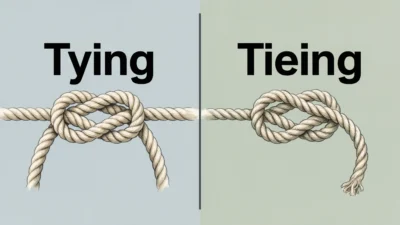

Many people feel confused when they see the words crier and cryer. They look almost the same. They both come from the verb cry. They both seem to mean “someone who cries.” Because of this, students, ESL learners, and even native speakers often ask: Which one is correct? Are they the same word?
The good news is that the difference is simple. Once you understand it, you will not forget it. This article explains everything in very clear and easy English, step by step.
Quick Answer
Here is the short and clear answer:
- Crier ✅ is the correct and common word
- Crier means:
- a person who cries (shows strong feelings)
- or a person who makes public announcements (like a town crier)
- a person who cries (shows strong feelings)
- Cryer ❌ is not standard English
- Cryer is usually a spelling mistake
If you remember only one thing, remember this:
Use “crier,” not “cryer.”
Simple Background: Where These Words Come From
To understand crier, we need to look at the verb cry.
The verb cry can mean:
- to shed tears because you are sad, happy, or emotional
- to shout or call out loudly
In older English, when people added -er to verbs, spelling sometimes changed to make the word easier to say and read. That is what happened here.
- cry + -er → crier
The y changes to i before -er.
This same change happens in other words too:
- try → trier
- dry → drier
So crier follows a normal English spelling rule.
Cryer does not follow this rule, which is why it is not accepted in modern English.
Clear Explanation of the Difference
What Does “Crier” Mean?
Crier is a real English word with two main meanings.
1. A person who cries
This meaning is common in daily English.
Examples:
- She is a crier when she watches sad movies.
- He is not a crier, but the story moved him.
Here, crier means a person who shows emotion by crying.
2. A person who makes public announcements
This meaning is older but still used, especially in history or news.
Examples:
- The town crier read the news in the village.
- In the past, a crier shared laws and messages.
In this meaning, cry means “to shout or call out.”
What Does “Cryer” Mean?
Cryer is not a standard English word.
- It does not appear in normal dictionaries
- Teachers and editors mark it as a spelling mistake
- It is not used in correct writing
If you see cryer, it is almost always an error.
Comparison Table: Crier vs Cryer
| Point | Crier | Cryer |
| Is it correct English? | Yes | No |
| Commonly used? | Yes | No |
| Found in dictionaries? | Yes | No |
| Meaning | A person who cries or announces | None |
| Used in school writing | Yes | No |
| Safe to use | Yes | No |
Which One to Use and When
Always use crier.
Use crier when:
- talking about someone who cries easily
- talking about strong emotions
- talking about a town crier or public announcer
- writing essays, emails, stories, or messages
Do not use cryer:
- not in school work
- not in exams
- not in professional writing
- not in casual messages
If you are unsure, choose crier. It is always the safe choice.
Common Mistakes People Make
Many learners make the same mistakes. Let’s look at them.
Mistake 1: Thinking “cryer” sounds more correct
Some people think:
- cry + er = cryer
But English spelling does not always work this way.
Correct:
- cry → crier
Incorrect:
- cry → cryer
Mistake 2: Mixing it with other -er words
People see words like:
- runner
- writer
- singer
So they think cryer should be correct.
But cry follows a different spelling rule.
Mistake 3: Using “cryer” in formal writing
Using cryer in:
- exams
- homework
- articles
- job emails
can cause lost marks or look careless.
Everyday Real-Life Examples
Here are clear examples from daily life.
In Emails
Correct:
- I am not a big crier, but the message touched me.
Incorrect:
- I am not a big cryer.
In News or Stories
Correct:
- The town crier announced the festival.
Incorrect:
- The town cryer announced the festival.
On Social Media
Correct:
- Anyone else a crier during emotional videos?
Incorrect:
- Anyone else a cryer during emotional videos?
In Daily Conversation
Correct:
- She is a happy crier.
- He becomes a crier at weddings.
Easy Learning Tips for Students and Beginners
Here are simple ways to remember the right word.
Tip 1: Remember “i before er”
When a verb ends in y:
- change y to i
- then add -er
Example:
- cry → crier
Tip 2: Think of “town crier”
The phrase town crier is very common in English.
If you remember this phrase, you will remember the spelling.
Tip 3: Practice one sentence
Repeat this sentence:
- A crier is someone who cries.
Say it out loud a few times. It helps memory.
Frequently Asked Questions (FAQ)
1. Is “cryer” ever correct?
No. Cryer is not correct in standard English.
2. Why do people still write “cryer”?
Because it looks logical and sounds right, but English spelling rules are different.
3. Can “crier” mean someone who cries a lot?
Yes. A crier can be someone who cries easily or often.
4. What is a town crier?
A town crier is a person who announces news loudly in public, usually in the past.
5. Is “crier” used in modern English?
Yes. It is used for emotions and in historical or formal topics.
6. Will exams mark “cryer” as wrong?
Yes. Most teachers and exam systems consider it incorrect.
7. Are “crier” and “cries” related?
Yes. They both come from the verb cry, but they are used differently.
Conclusion
The confusion between crier and cryer is very common, but the rule is simple.
- Crier is the correct word
- Cryer is a spelling mistake
- Crier means:
- a person who cries
- or a person who makes announcements
- a person who cries
Once you learn this, you can use crier with confidence in school, work, and daily life.
English can be tricky, but with clear rules and practice, it becomes much easier.
Keep learning, keep asking questions, and don’t worry about mistakes—they help you grow. 😊

Steven Mark is a writer, researcher, and contributor at Meanefy.com, a platform dedicated to exploring word meanings, language nuances, and everyday linguistic curiosities. With a passion for words and clear communication, Steven focuses on making language simple, engaging, and accessible to all readers.