Many people feel unsure when they want to praise someone. They stop and think:
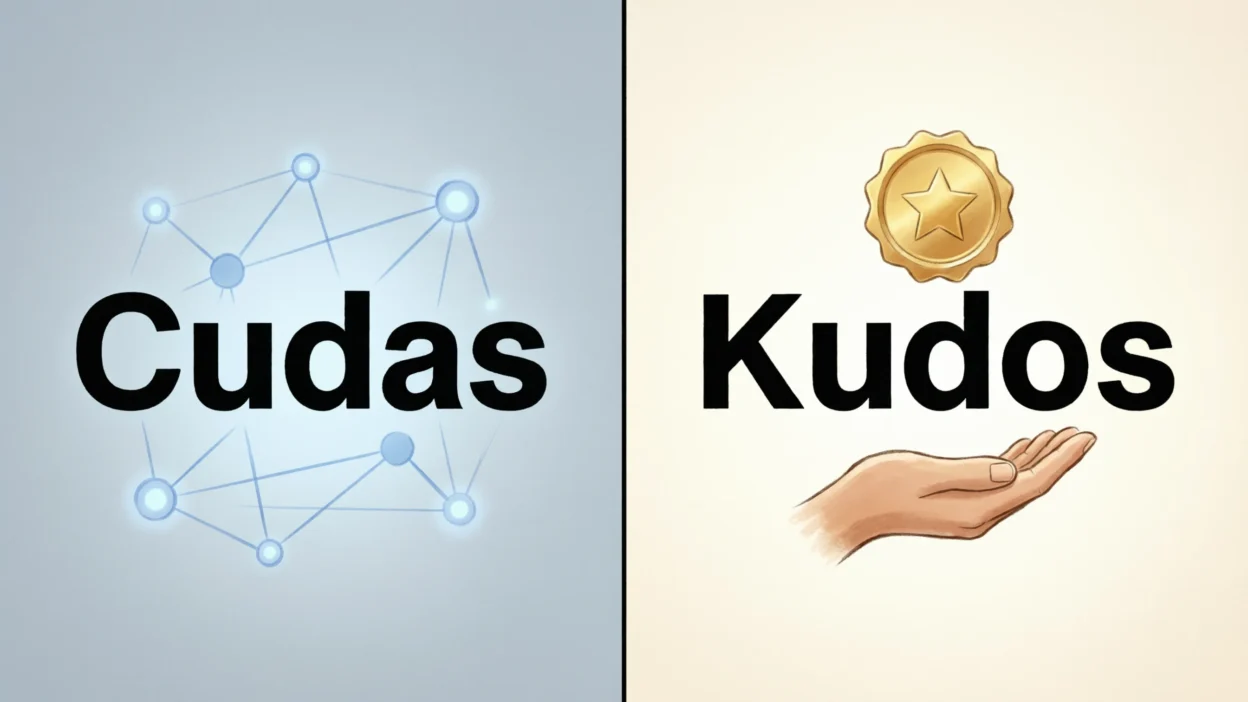
Should I write cudos or kudos?
You may see both words online. You may hear people say them in videos, comments, or daily talk. Spellcheck tools sometimes do not help.
This article will remove that confusion completely. By the end, you will know which word is correct, what it means, and how to use it with confidence.
Quick Answer
Here is the simple truth:
- Kudos ✅ is the correct word
- Cudos ❌ is not correct
- Kudos means praise, credit, or appreciation
- Cudos is a spelling mistake
If you remember only one thing, remember this:
👉 Always use “kudos.” Never use “cudos.”
Simple Background: Where the Word Comes From
The word kudos comes from an old Greek word. That word meant:
- glory
- praise
- honor
Long ago, people used it to talk about respect and good name. Over time, English speakers started using kudos to say:
- “Good job”
- “Well done”
- “You deserve praise”
The word cudos does not come from any language. It does not have a history or meaning. It appeared only because people heard “kudos” and guessed the spelling wrong.
Clear Explanation of the Difference
Let’s make this very simple.
What “Kudos” Means
Kudos means:
- praise for good work
- credit for effort
- appreciation for success
You give kudos when someone does something good.
Example idea:
- A student studies hard
- A worker finishes a project well
- A friend helps others
You can say:
“Kudos to you!”
What “Cudos” Means
Cudos means nothing.
- It is not a real word
- It is not correct English
- It should not be used in writing or speech
People write cudos by mistake because:
- “k” and “c” can sound the same
- They have heard the word but never seen it written
Comparison Table
| Point | Kudos | Cudos |
| Is it a real word? | Yes | No |
| Is it correct English? | Yes | No |
| Meaning | Praise or credit | No meaning |
| Used by native speakers | Yes | No |
| Safe to use in exams, emails, writing | Yes | No |
Which One to Use and When
Always Use “Kudos”
Use kudos when you want to:
- praise someone
- show respect
- say “well done”
- give credit for hard work
You can use it in:
- school writing
- emails
- social media
- daily conversation
- work messages
Examples:
- “Kudos to the team for finishing early.”
- “Kudos to you for helping others.”
- “She deserves kudos for her effort.”
Never Use “Cudos”
Do not use cudos in:
- exams
- homework
- professional writing
- posts
- messages
If you write cudos, people may think you do not know the word.
Common Mistakes People Make
Many learners make the same mistakes. Let’s look at them so you can avoid them.
Mistake 1: Thinking “Cudos” Is an Option
Some people think:
- kudos = formal
- cudos = informal
This is not true.
Only “kudos” is correct.
Mistake 2: Changing the Spelling on Purpose
People sometimes write:
- cudos
- kudosss
- koodos
These are all wrong.
The spelling never changes:
👉 k-u-d-o-s
Mistake 3: Adding “a” Before Kudos
People say:
- “a kudos” ❌
“Kudos” already works as a full word. You do not need “a”.
Correct:
- “Kudos to you.”
- “He got kudos for his work.”
Everyday Real-Life Examples
Here are simple examples from daily life.
Emails
- “Kudos to everyone for the great meeting.”
- “Kudos for finishing the task on time.”
News or Articles
- “The teacher received kudos for her kindness.”
- “The team earned kudos after the win.”
Social Media
- “Kudos to my friend for graduating!”
- “Big kudos to all the helpers today.”
Daily Speech
- “Kudos to you!”
- “She deserves kudos.”
Short Learning Section for Students and Beginners
If you are a student or new learner, remember this small lesson:
- Kudos = praise
- Cudos = mistake
Easy memory tip:
Kudos starts with K, like “kind words.”
Practice sentence:
- “Kudos to me for learning something new.”
Say it aloud. Write it down. The more you use it, the easier it becomes.
Frequently Asked Questions (FAQ)
1. Is “kudos” singular or plural?
In modern English, kudos works as one idea.
You can use it without changing the form.
Correct:
- “Kudos to you.”
- “She got kudos.”
2. Can I say “many kudos”?
Yes, some people say this.
It is common in friendly speech.
Example:
- “Many kudos to the team.”
3. Is “cudos” ever correct?
No.
Cudos is never correct.
4. Is “kudos” formal or informal?
It can be both.
- Informal: with friends or online
- Semi-formal: in emails or school writing
It is safe and polite.
5. Can I use “kudos” in exams?
Yes.
“Kudos” is a real and accepted English word.
6. Is “kudos” American or British English?
It is used in both American and British English.
7. What word can replace “kudos”?
Simple replacements include:
- praise
- credit
- appreciation
But “kudos” is shorter and friendly.
Conclusion: Keep It Simple and Correct
Let’s end with a clear message.
- Kudos is the correct word
- Cudos is a spelling mistake
- Kudos means praise, credit, or respect
If you remember this, you will never feel unsure again.
Next time you want to say “good job,” feel confident and say:
Kudos to you! 😊

Daniel Matthew is a language enthusiast, writer, and contributor at Meanefy.com, where he explores the meanings, origins, and nuances of words and phrases. With a deep passion for language, Daniel aims to make complex concepts simple, engaging, and easy to understand for readers of all ages.