Many people feel unsure when they see two spellings: humour and humor.
They look almost the same.
They sound the same.
They mean the same thing.
So why are there two spellings?
Students, ESL learners, and even native speakers often ask this question. You may worry about using the “wrong” one in school, exams, emails, or online posts. This article removes that confusion completely and explains everything in very simple English.
By the end, you will know exactly which word to use and why.
Quick Answer
Here is the clear and simple answer:
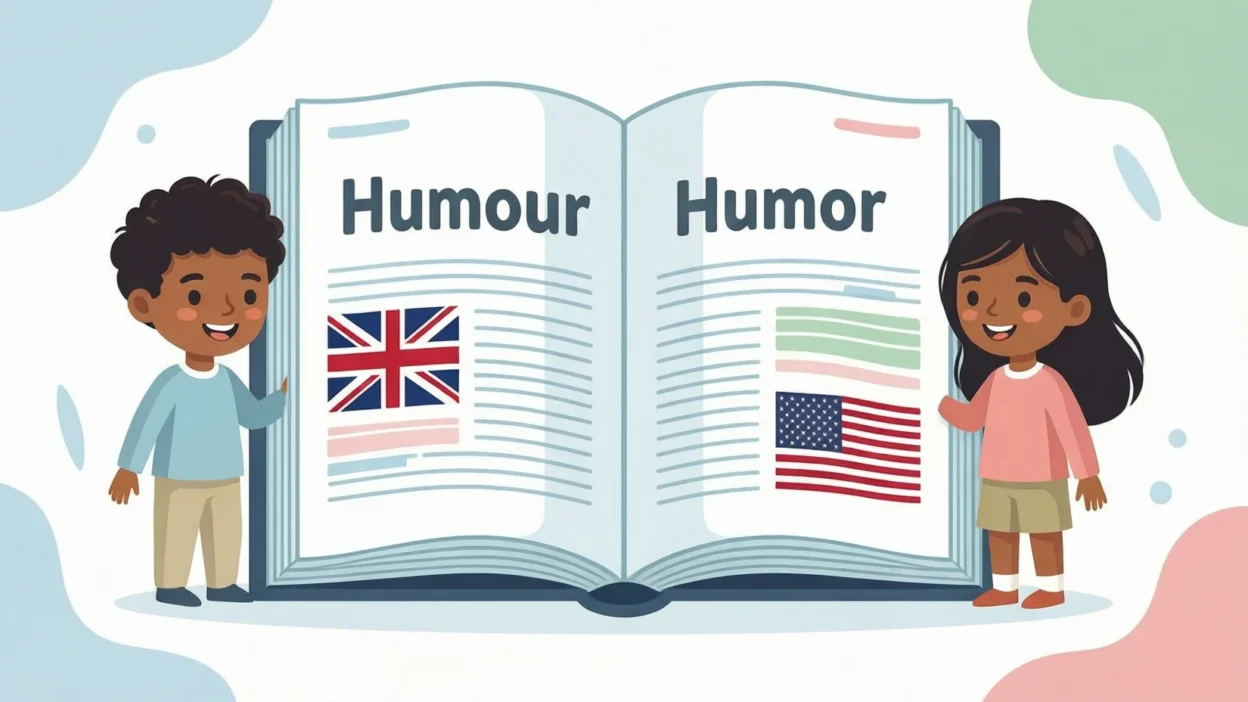
- Humour is used in British English
- Humor is used in American English
- The meaning is the same
- The pronunciation is the same
- The difference is only the spelling
That’s it. Nothing more complicated than that.
Simple Background: Where Do These Words Come From?
Long ago, English spelling was not fixed. People spelled words in many ways.
Later, English started to change in different places:
- In Britain, spelling stayed closer to older forms
- In the United States, spelling was made shorter and simpler
Because of this, some words got two spellings.
Examples:
- colour / color
- favourite / favorite
- centre / center
- humour / humor
So, humour and humor come from the same old word. They just followed different spelling paths.
What Does “Humour / Humor” Mean?
Both words mean the same thing.
Humour / humor means:
- The ability to make people laugh
- Something funny or amusing
- A joke, funny idea, or funny situation
Example:
- She has a great sense of humour.
- She has a great sense of humor.
Both sentences mean the same thing.
The Real Difference Explained Simply
The only real difference is the type of English you are using.
British English
Uses:
- humour
- extra “u”
Used in:
- The UK
- Ireland
- Australia
- New Zealand
- Many schools that teach British English
American English
Uses:
- humor
- no “u”
Used in:
- The United States
- Many American books, movies, and websites
There is no difference in meaning, tone, or feeling.
Easy Comparison Table
| Point | Humour | Humor |
| Meaning | Funny ideas or jokes | Funny ideas or jokes |
| Pronunciation | Same | Same |
| Type of English | British English | American English |
| Spelling style | Longer | Shorter |
| Used in exams | UK-based exams | US-based exams |
| Correct? | Yes | Yes |
Both are correct. Just choose the right one for your situation.
Which One Should You Use and When?
Use humour if:
- You are writing British English
- Your school follows UK spelling
- Your exam uses British English
- You are writing for UK, Australia, or similar countries
Use humor if:
- You are writing American English
- Your school follows US spelling
- You are writing for an American audience
- You are using American textbooks
Important Tip
Do not mix spellings in one piece of writing.
Bad example:
- He loves humor and British humour.
Good example:
- He loves humor and American comedy.
- He loves humour and British comedy.
Common Mistakes People Make
Here are mistakes many learners make:
- Thinking one spelling is wrong
- Mixing British and American spelling in one sentence
- Changing spelling without checking the type of English
- Thinking the meaning is different
- Feeling afraid to use either word
Remember:
Both spellings are correct.
The key is consistency.
Everyday Real-Life Examples
In Emails
- British style:
“Thank you for your message. I enjoyed your sense of humour.” - American style:
“Thank you for your message. I enjoyed your sense of humor.”
In News or Articles
- British:
“The writer is known for dry humour.” - American:
“The writer is known for dry humor.”
On Social Media
- British user:
“This made my day. Great humour!” - American user:
“This made my day. Great humor!”
In Daily Speech (Sound is Same)
People say both words in the same way, so you cannot hear the difference.
Learning Section for Students and Beginners
If you are learning English, keep this rule simple:
Same word. Same meaning. Different spelling.
Easy Memory Trick
- U in humour → UK
- No U in humor → USA
This small trick helps many students remember the difference fast.
Also:
- Check your textbook
- Check your exam style
- Follow one system only
Frequently Asked Questions (FAQ)
1. Are humour and humor different words?
No. They are the same word with different spelling styles.
2. Is one more correct than the other?
No. Both are correct in the right type of English.
3. Can I use humour in American English?
It is better not to. Use humor in American English.
4. Can I use humor in British English?
It is better not to. Use humour in British English.
5. Do they sound different when spoken?
No. They sound exactly the same.
6. Will exams mark it wrong?
Only if you mix spelling styles. Choose one style and stay consistent.
7. Is humour more formal than humor?
No. Both are equal in level and tone.
Conclusion
Humour and humor are not enemies. They are twins.
They:
- Mean the same thing
- Sound the same
- Make people laugh
The only difference is:
- Humour = British English
- Humor = American English
Once you know which type of English you are using, the choice is easy.There is no need to feel confused again.
Now you can use this word with confidence, every time. 😊