
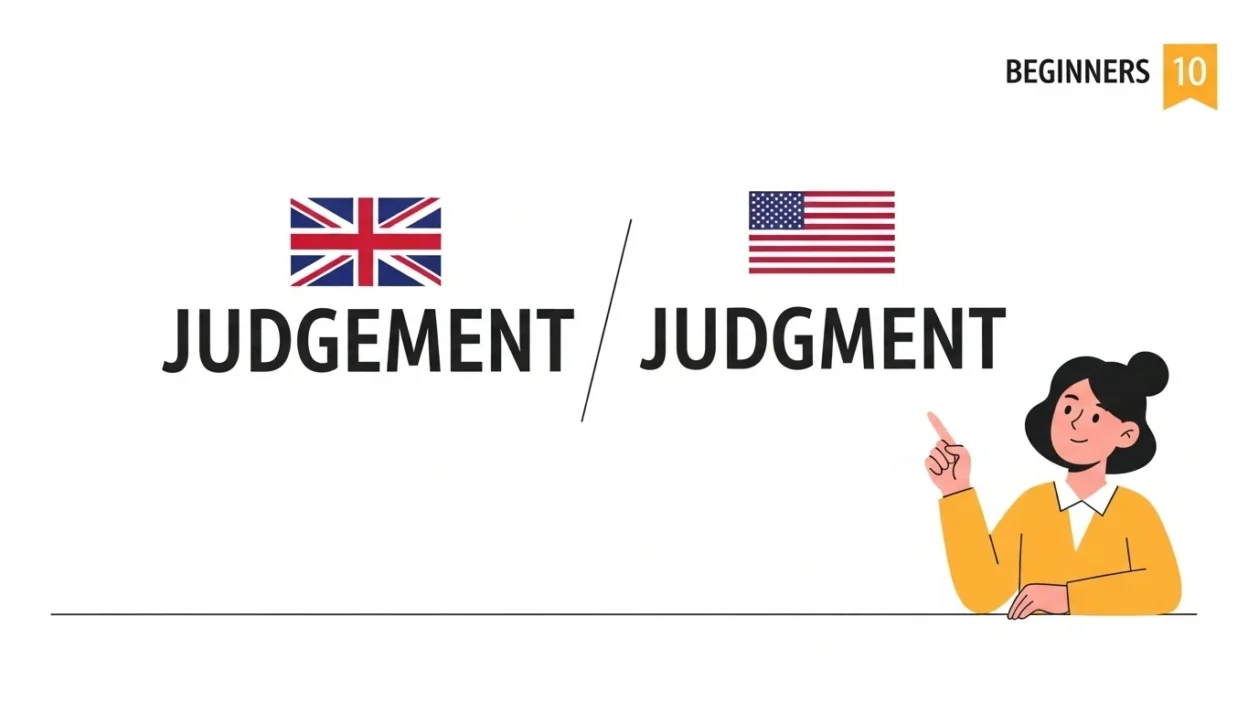
Many students, learners and general readers often get confused between judgement and judgment. Both words look almost the same, sound similar, and mean almost the same thing. So, which one should you use?
This guide will explain everything in very simple English, so you can understand and remember it easily.
Why People Get Confused
- The words are spelled differently but sound almost the same.
- Both mean a decision, opinion, or legal ruling.
- English has two main versions: British English and American English, which use different spellings.
Because of these reasons, many learners hesitate and sometimes use the wrong form in writing.
Quick Answer
Here is a simple way to remember:
- Judgment – This is the American English spelling. Use it in the USA.
- Judgement – This is the British English spelling. Use it in the UK, Canada, Australia, and other countries following British English.
✅ Both words are correct, but the spelling depends on where you are writing.
Origin / Background
The word comes from Old French “jugement” and Latin “judicium”, which both mean decision or law ruling.
- Over time, British English kept the “e” in judgement.
- American English simplified the spelling to judgment by removing the “e”.
So the difference is mostly about spelling style, not meaning.
The Difference Explained
- Meaning: Both words usually mean:
- The ability to make good decisions
- An opinion about someone or something
- A legal ruling in a court
- Spelling:
- British English: judgement
- American English: judgment
- Usage:
- In formal writing in the USA → use judgment
- In newspapers, books, or schoolwork in the UK → use judgement
Important note: In some legal documents, even British English uses judgment for court rulings.
Comparison Table
| Feature | Judgement (British English) | Judgment (American English) |
| Spelling style | British | American |
| Meaning | Same for both | Same for both |
| Common use | UK, Canada, Australia | USA |
| Legal use | Sometimes “judgment” | Always “judgment” |
| Everyday opinion meaning | Yes | Yes |
Which One to Use and When
- If you are in the USA: Always use judgment.
- If you are in the UK, Australia, or Canada: Use judgement, unless writing a legal document.
- If you are unsure: Judgment is safe, as it is understood worldwide.
Common Mistakes People Make
- Writing judgement in American English essays.
- Using judgment in UK schoolwork (sometimes seen as less formal).
- Confusing judgment with judging (judging = the act of forming an opinion about someone).
- Overthinking: Remember, the meaning is the same.
Everyday Real Life Examples
Here are some examples of how to use the words in daily life:
Emails
- “I need your judgment on this project proposal.” (US English)
- “Your judgement about the report was very helpful.” (UK English)
News
- “The court gave its final judgment yesterday.”
- “Her judgement in handling the crisis was praised.”
Social Media / Daily Use
- “Good judgment means knowing right from wrong.”
- “I trust your judgement when choosing a restaurant.”
Learning Tips for Students and Beginners
- Think “e = extra letter = British” → judgement.
- Think “no e = American” → judgment.
- Both words are pronounced the same, so focus on spelling when writing.
- Practice by reading newspapers or books from the country of English you are learning.
FAQ Section
1. Can I use either spelling anywhere?
Yes, but it is better to follow the rules of American or British English depending on your audience.
2. Do they mean exactly the same thing?
Yes, the meaning is the same: opinion, decision, or legal ruling.
3. Which one do lawyers use?
In the USA → judgment
In the UK → judgment is often used for legal rulings, judgement for everyday opinions.
4. How do you pronounce them?
Both are pronounced /ˈdʒʌdʒ.mənt/.
5. Can I use judgement in an American school essay?
It is better to use judgment to follow American English spelling rules.
6. Why do British people keep the “e”?
British English often keeps older spellings, which is why they use judgement.
7. Is one spelling more correct than the other?
No. Both are correct; it depends on where you are using English.
8. Is it confusing for non-native speakers?
Yes, but once you know the rule—e = British, no e = American it is easy to remember.
Conclusion
The words judgement and judgment can be confusing at first, but the rule is simple:
- Judgment = American English
- Judgement = British English
Both words mean the same thing: a decision, an opinion, or a legal ruling. Remembering the spelling rules and using them correctly in writing will make your English clearer and more confident. With practice, this will become easy to remember.
Next time you write an essay, email, or social media post, you will know exactly which spelling to use!