Many people get confused between the words “neice” and “niece.” Even English learners and native speakers sometimes make mistakes with these words.
The confusion is simple: one word is correct, and the other is just a common misspelling.
This article will explain the difference clearly, with examples, tables, and tips, so you will never confuse them again.
Quick Answer
Here is the short answer you need:
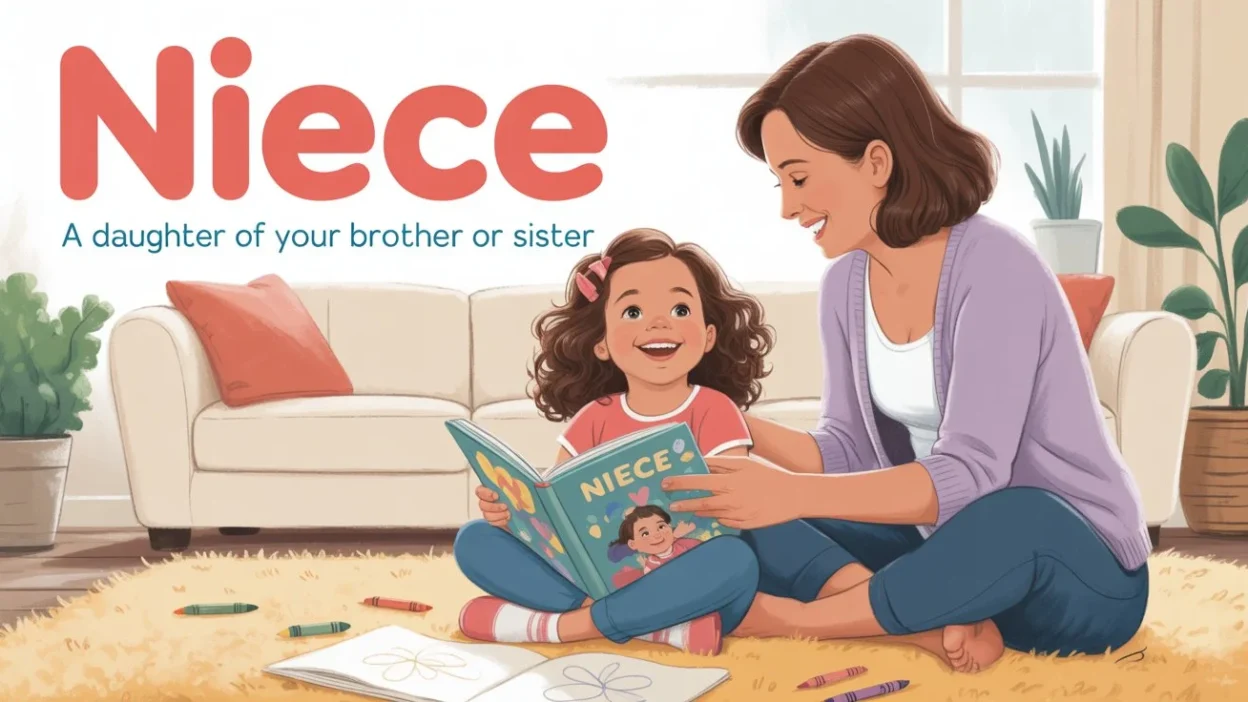
- Niece ✅ – This is the correct spelling. It means the daughter of your brother or sister.
- Neice ❌ – This is incorrect. Do not use this word.
Remember: if you want to talk about your brother’s or sister’s daughter, always use niece.
Origin or Background
The word niece comes from old English and French.
- In Old French, the word was nece, which meant daughter of a sibling.
- In Middle English, it became niece, which is the spelling we use today.
There was never a correct form “neice.” That spelling mistake comes from how people try to spell it by sound.
Clear Explanation of the Difference
- Niece is correct and standard. It is a noun. Example: “My niece is very smart.”
- Neice is just a typo or spelling mistake. There is no word in English with this meaning spelled this way.
A simple way to remember:
- N comes first in both “niece” and “nephew.” Think of N for family children.
- ie is always in niece, not ei.
Comparison Table
| Word | Correct? | Meaning | Example |
| niece | ✅ Yes | Daughter of your brother or sister | “I took my niece to the park.” |
| neice | ❌ No | None – incorrect spelling | ❌ “I love my neice” (wrong) |
Which One to Use and When
- Use niece when you talk about your brother’s or sister’s daughter.
- Never use neice in writing, emails, or social media.
- If you are unsure, check: “Is it ie or ei?” The correct spelling is ie.
Common Mistakes People Make
- Writing neice instead of niece.
- Confusing niece with nieves or other similar-looking words.
- Mispronouncing it as “neese.” Correct pronunciation is neess (/niːs/).
- Forgetting it only refers to the daughter of a sibling, not a cousin or friend’s child.
Everyday Real Life Examples
Emails:
- Correct: “Dear Aunt Sarah, I hope you and my niece are doing well.”
- Wrong: “Dear Aunt Sarah, I hope you and my neice are doing well.”
Social Media:
- “Spending the day with my niece at the zoo!” ✅
- “Spending the day with my neice at the zoo!” ❌
News:
- “The celebrity shared a photo with her young niece.” ✅
Daily Use:
- Talking to friends: “My niece just started school this week.” ✅
Short Learning Section for Students and Beginners
- Rule to remember: N + I + E + C + E = niece.
- Always think: “niece has IE, like in ‘friend’ – not EI.”
- Practice: write a sentence about your niece every day.
- Example: “My niece loves to draw.”
- Pronounce clearly: /niːs/ – one syllable.
FAQ
Q1: Can I ever write “neice”?
- No. It is always wrong.
Q2: How do I remember the correct spelling?
- Think of niece as “ie” like in the word “friend.”
Q3: Does “niece” only mean daughter of brother or sister?
- Yes, never cousins or other relatives.
Q4: Is “niece” pronounced like it is spelled?
- Kind of. It is pronounced neess (/niːs/).
Q5: Is there a male version?
- Yes, the male version is nephew.
Q6: Can “niece” be used in formal writing?
- Absolutely. It is correct in all types of writing.
Q7: What about “niece-in-law”?
- Correct. It means the wife of your nephew or the niece of your spouse.
Q8: Any trick to remember it for exams?
- Remember: “Niece has I before E.” Always think niece = family daughter.
Conclusion
To sum up, “niece” is the only correct spelling. “Neice” is a common mistake. A niece is simply your brother’s or sister’s daughter. Remember the simple rules:
- Always spell it N-I-E-C-E
- Pronounce it neess
- Use it only for your sibling’s daughter
Once you practice, you will never confuse niece with neice again. Start using it in sentences, emails, and messages today!