Have you ever wondered why sometimes people write “omelet” and other times “omelette”? If yes, you are not alone! Many students, English learners, and even native speakers get confused about this.
Both words sound almost the same, but the spelling is different. This article will help you understand everything clearly in simple English. By the end, you will never make a mistake again.
Quick Answer
Here’s the simple truth:
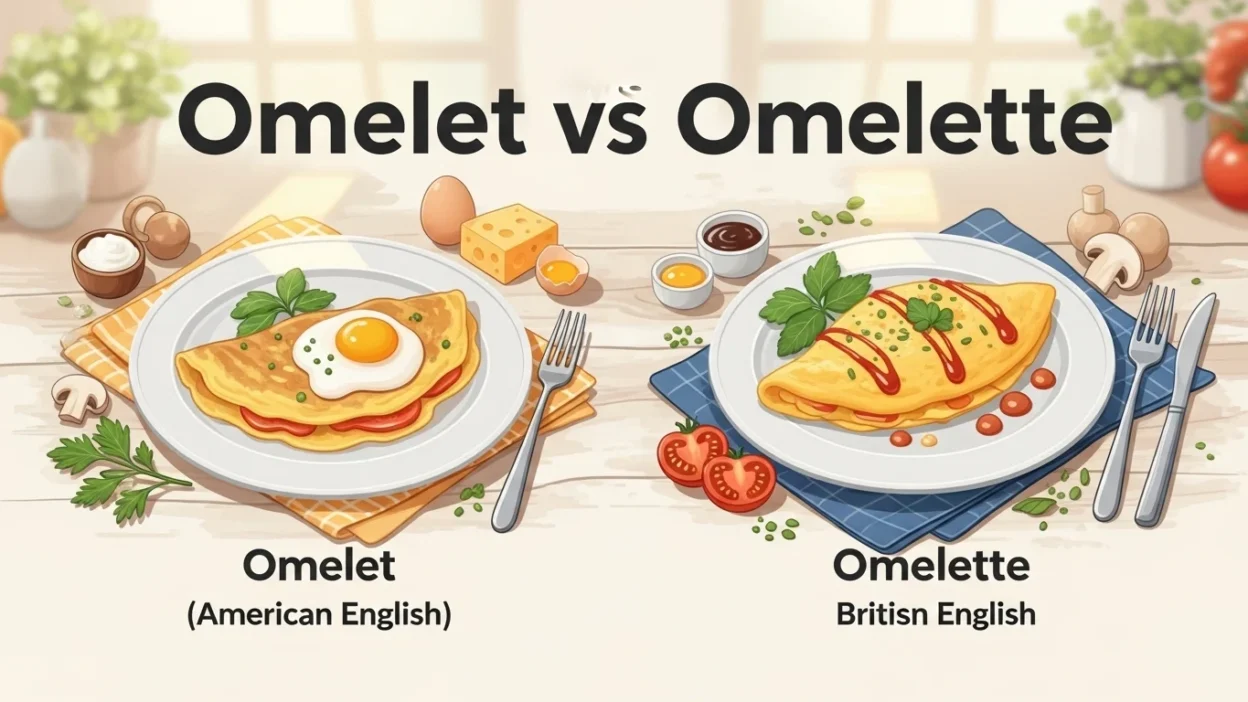
- Omelet – This is the American English spelling.
- Omelette – This is the British English spelling.
- Both words mean the same thing: a dish made from beaten eggs cooked in a pan, often with vegetables, cheese, or meat.
- You can use either spelling depending on where you are or what style of English you prefer.
Where Does the Word Come From?
The word comes from French. In French, it is spelled “omelette”. French cooking and language influenced many English words.
When English speakers in the United States borrowed the word, they changed the spelling to “omelet” to make it shorter and simpler. British English kept the French style, so they still write “omelette”.
The Difference Explained
Now let’s make it very simple:
| Word | English Type | Spelling Style | Example Dish |
| Omelet | American English | Simple | Cheese omelet, mushroom omelet |
| Omelette | British English | French style | Cheese omelette, mushroom omelette |
Important: There is no difference in meaning or pronunciation. Only the spelling is different.
When to Use “Omelet” or “Omelette”
- Use omelet if you are writing in American English (USA, Canada).
- Use omelette if you are writing in British English (UK, Australia, India).
- In restaurants or menus, check the style: many international restaurants choose omelette because it looks fancy.
Common Mistakes People Make
- Writing “omelet” in British English text – it may look wrong.
- Writing “omelette” in American English text – some Americans may say it’s too formal.
- Thinking “omelet” and “omelette” are different dishes – they are exactly the same.
- Pronouncing them completely differently – they sound almost the same.
Everyday Real Life Examples
Here’s how you can see the words in daily life:
- Emails: “I had a cheese omelet for breakfast today.” (American English)
- News: “The chef prepared a delicious mushroom omelette.” (British English)
- Social media: “Trying my first spinach omelet!”
- Daily conversation: “Do you want an omelette with your eggs?”
Notice that the meaning stays the same. Only the spelling changes based on the audience or location.
Learning Section for Students and Beginners
- Step 1: Remember that omelet = USA, omelette = UK.
- Step 2: Both words are pronounced almost the same: /ˈɑː.mə.lɪt/ or /ˈoʊ.mə.lɪt/
- Step 3: Think of French spelling → omelette, short American spelling → omelet.
- Step 4: Use whichever matches your English style, but don’t worry if you mix them occasionally.
Tip: If you are writing for school, check whether your teacher wants American or British English.
FAQ (Frequently Asked Questions)
Q: Are omelet and omelette the same food?
A: Yes, both are made with beaten eggs, cooked in a pan.
Q: Which spelling is correct?
A: Both are correct. Use omelet for American English and omelette for British English.
Q: How do you pronounce omelet and omelette?
A: Almost the same: “AH-muh-let” (US) or “OM-let” (UK accent slightly different).
Q: Can I use omelette in America?
A: Yes, it’s understood, but omelet is more common.
Q: Can I use omelet in the UK?
A: Yes, people will understand, but omelette is preferred.
Q: Is there a difference in meaning?
A: No, both words mean exactly the same dish.
Q: Are there different types of omelet/omelette?
A: Yes, you can make plain, cheese, vegetable, or meat omelets/omelettes.
Q: Why do Americans spell it differently?
A: Americans like simpler spellings. They removed extra letters from some French words.
Conclusion
To sum up:
- Omelet = American English
- Omelette = British English
- Meaning = exactly the same
- Pronunciation = almost the same
- Only spelling changes depending on your audience or location
Next time you see eggs cooked in a pan, you can confidently write omelet or omelette without confusion.
Remember, it’s not about right or wrong just about the style of English you are using.

Daniel Matthew is a language enthusiast, writer, and contributor at Meanefy.com, where he explores the meanings, origins, and nuances of words and phrases. With a deep passion for language, Daniel aims to make complex concepts simple, engaging, and easy to understand for readers of all ages.