Many English learners feel confused when they see the words “smooth” and “smoothe.” At first glance, both words look very similar. The only difference is one extra “e.” Because of this, people often wonder if they mean the same thing or if both are correct.
You might see smooth in everyday writing, such as describing skin, roads, or a calm voice. But sometimes you may also come across smoothe, especially in older texts or certain forms of writing. This can make students and beginners unsure about which spelling they should use.
The good news is that the difference is actually simple. Once you understand how these two words work, the confusion disappears.
This guide explains everything in very clear and simple English so you can understand the difference the first time you read it.
Quick Answer
Here is the short and simple explanation:
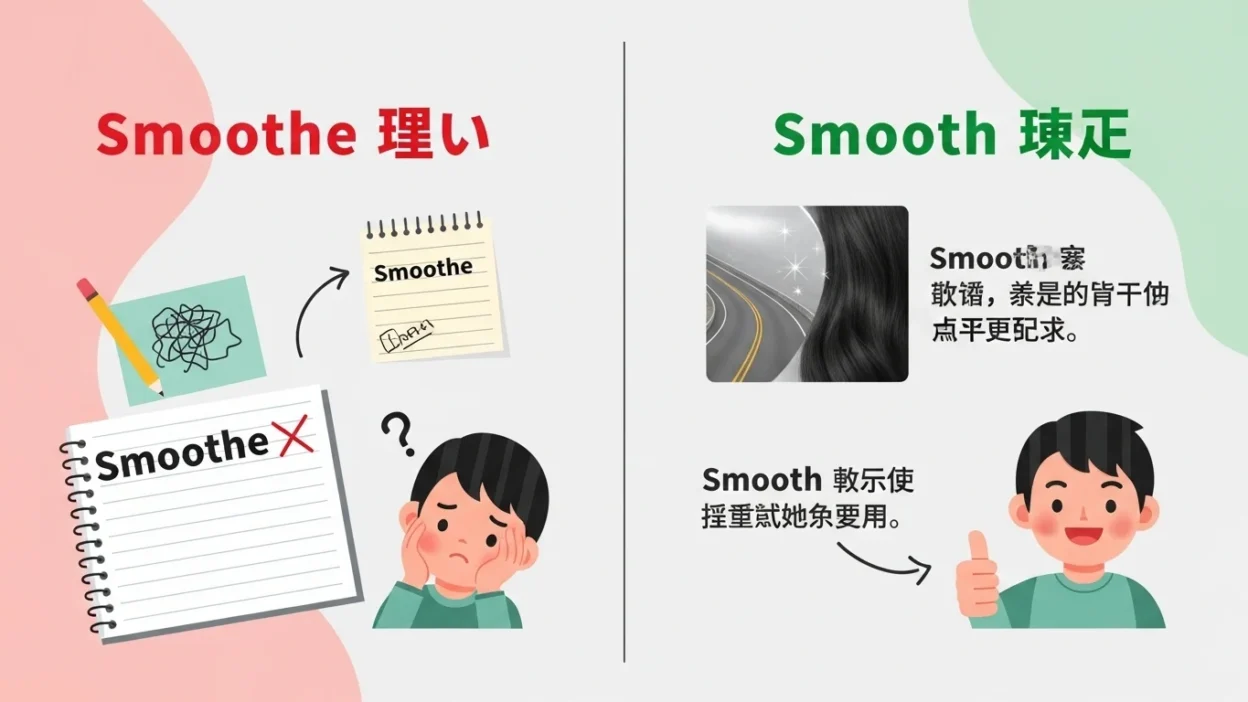
- Smooth is the correct and common word used in modern English.
- Smooth is mainly an adjective (a describing word).
- Smoothe is a rare verb form that means to make something smooth.
- In most everyday writing, people almost always use “smooth.”
Example:
- ✔ The table surface is smooth.
- ✔ She used oil to smooth her hair.
- ❌ The table surface is smoothe. (incorrect)
For most learners, the safe choice is simple: use “smooth.”
A Simple Background of the Words
To understand the difference, it helps to know a little about how English words developed.
The word smooth has been used in English for many hundreds of years. It comes from old forms of English that described something that is even, flat, soft, or not rough.
For example:
- smooth skin
- smooth glass
- smooth road
Over time, English speakers also needed a verb that meant to make something smooth. Because of this, another form appeared: smoothe.
However, language changed as people used it. Slowly, English speakers stopped using smoothe very often. Instead, they started using smooth for both the adjective and the verb.
Today, smoothe is considered very uncommon and mostly appears in older writing or dictionaries.
The Clear Difference Between Smooth and Smoothe
The key difference is how the words are used.
Smooth
Smooth is mainly an adjective.
It describes something that is not rough, even, or pleasant.
Examples:
- The baby’s skin is smooth.
- This road is very smooth.
- She has a smooth voice.
But smooth can also act as a verb in modern English.
Example:
- She smoothed the paper with her hand.
Here, smoothed means made the paper flat.
Smoothe
Smoothe is an old verb form.
It also means to make something smooth.
Example:
- He tried to smoothe the fabric.
However, in modern English, people usually write:
- He tried to smooth the fabric.
Because of this, smoothe is rarely used today.
Comparison Table
| Feature | Smooth | Smoothe |
| Main type | Adjective | Verb |
| Meaning | Not rough, flat, even | To make something smooth |
| Common today | Yes | No |
| Used in everyday English | Very common | Very rare |
| Example | The surface is smooth | He tried to smoothe the cloth |
| Recommended for learners | Yes | Usually avoid |
Which One Should You Use?
For students and beginners, the rule is very simple.
Use Smooth in almost every situation.
Examples:
As an adjective
- The stone feels smooth.
- Her hair is smooth and shiny.
- The ride was smooth.
As a verb
- He smoothed the page.
- She smoothed her dress.
Avoid using Smoothe
Even though it exists, it is:
- Rare
- Old-fashioned
- Unnecessary in modern writing
Most teachers and writing guides recommend using smooth instead.
Common Mistakes People Make
Because the words look similar, learners sometimes make small spelling mistakes.
Mistake 1: Adding an unnecessary “e”
Incorrect:
- The table is smoothe.
Correct:
- The table is smooth.
Mistake 2: Thinking both are common
Some people think both spellings are normal in modern English. But in reality:
- Smooth is used everywhere.
- Smoothe is rarely used.
Mistake 3: Confusing adjective and verb forms
Correct usage:
- The road is smooth. (adjective)
- He smoothed the blanket. (verb)
Incorrect:
- He smoothe the blanket yesterday.
Correct:
- He smoothed the blanket yesterday.
Everyday Real Life Examples
Here are examples you might see in real life.
In Emails
- “Please smooth out the wrinkles in the document before printing.”
In Social Media
- “This coffee tastes so smooth!”
In News
- “Workers repaired the road to make traffic smooth again.”
In Daily Conversations
- “Your skin looks very smooth.”
- “She smoothed her hair before the meeting.”
In Product Descriptions
- “This cream makes your skin smooth and soft.”
In all these cases, smooth is the correct and natural choice.
Learning Tip for Students and Beginners
A simple trick can help you remember the difference.
Remember this rule:
Smooth = common word
Smoothe = old or rare word
Another easy memory tip:
Think about the word “smoothie.”
The drink is called a smoothie, not a smoothee.
This reminds us that the base word is smooth.
So if you feel unsure, choose smooth. It will almost always be correct.
Frequently Asked Questions (FAQ)
1. Is “smoothe” a real English word?
Yes, it exists as a verb meaning to make something smooth, but it is rarely used today.
2. Is “smooth” correct in modern English?
Yes. Smooth is the standard and common word used in modern English.
3. Can “smooth” be both a verb and an adjective?
Yes.
Examples:
- Adjective: The glass is smooth.
- Verb: She smoothed the paper.
4. Should students use “smoothe”?
Usually no. It is better to use smooth, which is clear and widely accepted.
5. Why do some dictionaries include “smoothe”?
Because dictionaries record all forms of a word, including older or rare ones.
6. Is “smoothed” the past tense of smooth?
Yes.
Example:
- She smoothed the blanket.
7. Is “smoothest” correct?
Yes. It is the superlative form of smooth.
Example:
- This road is the smoothest in the city.
8. Do native speakers use “smoothe”?
Most native speakers do not use it in everyday conversation or writing.
Conclusion
The difference between smooth and smoothe is actually very simple once you understand it.
- Smooth is the common and modern word.
- It usually describes something flat, soft, or not rough.
- It can also work as a verb, meaning to make something smooth.
- Smoothe is an old and rarely used verb form.
For students, beginners, and everyday writing, the best choice is clear:
Use “smooth.”
If you follow this rule, your English will sound natural, clear, and correct every time.