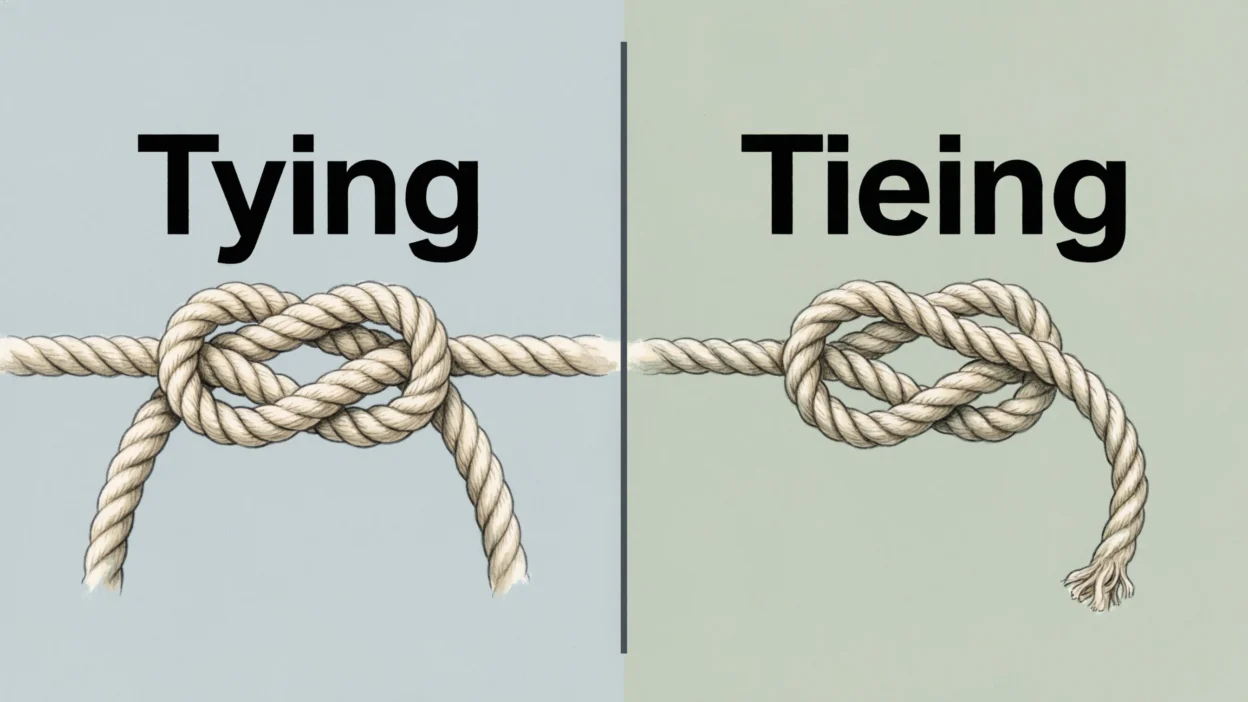
Many people feel confused when they need to write the word tying.
They stop and think:
“Is it tying or tieing?”
The reason is simple:
The base word is tie, and when we add -ing, it does not follow the rule people expect.
This article will explain everything in very simple English.
By the end, you will feel 100% confident and never doubt this word again.
Quick Answer: The Simple Truth
Here is the clear answer right away:
- ✅ Tying — Correct
- ❌ Tieing — Incorrect
Always use “tying.”
“Tieing” is not a correct spelling in standard English.
Where Does This Confusion Come From?
To understand the confusion, we need to look at the word tie.
- Tie means to make a knot or join things together
- Examples:
- Tie your shoes
- Tie a ribbon
- Tie two ropes together
When people add -ing to verbs, they usually follow this rule:
- Play → playing
- Work → working
- Read → reading
So many people think:
- Tie → tieing ❌
But tie is a special case.
Simple Background Rule (No Grammar Stress)
English has a small rule that changes some words before adding -ing.
The Rule in Easy Words
If a verb ends with -ie, we:
- Remove “ie”
- Add “y”
- Then add -ing
So:
- Tie → ty + ing = tying
This rule is not used often, which is why people forget it.
Another example:
- Die → dying (not dieing)
Clear Explanation of the Difference
Let’s look at both words clearly.
What “Tying” Means
Tying is the present form of tie.
It means:
- Making a knot
- Joining things together
- Fastening something
Examples:
- Tying my shoes
- Tying a gift ribbon
- Tying two bags together
What About “Tieing”?
Tieing is not a real word in correct English.
It may look right, but:
- It breaks English spelling rules
- It should not be used in school, exams, emails, or writing
Comparison Table: Tying vs Tieing
| Feature | Tying | Tieing |
| Correct spelling | ✅ Yes | ❌ No |
| Used in English | ✅ Yes | ❌ No |
| Accepted in exams | ✅ Yes | ❌ No |
| Used by native speakers | ✅ Yes | ❌ No |
| Grammar rule followed | ✅ Yes | ❌ No |
Which One Should You Use and When?
This part is easy.
Always Use Tying
Use tying when you want to say:
- Someone is making a knot
- Someone is fastening or joining something
Examples:
- She is tying her hair.
- He is tying the rope.
- I am tying my shoes.
Never Use Tieing
- Do not use it in writing
- Do not use it in tests
- Do not use it in messages or posts
If you remember only one thing, remember this:
👉 There is no situation where “tieing” is correct.
Common Mistakes People Make
Many learners make the same mistakes. Let’s look at them so you can avoid them.
Mistake 1: Keeping the “ie”
- ❌ tieing the rope
- ✅ tying the rope
Mistake 2: Guessing Without Checking
People often guess because the word looks strange.
Tip:
- If the word feels strange, remember the rule:
- ie → y + ing
Mistake 3: Learning by Sound Only
“Tying” and “tieing” sound similar when spoken.
But writing needs correct spelling, not just sound.
Everyday Real-Life Examples
Here are examples you might see or use every day.
In Emails
- ❌ I am tieing the documents now.
- ✅ I am tying the documents now.
On Social Media
- ❌ Just finished tieing my shoes 😂
- ✅ Just finished tying my shoes 😂
In School Writing
- ❌ He was tieing the rope tightly.
- ✅ He was tying the rope tightly.
In News or Stories
- ❌ The worker was tieing the cables.
- ✅ The worker was tying the cables.
Easy Learning Section for Students and Beginners
Here is a simple memory trick.
Remember This Sentence:
“IE changes to Y before ING.”
That’s it.
Let’s practice:
- Tie → tying
- Die → dying
If you see ie at the end:
- Change it to y
- Add ing
Small Practice Test
Choose the correct word:
- She is ___ her shoes.
- a) tieing
- b) tying ✅
- He is ___ the ribbon.
- a) tying ✅
- b) tieing
If you picked tying, you’re doing great!
Frequently Asked Questions (FAQs)
1. Is “tieing” ever correct?
No. Tieing is always incorrect.
2. Why does “tie” become “tying”?
Because English changes ie to y before adding -ing.
3. Is “tying” used in American and British English?
Yes. Tying is correct in all types of English.
4. Does “tying” sound the same as “tieing”?
Yes, they sound similar, but only tying is correct in writing.
5. Can this mistake affect exam scores?
Yes. Wrong spelling can reduce marks in exams and tests.
6. Is “dying” the same kind of rule?
Yes.
- Die → dying
- Tie → tying
Same rule.
7. How can I remember this easily?
Think:
- No IE + ING
- Change ie to y
Conclusion
Let’s end with full clarity.
- ✅ Tying is the only correct spelling
- ❌ Tieing is always wrong
- The rule is simple:
- ie → y + ing
English can feel confusing sometimes, but this word does not need to be.
Once you learn this rule, you will never make this mistake again.
You are now ready to use tying with confidence—in writing, exams, messages, and daily life. 😊

Steven Mark is a writer, researcher, and contributor at Meanefy.com, a platform dedicated to exploring word meanings, language nuances, and everyday linguistic curiosities. With a passion for words and clear communication, Steven focuses on making language simple, engaging, and accessible to all readers.