
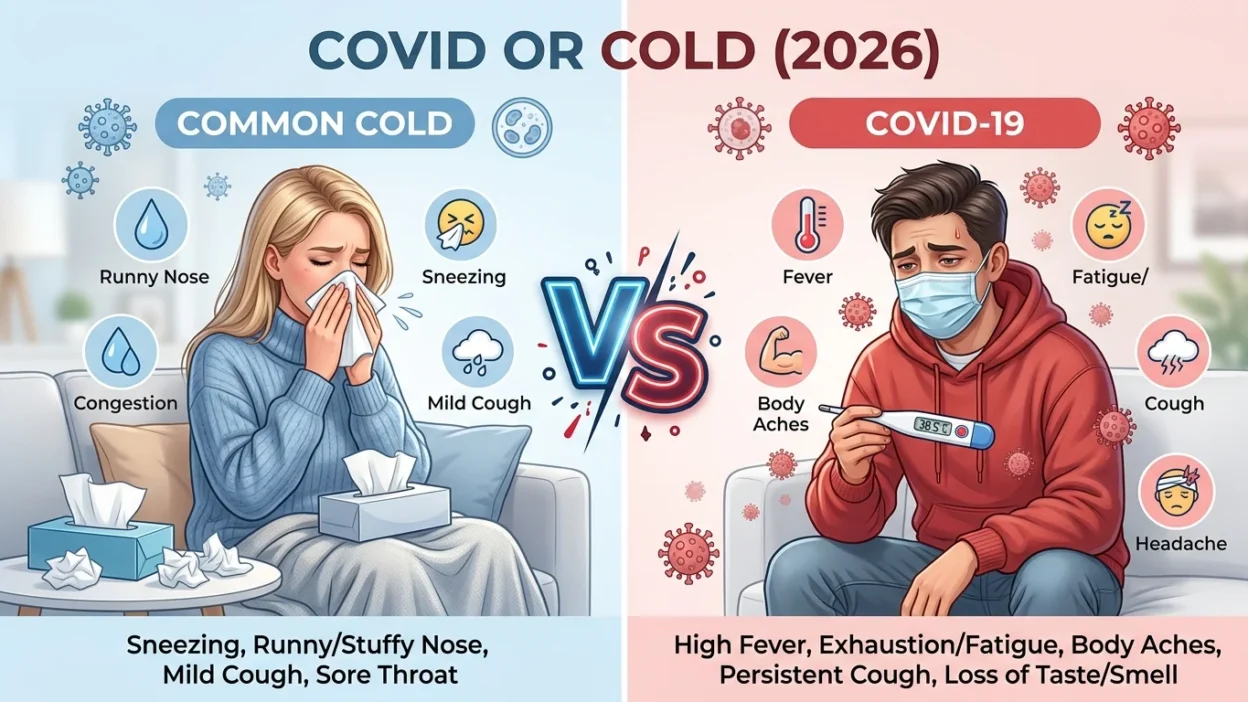
Many people get confused between COVID-19 and the common cold because both illnesses can look very similar at first. A sore throat, cough, runny nose, or fever can happen in both cases. Sometimes people think they only have a cold when they actually have COVID-19. Other times, they panic and think they have COVID-19 when it is only a normal cold.
This confusion is very common, especially for students, families, and beginners learning English health words. The good news is that there are some simple differences that can help you understand what may be happening.
This guide explains everything in very easy English so you can clearly understand the difference between COVID-19 and a cold.
Quick Answer
Here is the short and simple answer:
A cold usually:
- Is mild
- Causes sneezing and a runny nose
- Gets better in a few days
- Rarely causes serious breathing problems
COVID-19 usually:
- Can spread more easily
- May cause fever, body pain, tiredness, or loss of taste and smell
- Can become serious for some people
- May last longer than a normal cold
Important:
The only way to know for sure is with a test because symptoms can be very similar.
Simple Background Explanation
What Is a Cold?
A cold is a very common illness caused by viruses. Most people get colds many times in their lives. Colds usually affect the nose and throat.
A cold is normally mild and people recover without special treatment.
What Is COVID-19?
COVID-19 is an illness caused by a virus called coronavirus. It became widely known around the world in 2020 and continued affecting people for years.
COVID-19 can affect the lungs, throat, nose, and whole body. Some people only get mild symptoms, while others become very sick.
Main Difference Between COVID-19 and a Cold
The biggest difference is usually how serious the illness can become.
A common cold is often mild and short. COVID-19 can sometimes become stronger and cause more body pain, fever, tiredness, or breathing problems.
Another difference is that COVID-19 spreads very easily from person to person.
However, symptoms can overlap, which is why many people mix them up.
Symptoms of a Cold
Common cold symptoms include:
- Sneezing
- Runny nose
- Stuffy nose
- Mild cough
- Mild sore throat
- Light headache
- Mild tiredness
People with a cold usually continue daily activities, even if they feel uncomfortable.
Symptoms of COVID-19
COVID-19 symptoms may include:
- Fever
- Dry cough
- Strong tiredness
- Body aches
- Sore throat
- Headache
- Loss of taste or smell
- Shortness of breath
- Chills
Some people may only have a few symptoms, while others may feel very sick.
Easy Comparison
| Feature | Common Cold | COVID-19 |
| Cause | Common viruses | Coronavirus |
| Severity | Usually mild | Mild to serious |
| Fever | Rare or mild | Common |
| Sneezing | Very common | Sometimes |
| Runny nose | Very common | Sometimes |
| Body pain | Mild | Often stronger |
| Loss of taste or smell | Rare | More common |
| Breathing trouble | Rare | Possible |
| Recovery time | Few days | May take longer |
| Spread | Easy to spread | Very easy to spread |
How Symptoms Usually Start
Cold Symptoms
Cold symptoms often start slowly.
For example:
- First day: sore throat
- Second day: runny nose
- Third day: sneezing and cough
COVID-19 Symptoms
COVID-19 may begin differently for each person.
Some people suddenly get:
- Fever
- Tiredness
- Body pain
Others may only notice a sore throat or cough at first.
Which One Should You Think About?
It May Be a Cold If:
- You mainly have sneezing and a runny nose
- Symptoms are mild
- You feel better quickly
- You do not have fever or strong body pain
It May Be COVID-19 If:
- You have fever and strong tiredness
- Your whole body hurts
- You lose taste or smell
- Breathing feels harder
- Someone near you recently had COVID-19
Again, symptoms can overlap, so testing is important when possible.
When Should You Rest at Home?
You should stay home if you:
- Have fever
- Feel very sick
- Keep coughing
- Have body aches
- Think you may spread illness to others
Rest helps your body recover and also protects people around you.
When Should You See a Doctor?
Get medical help if you have:
- Trouble breathing
- Chest pain
- Very high fever
- Severe weakness
- Confusion
- Symptoms that become worse
Children, older adults, and people with health problems should be extra careful.
Common Mistakes People Make
1. Thinking Every Cough Is COVID-19
Not every cough means COVID-19. Many illnesses can cause coughing.
2. Ignoring Fever
Some people think fever is “just a cold.” But fever can be an important sign of COVID-19 or another illness.
3. Going Outside While Sick
People sometimes continue school, work, or shopping while sick. This can spread illness to others.
4. Taking Antibiotics Without Advice
Antibiotics do not cure viruses like colds or COVID-19.
5. Not Drinking Enough Water
When sick, the body needs rest and fluids.
Everyday Real Life Examples
Example 1: At School
Ahmed has sneezing and a runny nose but no fever. He likely has a cold.
Example 2: At Work
Sara suddenly gets fever, body pain, and strong tiredness. She decides to test for COVID-19 and stay home.
Example 3: Social Media Post
“Feeling sick today. Staying home and resting.”
This could be written by someone with either a cold or COVID-19.
Example 4: News Reports
News reports may say:
- “COVID-19 cases are increasing.”
- “Cold and flu season has started.”
These illnesses are often discussed together because symptoms can look similar.
Example 5: Family Conversation
Mother: “Do you have a fever?”
Child: “No, just sneezing.”
This sounds more like a cold than COVID-19.
Simple Learning Section for Students and Beginners
Here are easy ways to remember the difference.
Remember This:
- Cold = usually mild
- COVID-19 = can become more serious
Easy Memory Tip
Think of a cold as mainly affecting:
- Nose
- Sneezing
- Runny nose
Think of COVID-19 as often affecting:
- Whole body
- Energy
- Breathing
- Fever
Easy Vocabulary
| Word | Simple Meaning |
| Fever | High body temperature |
| Symptoms | Signs of illness |
| Virus | Tiny germ that causes sickness |
| Tiredness | Feeling very weak or sleepy |
| Spread | Passing illness to others |
FAQ
1. Can COVID-19 feel like a cold?
Yes. Some people with COVID-19 only have mild cold-like symptoms.
2. Does a cold cause loss of smell?
Usually no. Loss of taste or smell is more common with COVID-19.
3. Which illness lasts longer?
COVID-19 may last longer than a normal cold.
4. Is sneezing more common in a cold?
Yes. Sneezing is usually more common with a cold.
5. Can both illnesses spread to others?
Yes. Both can spread from person to person.
6. Should I stay home if I feel sick?
Yes. Staying home helps protect other people.
7. Can children get COVID-19?
Yes. Children can get both colds and COVID-19.
8. Is testing important?
Yes. Testing helps confirm whether you have COVID-19.
Simple Tips to Protect Yourself
Here are some easy health habits:
- Wash hands often
- Cover coughs and sneezes
- Rest when sick
- Drink enough water
- Avoid close contact with sick people
- Keep shared spaces clean
These habits help reduce the spread of many illnesses.
Conclusion
COVID-19 and the common cold can seem very similar, especially in the beginning. Both can cause coughing, sore throat, and tiredness. This is why many people become confused.
The main difference is that a cold is usually mild, while COVID-19 can sometimes become more serious and affect the whole body more strongly.
Pay attention to symptoms like fever, body pain, breathing trouble, and loss of taste or smell. When possible, testing can help you know the real cause.
Most importantly, rest, stay careful, and protect others when you feel sick. Simple health habits can make a big difference for everyone around you.

Daniel Matthew is a language enthusiast, writer, and contributor at Meanefy.com, where he explores the meanings, origins, and nuances of words and phrases. With a deep passion for language, Daniel aims to make complex concepts simple, engaging, and easy to understand for readers of all ages.