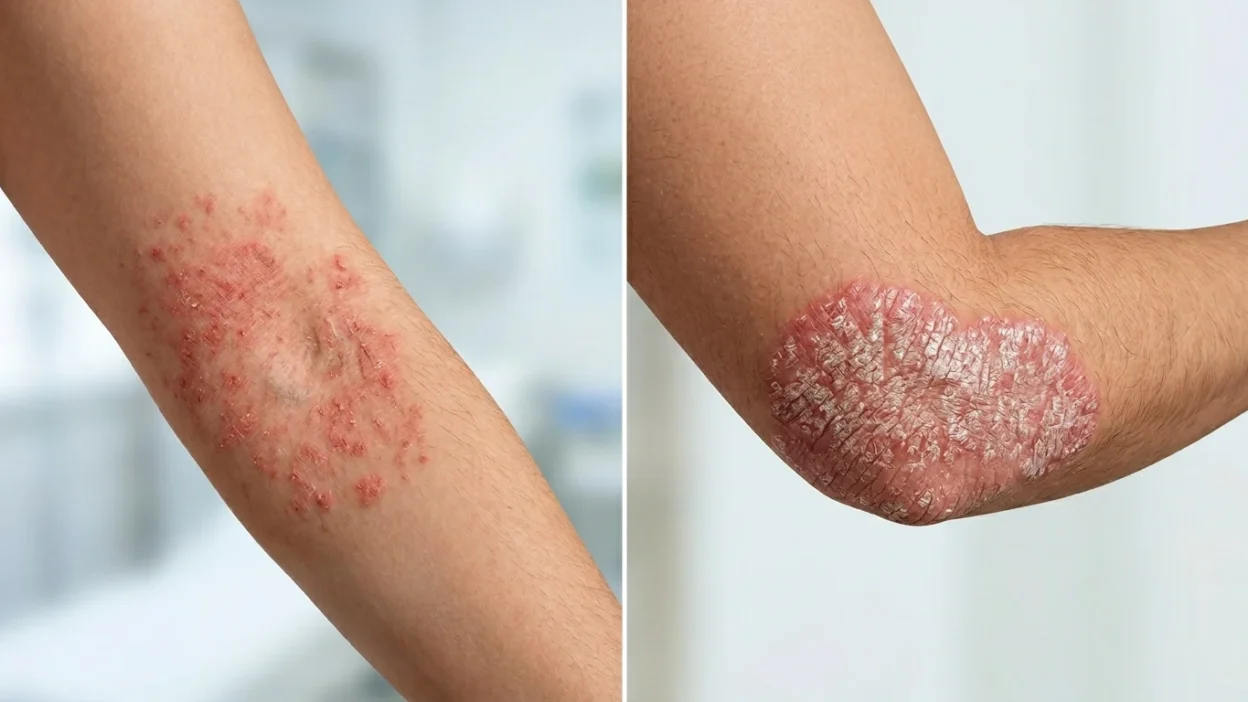
Many people get confused between eczema and psoriasis because both can make the skin red, itchy, dry, or irritated. At first look, they may seem almost the same. But they are actually different skin conditions with different causes, symptoms, and treatments.
If you have ever wondered:
- “Is this eczema or psoriasis?”
- “Why does my skin look flaky?”
- “Why is it itchy and red?”
this guide will help you understand everything in very simple English.
Quick Answer: Eczema vs Psoriasis
Here is the short and simple difference:
Eczema
- Usually causes very itchy skin
- Skin may look dry, cracked, or rough
- Common in children but adults can get it too
- Often linked to allergies or sensitive skin
- Scratching can make it worse
Psoriasis
- Causes thick, scaly patches on the skin
- Skin may look red with silver or white scales
- Happens because skin cells grow too fast
- Often appears on elbows, knees, and scalp
- Can sometimes be painful
What Is Eczema?
Eczema is a skin condition that makes the skin dry, itchy, and irritated. The most common type is called atopic dermatitis.
People with eczema often have very sensitive skin. Things like soap, dust, weather changes, sweat, or certain foods may trigger it.
Common signs of eczema
- Dry skin
- Strong itching
- Red patches
- Cracked skin
- Small bumps
- Skin that feels rough
Eczema can come and go. Some days the skin looks better, and other days it gets worse.
What Is Psoriasis?
Psoriasis is a long term skin condition where skin cells grow too quickly. Because of this, thick patches form on the skin.
These patches are often covered with white or silver scales.
Psoriasis is not contagious. You cannot catch it from another person.
Common signs of psoriasis
- Thick skin patches
- Red areas with scales
- Burning or soreness
- Dry, cracked skin
- Flaky scalp
- Nail changes in some people
Psoriasis may also affect joints in some people. This is called psoriatic arthritis.
Why People Confuse Eczema and Psoriasis
The confusion happens because both conditions can:
- Make the skin red
- Cause itching
- Create dry skin
- Affect the hands, scalp, or legs
- Come and go over time
But when you look closely, the symptoms are different.
Main Difference Between Eczema and Psoriasis
The biggest difference is how the skin looks and feels.
Eczema
Eczema usually feels:
- Very itchy
- Dry
- Soft or rough
The skin may become irritated after scratching.
Psoriasis
Psoriasis usually looks:
- Thick
- Scaly
- More clearly shaped
The patches are often heavier and more noticeable than eczema.
Eczema vs Psoriasis Comparison
| Feature | Eczema | Psoriasis |
| Main symptom | Intense itching | Thick scaly patches |
| Skin texture | Dry and rough | Thick and flaky |
| Color | Red or brownish | Red with silver scales |
| Common age | Often starts in childhood | More common in adults |
| Common places | Hands, face, neck, inside elbows | Elbows, knees, scalp |
| Pain level | Usually itchy | Can itch or hurt |
| Triggered by | Allergies, soaps, stress | Immune system problems |
| Skin appearance | Less defined patches | Clear thick patches |
| Contagious? | No | No |
What Causes Eczema?
Doctors believe eczema happens because of:
- Sensitive skin
- Family history
- Allergies
- Stress
- Dry weather
- Irritating products
Some people notice flare ups after using strong soaps or perfumes.
Common eczema triggers
- Dust
- Pet hair
- Heat
- Sweating
- Certain fabrics
- Stress
What Causes Psoriasis?
Psoriasis is linked to the immune system. The body sends signals that make skin cells grow too fast.
Normally, skin cells grow slowly. In psoriasis, they build up quickly and create thick patches.
Common psoriasis triggers
- Stress
- Skin injuries
- Cold weather
- Smoking
- Some medicines
- Infections
Which One Is More Itchy?
Eczema is usually itchier than psoriasis.
People with eczema often feel a strong need to scratch all the time. This scratching can damage the skin.
Psoriasis can itch too, but many people describe it more as:
- Burning
- Tightness
- Soreness
Where Do They Usually Appear?
Eczema often appears on:
- Hands
- Face
- Neck
- Inside elbows
- Behind knees
Psoriasis often appears on:
- Elbows
- Knees
- Lower back
- Scalp
- Nails
Location can help doctors tell the difference.
Which One Should You Use and When?
People sometimes use the words “eczema” and “psoriasis” as if they mean the same thing. That is incorrect.
Use “eczema” when:
- Talking about itchy, sensitive, dry skin
- Discussing allergic skin reactions
- Referring to atopic dermatitis
Use “psoriasis” when:
- Talking about thick scaly patches
- Discussing fast skin cell growth
- Referring to immune related skin disease
Common Mistakes People Make
Here are mistakes many people make:
1. Thinking they are the same
They are different conditions even if they look similar.
2. Using the wrong creams
A cream that helps eczema may not help psoriasis.
3. Ignoring symptoms
Some people wait too long before seeing a doctor.
4. Scratching too much
Scratching can worsen eczema and damage skin.
5. Believing psoriasis is contagious
It is not contagious at all.
Everyday Real Life Examples
Here are some simple real life examples.
In daily conversation
- “My child has eczema because his skin gets itchy in winter.”
- “My uncle has psoriasis on his elbows.”
On social media
- “This cream helped calm my eczema flare up.”
- “Living with psoriasis can be stressful sometimes.”
In health news
- “Researchers are studying new psoriasis treatments.”
- “Doctors say eczema is common in children.”
In an email
- “I may need a doctor appointment because my eczema is getting worse.”
Simple Treatments for Eczema
Treatment depends on the person, but common options include:
- Moisturizers
- Gentle soaps
- Anti itch creams
- Avoiding triggers
- Wearing soft clothing
Doctors may also suggest special medicines for severe cases.
Simple Treatments for Psoriasis
Common psoriasis treatments include:
- Medicated creams
- Light therapy
- Moisturizers
- Special medicines
- Stress control
Treatment often depends on how serious the condition is.
Learning Section for Students and Beginners
Here is an easy memory trick:
Think of eczema as:
“Dry and itchy sensitive skin.”
Think of psoriasis as:
“Thick scaly skin patches.”
Another easy way to remember:
- Eczema = more itching
- Psoriasis = more scaling
Quick practice
Sentence 1
“My skin feels extremely itchy after using strong soap.”
Most likely: Eczema
Sentence 2
“I have thick silver scales on my elbows.”
Most likely: Psoriasis
FAQ About Eczema and Psoriasis
1. Are eczema and psoriasis the same?
No. They are different skin conditions with different causes and symptoms.
2. Which one itches more?
Eczema usually causes stronger itching.
3. Can children get psoriasis?
Yes, but eczema is more common in children.
4. Is psoriasis contagious?
No. You cannot catch psoriasis from another person.
5. Can stress make them worse?
Yes. Stress can trigger flare ups in both conditions.
6. Can eczema turn into psoriasis?
No. One condition does not turn into the other.
7. Should I see a doctor?
Yes, especially if the skin becomes painful, infected, or very uncomfortable.
8. Can both happen at the same time?
Yes, but it is uncommon. A doctor can help identify the condition correctly.
Final Thoughts
Eczema and psoriasis may look similar at first, but they are different skin conditions.
The easiest way to remember the difference is:
- Eczema is usually more itchy and sensitive.
- Psoriasis usually causes thick, scaly patches.
Understanding the difference can help people choose the right treatment and avoid confusion.
If skin problems continue or become severe, it is always best to speak with a healthcare professional.

Daniel Matthew is a language enthusiast, writer, and contributor at Meanefy.com, where he explores the meanings, origins, and nuances of words and phrases. With a deep passion for language, Daniel aims to make complex concepts simple, engaging, and easy to understand for readers of all ages.