
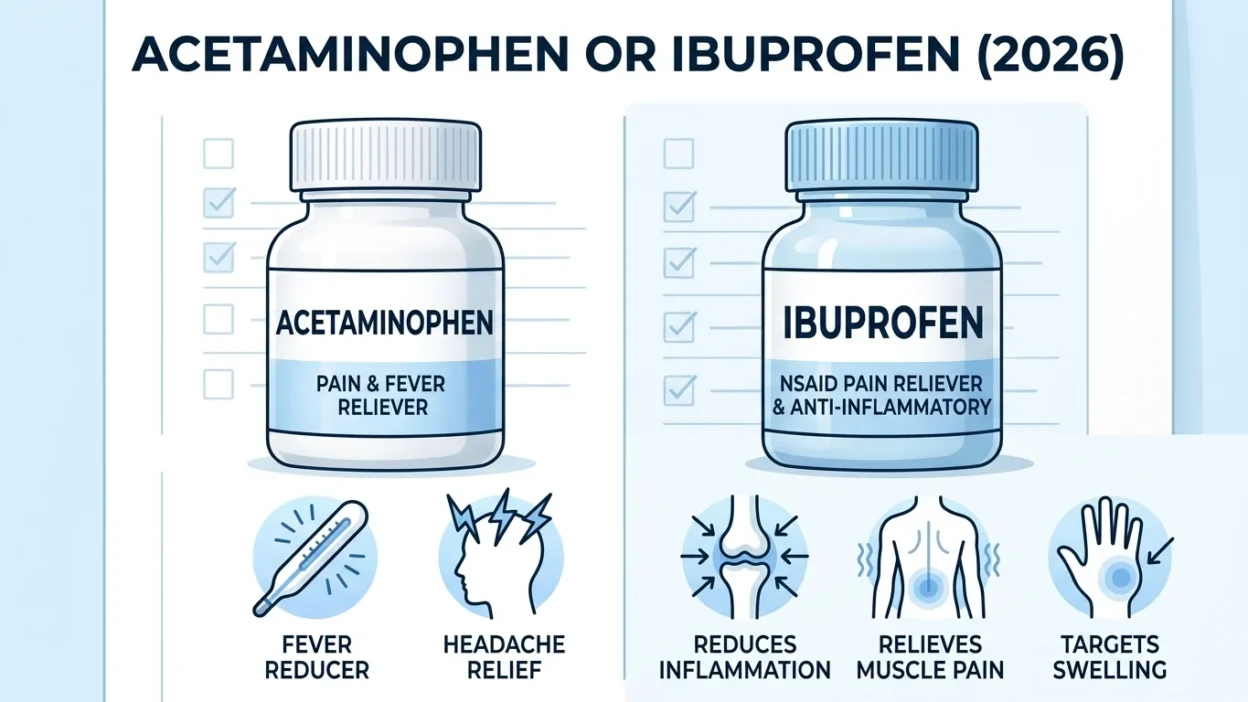
Many people get confused when choosing between acetaminophen and ibuprofen. Both are common medicines used for pain and fever, and both are found in homes, schools, and pharmacies around the world.
Because they seem similar, people often think they work the same way. But they are actually different medicines with different uses, side effects, and safety rules.
This guide explains everything in very simple English so students, beginners, and general readers can understand the difference clearly.
Quick Answer
Here is the short and simple answer:
- Acetaminophen is usually best for:
- Fever
- Headaches
- Mild pain
- People with stomach problems
- Ibuprofen is usually best for:
- Swelling
- Muscle pain
- Tooth pain
- Body aches
- Injuries
- Acetaminophen is gentler on the stomach.
- Ibuprofen can reduce inflammation and swelling.
- Taking too much acetaminophen may hurt the liver.
- Taking too much ibuprofen may hurt the stomach or kidneys.
Simple Background Explanation
Acetaminophen and ibuprofen are both pain relievers, but they belong to different medicine groups.
What Is Acetaminophen?
Acetaminophen is a medicine used to lower fever and reduce pain.
It is often used for:
- Fever
- Headaches
- Back pain
- Minor body pain
- Cold and flu symptoms
In some countries, acetaminophen is also called paracetamol.
What Is Ibuprofen?
Ibuprofen is another medicine for pain and fever, but it also helps reduce swelling and inflammation.
It is often used for:
- Muscle pain
- Sports injuries
- Toothaches
- Menstrual cramps
- Joint pain
Ibuprofen belongs to a group called NSAIDs, which means nonsteroidal anti inflammatory drugs.
The Main Difference Between Acetaminophen and Ibuprofen
The biggest difference is how they work inside the body.
Acetaminophen
Acetaminophen mainly:
- Reduces pain
- Lowers fever
But it does not strongly reduce swelling.
Ibuprofen
Ibuprofen:
- Reduces pain
- Lowers fever
- Reduces swelling and inflammation
This makes ibuprofen more useful for injuries or conditions where swelling is a problem.
For example:
- A fever from a cold → acetaminophen may help
- A swollen ankle after sports → ibuprofen may help more
Easy Comparison
| Feature | Acetaminophen | Ibuprofen |
| Main use | Pain and fever | Pain, fever, and swelling |
| Helps inflammation? | No | Yes |
| Gentler on stomach? | Usually yes | No |
| Risk if used too much | Liver damage | Stomach or kidney problems |
| Good for headaches | Yes | Yes |
| Good for muscle injuries | Sometimes | Usually better |
| Good for arthritis pain | Less helpful | Often more helpful |
| Can irritate stomach | Rarely | More common |
| Often taken with food | Not always needed | Better with food |
Which One Should You Use and When?
The best choice depends on the situation.
Use Acetaminophen When:
You have:
- Fever
- Mild headaches
- Minor pain
- Cold or flu symptoms
- A sensitive stomach
It may also be better for people who cannot take NSAIDs.
Use Ibuprofen When:
You have:
- Swelling
- Muscle pain
- Sports injuries
- Tooth pain
- Joint pain
- Menstrual cramps
Because ibuprofen fights inflammation, it often works better for these problems.
Important Safety Information
Even common medicines can become dangerous if used the wrong way.
Acetaminophen Safety
Too much acetaminophen can seriously harm the liver.
People sometimes accidentally take too much because it is included in:
- Cold medicines
- Flu medicines
- Combination pain medicines
Always check labels carefully.
Ibuprofen Safety
Ibuprofen may irritate:
- The stomach
- The kidneys
Taking it without food may increase stomach discomfort for some people.
People with stomach ulcers or kidney problems should be extra careful and talk to a doctor before using it regularly.
Common Mistakes People Make
1. Thinking They Are Exactly the Same
They are similar, but they work differently.
Ibuprofen fights inflammation. Acetaminophen mainly does not.
2. Taking Too Much
Some people think:
“If one pill helps, more pills will help faster.”
This can be dangerous.
Always follow package directions or a doctor’s advice.
3. Mixing Medicines Without Reading Labels
Many cold and flu medicines already contain acetaminophen.
Taking extra acetaminophen at the same time may lead to overdose.
4. Taking Ibuprofen on an Empty Stomach
This may cause stomach pain or irritation for some people.
5. Using Pain Medicine for Every Small Problem
Sometimes:
- Rest
- Water
- Sleep
- Ice packs
can help without medicine.
Everyday Real Life Examples
Here are some simple examples people may see in daily life.
Example 1: School Situation
A student has a fever before an exam.
The parent may choose acetaminophen to lower the fever and help the student feel better.
Example 2: Sports Injury
Someone twists an ankle while playing football.
Ibuprofen may help because the ankle is swollen.
Example 3: Social Media Post
You may see comments like:
“Ibuprofen helped my tooth pain more.”
This is common because tooth pain often includes inflammation.
Example 4: Daily Conversation
A friend says:
“I can’t take ibuprofen because it hurts my stomach.”
This happens to some people because ibuprofen may irritate the stomach lining.
Example 5: News or Health Advice
Health experts often remind people:
“Read medicine labels carefully.”
This is especially important with acetaminophen because many products contain it.
Simple Learning Section for Students and Beginners
Here is an easy way to remember the difference.
Memory Trick
Acetaminophen
Think:
- A = Ache and fever
Good mainly for:
- Pain
- Fever
Ibuprofen
Think:
- I = Inflammation
Good for:
- Pain
- Fever
- Swelling
Easy Practice Questions
Question 1
Which medicine usually helps swelling more?
Answer: Ibuprofen.
Question 2
Which medicine is usually gentler on the stomach?
Answer: Acetaminophen.
Question 3
Which medicine may hurt the liver if too much is taken?
Answer: Acetaminophen.
Question 4
Which medicine is often used for sports injuries?
Answer: Ibuprofen.
Frequently Asked Questions (FAQ)
Is acetaminophen stronger than ibuprofen?
Not always. It depends on the type of pain.
Ibuprofen may work better for swelling and inflammation.
Can I take acetaminophen and ibuprofen together?
Sometimes doctors allow this, but people should follow medical advice carefully and avoid guessing doses themselves.
Which one is better for fever?
Both can lower fever.
Which one is better for headaches?
Both may help headaches.
Why does ibuprofen upset the stomach?
It can irritate the stomach lining in some people.
Is acetaminophen safer?
It can be safer for the stomach, but taking too much can seriously harm the liver.
Can children take these medicines?
Children can sometimes take special children’s versions, but adults should always follow proper dosing instructions.
Is ibuprofen an antibiotic?
No.
Ibuprofen treats pain, fever, and inflammation. It does not kill bacteria.
Final Thoughts
Acetaminophen and ibuprofen are both useful medicines, but they are not exactly the same.
Acetaminophen is often better for:
- Fever
- Mild pain
- Sensitive stomachs
Ibuprofen is often better for:
- Swelling
- Muscle pain
- Injuries
- Inflammation
The safest choice depends on:
- Your symptoms
- Your health condition
- The correct dosage
Reading labels carefully and using medicine responsibly can help people stay safe and avoid common mistakes.

Anthony Charles is the founder and lead content creator at Meanefy.com, a platform dedicated to exploring word meanings, language nuances, and everyday curiosities. With a passion for language and a keen eye for detail, Anthony aims to make complex words and concepts simple and accessible for readers around the world.