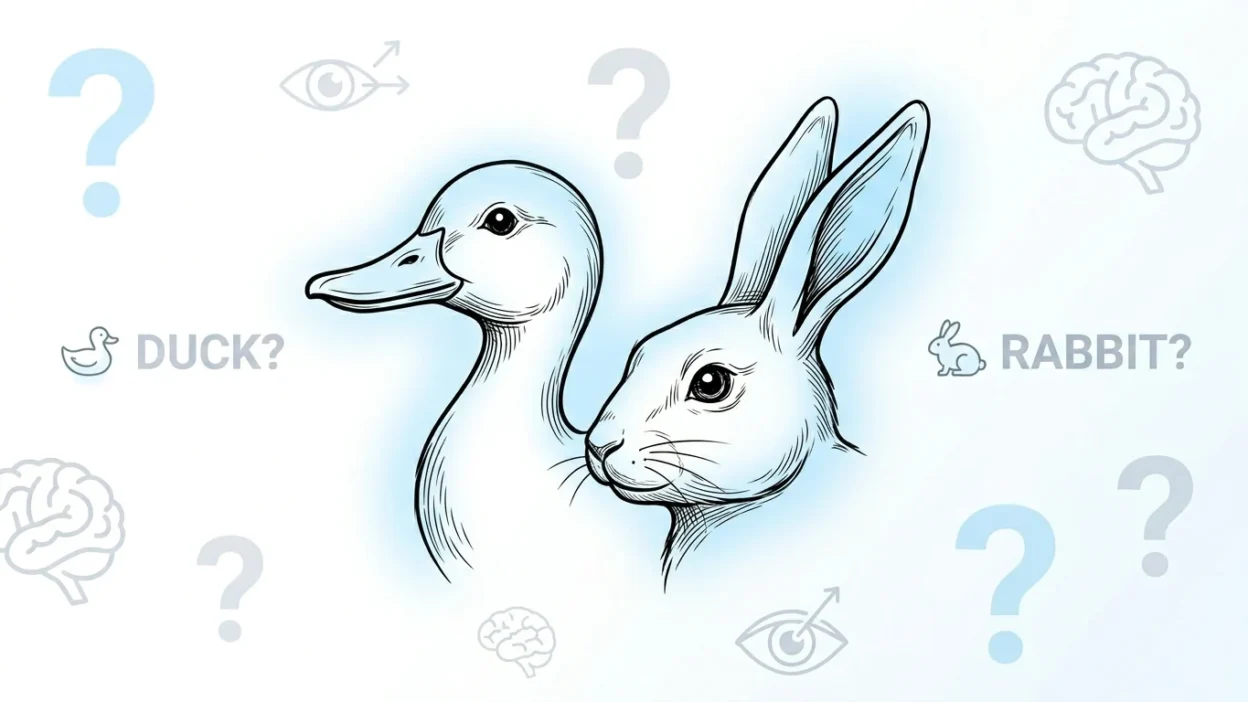
Many people see a picture that looks like a duck and a rabbit at the same time. Some people see a duck first. Others see a rabbit first. This creates confusion because the same image can be understood in two different ways.
The “duck or rabbit” picture is not about choosing the correct animal. Instead, it shows how our brains can look at the same thing and see different meanings.
This visual puzzle is popular in schools, psychology lessons, books, and online discussions because it helps us understand how people think and see the world differently.
Quick Answer
- A duck or rabbit image is a visual illusion.
- The picture can be seen as either a duck or a rabbit.
- Neither answer is wrong.
- The duck’s bill can also look like the rabbit’s ears.
- Different people may see different animals first.
- The image teaches us that one picture can have more than one meaning.
- It is often used to explain perception and how the brain works.
Origin and Background
The duck rabbit image has been known for many years.
It became famous because it is one of the best examples of an optical illusion. An optical illusion is something that makes our eyes and brain understand an image in different ways.
When people look at the drawing, they usually notice one animal first. After a moment, they may suddenly see the second animal.
This experience surprises many people because the picture itself does not change. Only the way the brain interprets it changes.
Because of this, teachers and researchers often use the duck rabbit image to explain how human perception works.
Difference Between Seeing a Duck and Seeing a Rabbit
The image stays exactly the same, but your brain gives it different meanings.
When You See a Duck
If you see a duck:
- The animal appears to face left.
- The long shape looks like a duck’s bill.
- The eye appears near the center of the head.
- The drawing looks like a duck swimming or looking around.
When You See a Rabbit
If you see a rabbit:
- The animal appears to face right.
- The long shape becomes rabbit ears.
- The eye stays in the same place.
- The drawing looks like a rabbit looking ahead.
The Important Point
The drawing never changes.
Only your interpretation changes.
This is why the image is called an ambiguous image. It can be understood in more than one way.
Comparison Table
| Feature | Duck View | Rabbit View |
| Animal Seen | Duck | Rabbit |
| Direction Facing | Left | Right |
| Long Shape | Bill | Ears |
| Eye Position | Same position | Same position |
| Drawing Changes? | No | No |
| Correct Answer | Duck is possible | Rabbit is possible |
| Main Lesson | Different interpretations | Different interpretations |
Which One to Use and When?
The answer depends on what you are talking about.
If You Are Describing What You See First
You can say:
- “I see a duck.”
- “The picture looks like a duck to me.”
If You See the Other Animal
You can say:
- “I see a rabbit.”
- “It looks like a rabbit.”
If You Want to Describe the Whole Image
You can say:
- “It is a duck rabbit illusion.”
- “The image can be seen as both a duck and a rabbit.”
- “It is an optical illusion.”
In School or Learning Situations
Teachers often use the image when discussing:
- Perception
- Visual thinking
- Psychology
- Different viewpoints
- Problem solving
Common Mistakes People Make
Thinking One Answer Is Correct
Many people believe there must be only one correct animal.
In reality, both interpretations are valid.
Assuming Everyone Sees the Same Thing
Not everyone sees the same animal first.
Some people immediately see a duck, while others immediately see a rabbit.
Believing the Picture Changes
The picture itself never changes.
The brain changes how it understands the image.
Getting Frustrated
Some people cannot see the second animal right away.
This is normal. It often takes a little time before the brain notices the other interpretation.
Missing the Main Lesson
The goal is not to find the “right” animal.
The goal is to understand that one image can have multiple meanings.
Everyday Real Life Examples
Emails
A message in an email can sometimes be understood in different ways.
For example:
- One person thinks the writer sounds serious.
- Another person thinks the writer sounds friendly.
Just like the duck rabbit image, people may interpret the same thing differently.
News
Two readers may look at the same news story and focus on different details.
This shows how people can see the same information from different viewpoints.
Social Media
A photo or post online may have different meanings for different people.
Some users notice one detail first, while others notice something completely different.
Daily Conversations
When people talk, they sometimes understand words differently.
This can create confusion even when everyone hears the same sentence.
The duck rabbit image reminds us that different interpretations are common in everyday life.
Learning Section for Students and Beginners
What Is Perception?
Perception is the way we understand what we see, hear, and experience.
Our eyes collect information, but the brain decides what that information means.
Why Is the Duck Rabbit Important?
The image teaches us that:
- People can have different viewpoints.
- First impressions are not always complete.
- Looking again may reveal something new.
- The brain actively interprets information.
Easy Practice Activity
Try these steps:
- Look at the image and identify the animal you see first.
- Keep looking for a few seconds.
- Try to find the second animal.
- Ask a friend what they see first.
- Compare your answers.
This simple activity shows how perception can differ from person to person.
Key Lesson
Seeing something differently does not always mean someone is wrong.
Sometimes people are simply looking at the same thing from another perspective.
FAQ
What is the duck or rabbit image?
It is a famous optical illusion that can be seen as either a duck or a rabbit.
Is the image a duck or a rabbit?
It can be both. The drawing allows two different interpretations.
Why do I only see a duck?
Your brain may naturally notice the duck interpretation first. With time, you may also see the rabbit.
Why do some people see a rabbit first?
People notice different visual patterns. This can affect which animal they see first.
Is one answer correct and the other wrong?
No. Both interpretations are accepted.
What does the illusion teach us?
It teaches that people can understand the same thing in different ways.
Is the duck rabbit image used in education?
Yes. Teachers often use it to explain perception, observation, and different viewpoints.
Can children understand this illusion?
Yes. It is simple enough for children and useful for learning about how the brain works.
Conclusion
The duck or rabbit image is one of the most famous visual illusions in the world. It looks simple, but it teaches an important lesson. The same picture can be seen in two different ways, and both interpretations are correct.
When some people see a duck and others see a rabbit, it reminds us that our brains do not always interpret information in the same way. This makes the duck rabbit illusion a helpful tool for learning about perception, observation, and open minded thinking.
The next time you look at the image, remember that the drawing never changes only the way you see it does.

Daniel Matthew is a language enthusiast, writer, and contributor at Meanefy.com, where he explores the meanings, origins, and nuances of words and phrases. With a deep passion for language, Daniel aims to make complex concepts simple, engaging, and easy to understand for readers of all ages.