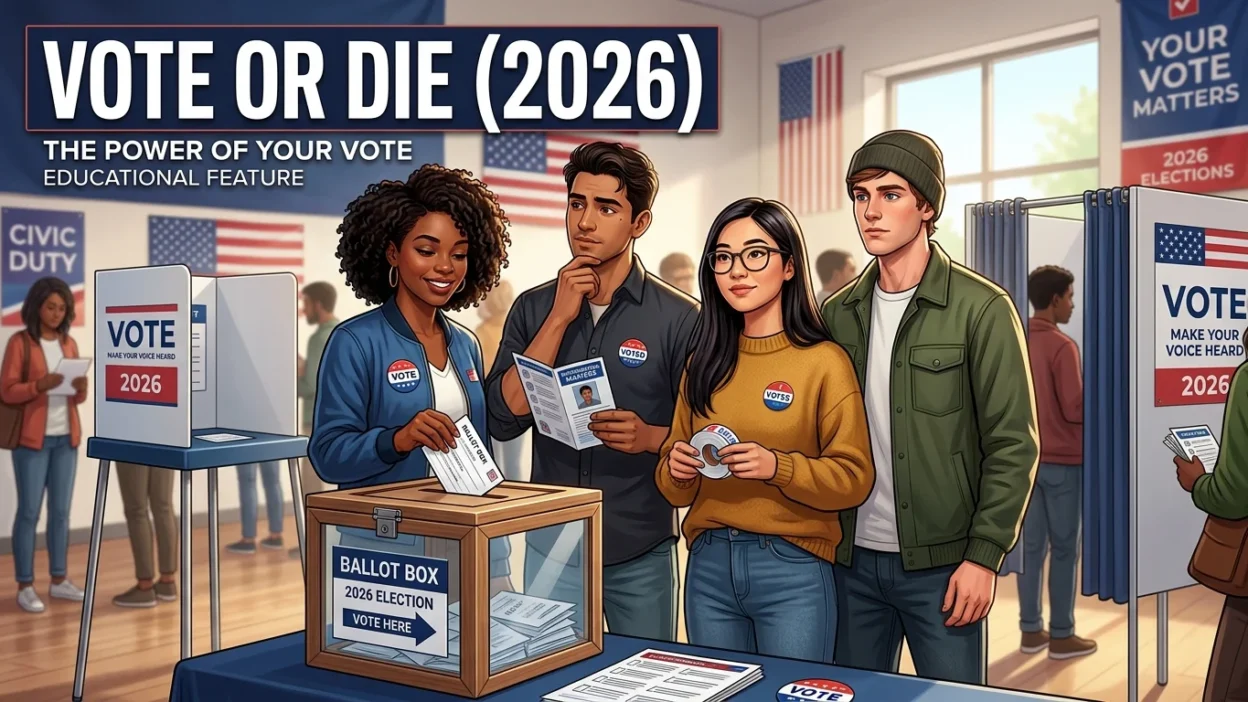
Many people hear the phrase “vote or die” and feel confused. Some think it is a real threat. Others think it is just a political slogan. Students, English learners, and general readers often wonder what the phrase truly means and when people use it.
The confusion happens because the words sound very strong and serious. In normal English, “or die” sounds extreme. But in many situations, the phrase is not meant literally.
This article explains the meaning of “vote or die” in very simple English. You will learn where the phrase came from, why people say it, how it is used today, and what mistakes people should avoid.
Quick Answer
- “Vote or die” is a political slogan.
- It strongly encourages people to vote in elections.
- Most people do not mean it literally.
- The phrase uses dramatic language to get attention.
- It became very popular in the early 2000s.
- Some people think it is motivating.
- Others think it sounds too aggressive or extreme.
What Does “Vote or Die” Mean?
“Vote or die” means:
“Voting is extremely important, so you should not ignore it.”
The phrase is usually used to push people to take part in elections. It tells citizens that voting matters and that their choices can affect the future.
The phrase does not usually mean that someone will actually die if they do not vote.
Instead, it uses emotional and dramatic language to create urgency.
For example:
- “Healthcare could change.”
- “Education could change.”
- “Jobs and prices could change.”
People who use the slogan want others to understand that elections can affect everyday life.
The Origin and Background of “Vote or Die”
The phrase became famous in the United States during the 2004 presidential election.
Music producer and businessman Sean Combs helped create a campaign called “Vote or Die!” The campaign encouraged young people to vote.
Celebrities wore shirts with the slogan. It appeared on television, in music culture, and on social media like platforms of that time.
The goal was simple:
- Get more young adults interested in politics
- Increase voter participation
- Make voting seem important and urgent
Because the phrase was bold and dramatic, many people remembered it.
Over time, “vote or die” became part of popular culture. Some people still use it seriously, while others use it jokingly or sarcastically online.
Why the Phrase Sounds So Strong
The phrase uses exaggeration.
Exaggeration means making something sound bigger or more serious than it really is.
For example:
- “I’m starving!” usually means “I’m very hungry.”
- “This homework is killing me!” means “This homework is difficult.”
In the same way, “vote or die” usually means:
“Voting is extremely important.”
The phrase tries to create emotional energy and urgency.
Some people like this style because it gets attention quickly.
Others dislike it because they feel politics should use calmer language.
Difference Between Literal Meaning and Intended Meaning
This is one of the biggest areas of confusion.
Literal Meaning
If you read the words exactly as written, the phrase sounds like:
“If you do not vote, you will die.”
This is the literal meaning.
Intended Meaning
The intended meaning is different:
“Voting is very important for society and your future.”
Most people understand the slogan this way.
Comparison
| Part | Literal Meaning | Intended Meaning |
| Vote | Take part in an election | Same |
| Or die | Actual death | Strong emotional warning |
| Tone | Threatening | Dramatic and motivational |
| Purpose | Fear | Encourage participation |
| Common use | Rare | Very common |
Is “Vote or Die” Offensive?
Different people react differently.
Some people think it is helpful because:
- It gets attention
- It sounds powerful
- It motivates younger voters
- It makes elections feel important
Other people dislike it because:
- It sounds too aggressive
- It can feel disrespectful
- It may scare or confuse children
- It oversimplifies politics
Because of this, the phrase can sometimes create debate.
Which One Should You Use and When?
You may wonder whether you should use the phrase yourself.
Good situations to use it
- Talking about political slogans
- Discussing election campaigns
- Explaining popular culture
- Casual conversation about voting
- Social media jokes or memes
Situations where you should be careful
- Formal school writing
- Academic essays
- Professional emails
- Serious political discussions
- Conversations with people who may misunderstand it
In formal writing, it is usually better to say:
- “Voting is important.”
- “People should participate in elections.”
- “Citizens should vote.”
These versions sound calmer and more professional.
Common Mistakes People Make
1. Thinking the phrase is literal
The biggest mistake is believing it is a real threat.
Most of the time, it is simply dramatic language.
2. Using it in formal situations
Some students write “vote or die” in school essays without explanation.
Teachers may think the phrase sounds too informal or emotional.
3. Using it without understanding the context
Some people repeat the phrase because they heard it online, but they do not know its history or meaning.
It is always better to understand a slogan before using it.
4. Assuming everyone likes the phrase
Not everyone enjoys dramatic political language.
Some people prefer respectful and calm discussion.
Everyday Real Life Examples
Here are simple examples of how people use the phrase in daily life.
Social Media Example
“Election day is tomorrow. Vote or die!”
Meaning:
The person wants others to remember voting is important.
News Discussion Example
“The old ‘vote or die’ slogan became popular again online.”
Meaning:
People are talking about the famous political phrase.
Friendly Conversation Example
“Come on, vote or die!”
Meaning:
A joking or energetic reminder to vote.
College Event Example
“The student group created a ‘vote or die’ poster campaign.”
Meaning:
The group wants students to participate in elections.
Online Meme Example
Sometimes people use the phrase humorously:
“Vote for pizza night… vote or die.”
In this case, it is clearly a joke.
How the Phrase Changed Over Time
In the beginning, the slogan was mostly connected to political campaigns.
Today, people also use it:
- In memes
- In jokes
- In internet culture
- In casual conversations
Because of this, the phrase can sound serious or funny depending on the situation.
Tone matters a lot.
Learning Section for Students and Beginners
Here are simple tips to help learners understand and remember the phrase.
Easy Memory Trick
Think of the phrase like this:
“Vote because it really matters.”
That is the core meaning.
Vocabulary Help
| Word | Simple Meaning |
| Vote | Choose a leader or decision in an election |
| Slogan | A short phrase people remember easily |
| Literal | Exact meaning of words |
| Dramatic | Emotional or exaggerated |
| Campaign | Organized effort to support something |
Beginner English Tip
English speakers often use dramatic phrases that are not literal.
Examples:
- “I’m dying of laughter.”
- “This bag weighs a ton.”
- “I could sleep forever.”
These expressions are common in casual English.
“Vote or die” works the same way.
FAQ Section
1. Does “vote or die” mean actual death?
No. Usually it is not literal. It is dramatic language meant to encourage voting.
2. Who made the phrase famous?
The slogan became famous during a voting campaign connected to Sean Combs in the early 2000s.
3. Is “vote or die” a joke?
Sometimes yes. Some people use it seriously, while others use it humorously online.
4. Is the phrase rude?
Some people think it sounds too aggressive, while others think it is motivating.
5. Can students use this phrase in essays?
It is usually better to use calmer language in formal school writing unless you are discussing the slogan itself.
6. Why do political slogans use dramatic language?
Dramatic language gets attention quickly and helps people remember the message.
7. Is the phrase still popular today?
Yes. People still use it in politics, social media, memes, and online discussions.
8. What is a simpler way to say “vote or die”?
You can say:
- “Voting is important.”
- “Please vote.”
- “Every vote matters.”
Conclusion
“Vote or die” is a famous political slogan that uses strong and dramatic language to encourage people to vote. Although the words sound serious, the phrase is usually not meant literally.
The slogan became popular because it was memorable, emotional, and attention grabbing. Over time, it moved from political campaigns into everyday culture, social media, and internet jokes.
For students and English learners, the most important thing to remember is this:
The phrase really means that voting matters and people should participate in elections.
Understanding the difference between literal meaning and intended meaning helps remove confusion and makes the phrase much easier to understand.

Anthony Charles is the founder and lead content creator at Meanefy.com, a platform dedicated to exploring word meanings, language nuances, and everyday curiosities. With a passion for language and a keen eye for detail, Anthony aims to make complex words and concepts simple and accessible for readers around the world.