Many learners feel confused when they see words like “set” and “setted.” English verbs often change form in the past, so it feels natural to think that “setted” might be correct. For example, we say “worked,” “played,” and “walked,” so why not “setted”?
But English does not always follow one simple pattern. Some verbs are irregular, and “set” is one of them. This article will help you understand the difference in a very easy way, so you never feel confused again.
Quick Answer
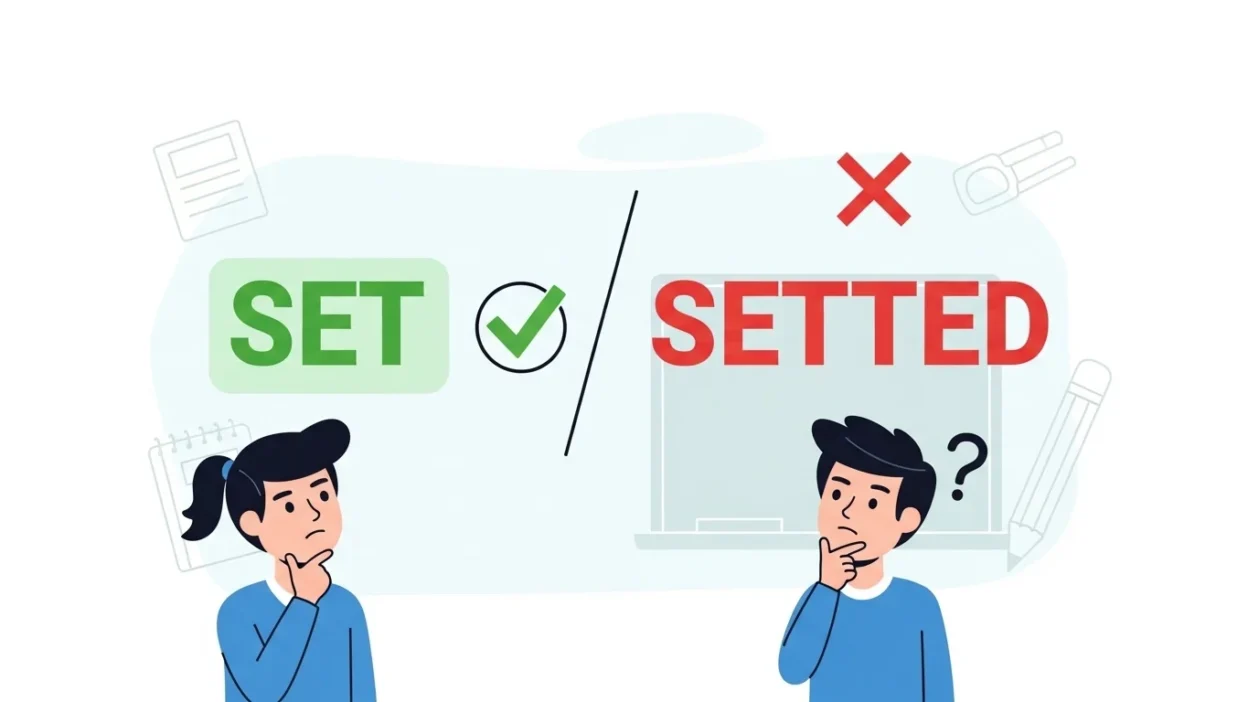
- “Set” is correct in all forms (present, past, and past participle)
- “Setted” is incorrect in standard English
- Always use “set”, no matter the time
Examples:
- I set the alarm yesterday ✅
- I have set the table ✅
- I setted the alarm ❌
Simple origin and background
In English, verbs can be divided into two main groups:
- Regular verbs: add “-ed” in the past (like “play → played”)
- Irregular verbs: change in a different way (like “go → went”)
The verb “set” is an irregular verb, but it is very simple because it does not change at all.
Here are its forms:
- Present: set
- Past: set
- Past participle: set
This is why “setted” does not exist in correct English.
Clear explanation of the difference
Let’s make it very simple:
What is “set”?
“Set” means to:
- put something in a place
- fix something
- arrange something
- adjust something (like time or settings)
Example:
- She set the book on the table.
What is “setted”?
“Setted” is not a real word in standard English. It is a mistake.
People sometimes create it because they think:
- every verb needs “-ed” in the past
But this rule does not work for irregular verbs like “set.”
Easy comparison
| Form | Correct word | Example sentence |
| Present | set | I set the clock every day |
| Past | set | I set the clock yesterday |
| Past participle | set | I have set the clock |
| Incorrect form | setted ❌ | I setted the clock |
Which one to use and when
You should always use “set” in every situation.
Present time
- I set my goals every month
- They set the rules
Past time
- I set the alarm last night
- She set the table before dinner
With “have/has/had”
- I have set everything
- He has set the system
- They had set the meeting time
No matter the tense, the word stays the same.
Common mistakes people make
Here are some common errors and why they happen:
Using “setted” because of regular verb rules
❌ I setted the timer
✔ I set the timer
People think all verbs follow the “-ed” rule, but “set” does not.
Confusing with similar verbs
Some verbs look similar but behave differently:
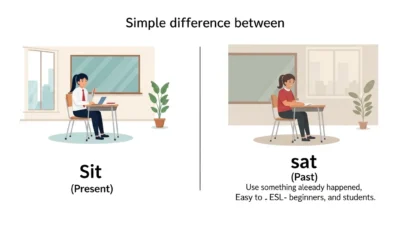
- “Sit” → “sat”
- “Set” → “set”
❌ I sat the table
✔ I set the table
Overthinking grammar
Some learners try to make English more “logical” than it really is. But English has many irregular verbs that must be memorized.
Everyday Real Life Examples
In emails
- I have set the meeting for Monday
- The team has set new goals
In daily conversation
- I set my phone to silent
- She set the food on the table
On social media
- Just set my new workout plan!
- I set a new personal record today
In news or formal writing
- The company set a new standard
- The government has set new rules
At home
- Please set the table
- I already set the alarm
Learning section for students and beginners
Here is an easy way to remember:
Simple rule:
👉 “Set” never changes
Repeat this sentence:
- Today I set
- Yesterday I set
- I have set
Practice sentences
Fill in the blanks:
- I ______ the clock yesterday
- She has ______ the rules
- They ______ the chairs before guests arrived
Answers:
- set
- set
- set
Memory tip
Think of it like this:
👉 “Set is always set”
This small sentence can help you remember forever.
FAQ section
Is “setted” ever correct?
No. “Setted” is not correct in standard English.
Why does “set” not change?
Because it is an irregular verb, and its form stays the same in all tenses.
Is “set” used for past tense?
Yes. “Set” is used for present, past, and past participle.
Can I use “setted” in informal speech?
No. Even in casual speech, it sounds incorrect.
How do I know if a verb is irregular?
You need to learn and remember common irregular verbs. “Set” is one of the easiest because it never changes.
Is “set” the same as “put”?
They are similar, but not always the same.
- “Put” means place something
- “Set” can mean arrange, fix, or prepare something
What is an example of “set” in past tense?
- I set the alarm last night
Why do learners make this mistake?
Because many verbs add “-ed” in the past, and learners try to apply that rule to all verbs.
Conclusion
The confusion between “set” and “setted” is very common, especially for learners. But the answer is simple:
- “Set” is always correct
- “Setted” is always wrong
Remember one easy rule:
👉 The verb “set” never changes
With a little practice, this will become natural for you. Keep using “set” in your speaking and writing, and you will feel more confident every day.

Anthony Charles is the founder and lead content creator at Meanefy.com, a platform dedicated to exploring word meanings, language nuances, and everyday curiosities. With a passion for language and a keen eye for detail, Anthony aims to make complex words and concepts simple and accessible for readers around the world.