
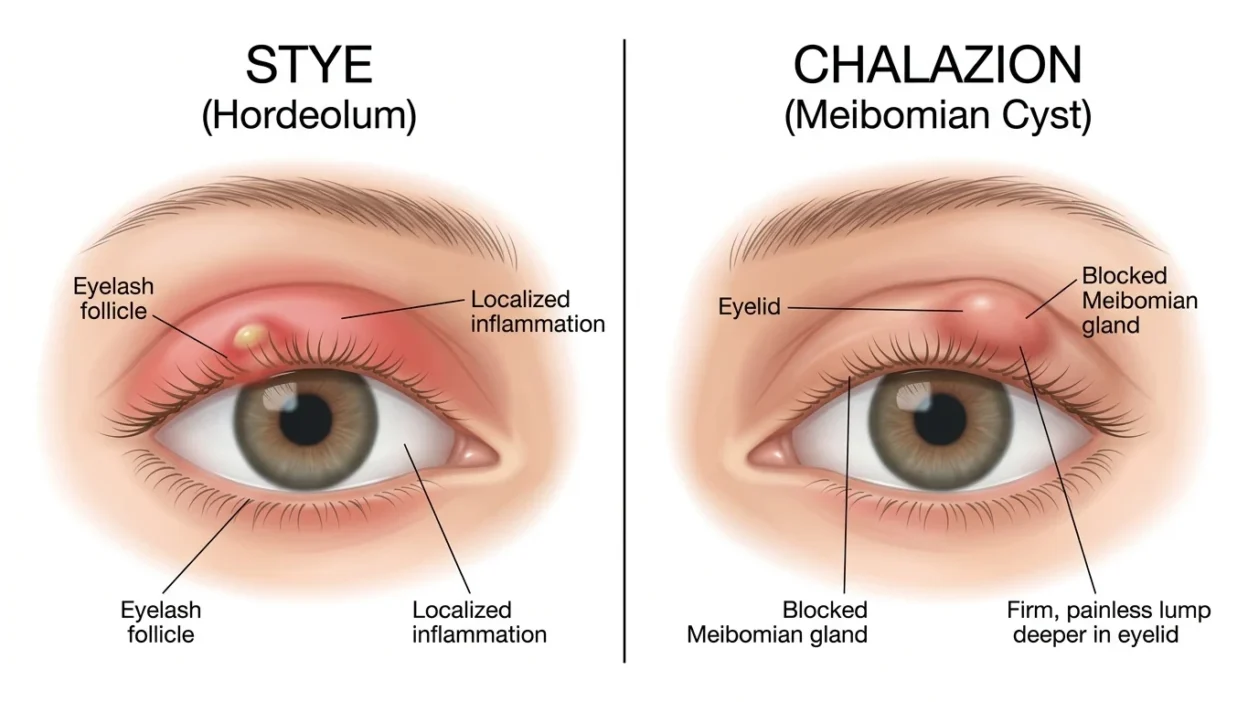
Many people notice a small lump or swelling on their eyelid and immediately wonder whether it is a stye or a chalazion. Both conditions affect the eyelid, both can cause a bump, and both may look very similar at first.
Because they share many signs, it is easy to mix them up. However, they are not exactly the same. A stye is usually linked to an infection, while a chalazion is often caused by a blocked oil gland.
Understanding the difference can help you know what is happening with your eye and when it may be a good idea to seek medical advice.
Quick Answer
- A stye is usually a painful red bump caused by an infection.
- A chalazion is usually a painless lump caused by a blocked oil gland.
- Styes often appear quickly.
- Chalazia (the plural of chalazion) usually develop more slowly.
- A stye may feel sore and tender.
- A chalazion often feels firm but not painful.
- Warm compresses may help both conditions.
- If the lump does not improve or affects vision, medical care may be needed.
Simple Origin or Background Explanation
Your eyelids contain tiny oil glands. These glands help keep your eyes moist and comfortable.
Sometimes one of these glands becomes blocked. When that happens, oil can build up inside the gland and form a lump. This lump is called a chalazion.
A stye develops differently. It usually happens when bacteria infect an eyelid gland or eyelash follicle. The infection causes redness, swelling, and pain.
Although both conditions involve the eyelid glands, the main difference is that a stye is commonly linked to infection, while a chalazion is usually linked to blockage.
Clear Explanation of the Difference
What Is a Stye?
A stye is a small, painful bump that appears on the eyelid.
Common signs include:
- Redness
- Swelling
- Pain or tenderness
- A pimple like appearance
- Watering of the eye
A stye may form near the edge of the eyelid where eyelashes grow. It can appear suddenly and become uncomfortable within a short time.
What Is a Chalazion?
A chalazion is a lump that forms when an oil gland becomes blocked.
Common signs include:
- A firm lump in the eyelid
- Little or no pain
- Mild swelling
- Slow development over days or weeks
A chalazion may start small and gradually become more noticeable. It is often less red and less painful than a stye.
The Main Difference
The easiest way to remember the difference is:
- Stye = Infection + Pain
- Chalazion = Blocked Gland + Usually No Pain
Comparison Table
| Feature | Stye | Chalazion |
| Cause | Infection | Blocked oil gland |
| Pain | Usually painful | Usually painless |
| Redness | Common | Less common |
| Speed of appearance | Often quick | Usually slow |
| Location | Often near eyelash line | Often deeper in eyelid |
| Tender to touch | Usually yes | Usually no |
| Warm compress helpful | Yes | Yes |
| May go away on its own | Often | Often |
Which One to Use and When
When You Might Have a Stye
You may have a stye if:
- The bump hurts
- The eyelid looks red
- Swelling appeared quickly
- The area feels tender
- It looks like a small pimple
When You Might Have a Chalazion
You may have a chalazion if:
- The lump is not painful
- It developed slowly
- The bump feels firm
- Redness is minimal
- The lump remains for several weeks
Important Note
Only a healthcare professional can make a definite diagnosis. If you are unsure, have severe symptoms, or notice changes in vision, seek medical advice.
Common Mistakes People Make
Assuming Every Eyelid Lump Is a Stye
Many people call any eyelid bump a stye. In reality, some bumps are chalazia.
Ignoring Long Lasting Lumps
A chalazion may remain for weeks or even longer. Some people ignore it because it does not hurt.
Squeezing the Lump
Trying to pop or squeeze a stye or chalazion can irritate the area and may make the problem worse.
Touching the Eye Frequently
Touching the eyelid with unclean hands can increase irritation and may spread bacteria.
Stopping Care Too Early
Warm compresses often need time to work. Some people stop after only a day or two and expect immediate results.
Everyday Real Life Examples
Emails
Correct Example:
“I have a painful red bump on my eyelid that looks like a stye.”
Another Example:
“The doctor said the lump was a chalazion, not a stye.”
News
Example Headline:
“Doctors Explain the Difference Between a Stye and a Chalazion”
Social Media
Example Post:
“I thought I had a stye, but it turned out to be a chalazion.”
Daily Conversations
Example One:
“My eyelid hurts, and I think I have a stye.”
Example Two:
“The lump doesn’t hurt anymore. It may be a chalazion.”
School or Student Use
Example Sentence:
“A stye is usually painful, while a chalazion is often painless.”
Short Learning Section for Students and Beginners
Easy Memory Trick
Remember this simple phrase:
Stye = Sore
Both words begin with the letter S, making it easier to remember that styes are usually painful.
Another Easy Memory Trick
Think of a chalazion as a clogged gland.
The gland gets blocked, creating a lump without the infection that commonly causes the pain of a stye.
Quick Review
- Painful bump? Think stye.
- Painless lump? Think chalazion.
- Fast appearance? More likely a stye.
- Slow appearance? More likely a chalazion.
FAQ
Is a stye the same as a chalazion?
No. A stye is usually related to an infection, while a chalazion is usually caused by a blocked oil gland.
Which one hurts more?
A stye is generally more painful than a chalazion.
Can a stye turn into a chalazion?
Yes. In some cases, after the infection improves, a blocked gland may remain and form a chalazion.
Can a chalazion go away by itself?
Yes. Many chalazia improve over time, especially with warm compresses.
Should I squeeze a stye or chalazion?
No. Squeezing can irritate the eyelid and may worsen the problem.
Can I wear makeup with a stye or chalazion?
It is usually best to avoid eye makeup until the eyelid has healed to prevent further irritation.
When should I see a doctor?
Seek medical care if the lump becomes very painful, affects vision, keeps returning, or does not improve after several weeks.
Are styes and chalazia contagious?
A chalazion is not contagious. A stye itself is not usually spread from person to person, but good hygiene is important because bacteria may be involved.
Conclusion
A stye and a chalazion can look similar, which is why many people confuse them. The biggest difference is that a stye is usually a painful bump caused by an infection, while a chalazion is usually a painless lump caused by a blocked oil gland.
Knowing these differences makes it easier to understand what may be happening with your eyelid. If symptoms become severe, last a long time, or affect your vision, it is important to seek professional medical advice. In many cases, however, both conditions improve with proper care and patience.

Steven Mark is a writer, researcher, and contributor at Meanefy.com, a platform dedicated to exploring word meanings, language nuances, and everyday linguistic curiosities. With a passion for words and clear communication, Steven focuses on making language simple, engaging, and accessible to all readers.