Many learners feel confused when they see the words “burst” and “bursted.” They look very similar, and both seem like they could be correct.
This confusion happens because most English verbs change in the past tense by adding ed (like walk → walked or jump → jumped). So it feels natural to think burst → bursted.
But English has some special verbs that do not follow this rule. These verbs can surprise learners.
This article will explain everything in a very simple way so you can understand it clearly the first time.
Quick Answer
- “Burst” is correct (present, past, and past participle)
- “Bursted” is not standard English
- You should always use “burst” for all forms
Examples:
- Present: The balloon bursts
- Past: The balloon burst
- Perfect: The balloon has burst
Simple Background Explanation
English verbs usually follow patterns. Most verbs add ed for the past tense:
- talk → talked
- play → played
- open → opened
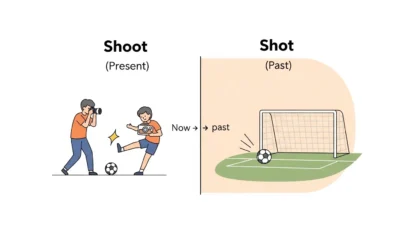
But some verbs are irregular verbs. These verbs do not follow the normal rule.
Examples of irregular verbs:
- go → went
- eat → ate
- cut → cut
- put → put
- burst → burst
Notice something special:
Some verbs do not change at all. Their present, past, and past participle forms are the same. These are called unchanging verbs.
“Burst” is one of these verbs.
Clear Explanation of the Difference
Now let’s answer the main question:
Is “bursted” correct?
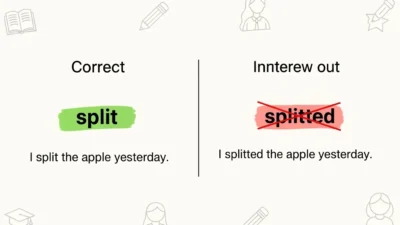
No. “Bursted” is not correct in modern standard English.
Why do people say “bursted”?
People say it because they apply the normal rule:
- Verb + ed = past
So they think:
- burst → bursted
This is a natural mistake, especially for beginners.
What is correct?
The correct form is always:
- burst
Even in the past, you still say “burst.”
Simple Example
❌ Incorrect: The pipe bursted last night.
✅ Correct: The pipe burst last night.
Comparison
| Form | Correct Word | Example Sentence |
| Base form | burst | Be careful or the balloon will burst |
| Past tense | burst | The balloon burst suddenly |
| Past participle | burst | The balloon has burst |
| Incorrect form | bursted ❌ | Not used in standard English |
Which One to Use and When
You should always use “burst” in every situation.
Use “burst” for present:
- The bubble bursts quickly.
Use “burst” for past:
- The bubble burst quickly.
Use “burst” with helping verbs:
- The bubble has burst.
- The bubble had burst.
Simple rule to remember:
👉 If you are thinking of using “bursted,” stop and use “burst” instead.
Common Mistakes People Make
Adding “ ed” automatically
Many learners think every verb needs ed in the past.
❌ The tire bursted.
✅ The tire burst.
Confusing with similar verbs
Some verbs do change:
- start → started
- push → pushed
But “burst” does not follow this pattern.
Overthinking grammar
Sometimes learners think:
“This sounds too simple. Maybe I need ‘bursted’ to sound correct.”
But English is often simple:
👉 Short is correct here: just “burst.”
Using “bursted” in writing
In informal speech, some people might say “bursted,” but it is still not correct.
In school, exams, emails, or formal writing:
👉 Always use “burst.”
Everyday Real Life Examples
Let’s look at how “burst” is used in daily life.
In emails
- The water pipe burst in the office yesterday.
- One of the balloons burst during the event.
In news
- A gas line burst, causing a fire.
- The dam almost burst after heavy rain.
On social media
- My tire burst on the way home 😩
- The popcorn bag burst in the microwave 😂
In daily conversation
- My balloon burst!
- The bag suddenly burst open.
- The child burst into tears.
👉 Notice: “burst” is used everywhere, never “bursted.”
Short Learning Section for Students
Here is a simple way to learn and remember:
Step 1: Memorize this
“Burst never changes.”
Step 2: Practice with sentences
Fill in the blank:
- The balloon ______.
Answer: burst - The balloon has ______.
Answer: burst - The balloon will ______.
Answer: burst
Step 3: Compare with other similar verbs
| Verb | Past |
| cut | cut |
| put | put |
| hit | hit |
| burst | burst |
👉 These verbs are easy because they never change.
Step 4: Say it out loud
Repeat:
- burst, burst, burst
This helps your brain remember faster.
FAQ Section
Is “bursted” ever correct?
No. “Bursted” is not correct in standard English. Always use “burst.”
Why doesn’t “burst” change in the past?
Because it is an irregular verb. Some verbs stay the same in all forms.
Is “burst” both present and past?
Yes. The word “burst” is used for present, past, and past participle.
How do I know if a verb is irregular?
You usually learn it through practice and reading. There is no simple rule for all irregular verbs.
Can I use “bursted” in casual speech?
Some people might say it, but it is still incorrect. It is better to avoid it.
What is the past participle of “burst”?
It is also “burst.”
Example:
- The pipe has burst.
Is “bursting” correct?
Yes. “Bursting” is the present continuous form.
Example:
- The balloon is bursting.
What does “burst into” mean?
It means something happens suddenly.
Examples:
- She burst into laughter.
- He burst into tears.
Conclusion
The confusion between “burst” and “bursted” is very common, especially for learners. It happens because many English verbs follow the ed rule, but not all of them.
Here is the simple truth:
- “Burst” is always correct
- “Bursted” is incorrect
The word “burst” does not change, no matter the tense. Once you remember this, you will never feel confused again.
Keep practicing with simple sentences, and soon it will feel natural.

Daniel Matthew is a language enthusiast, writer, and contributor at Meanefy.com, where he explores the meanings, origins, and nuances of words and phrases. With a deep passion for language, Daniel aims to make complex concepts simple, engaging, and easy to understand for readers of all ages.