
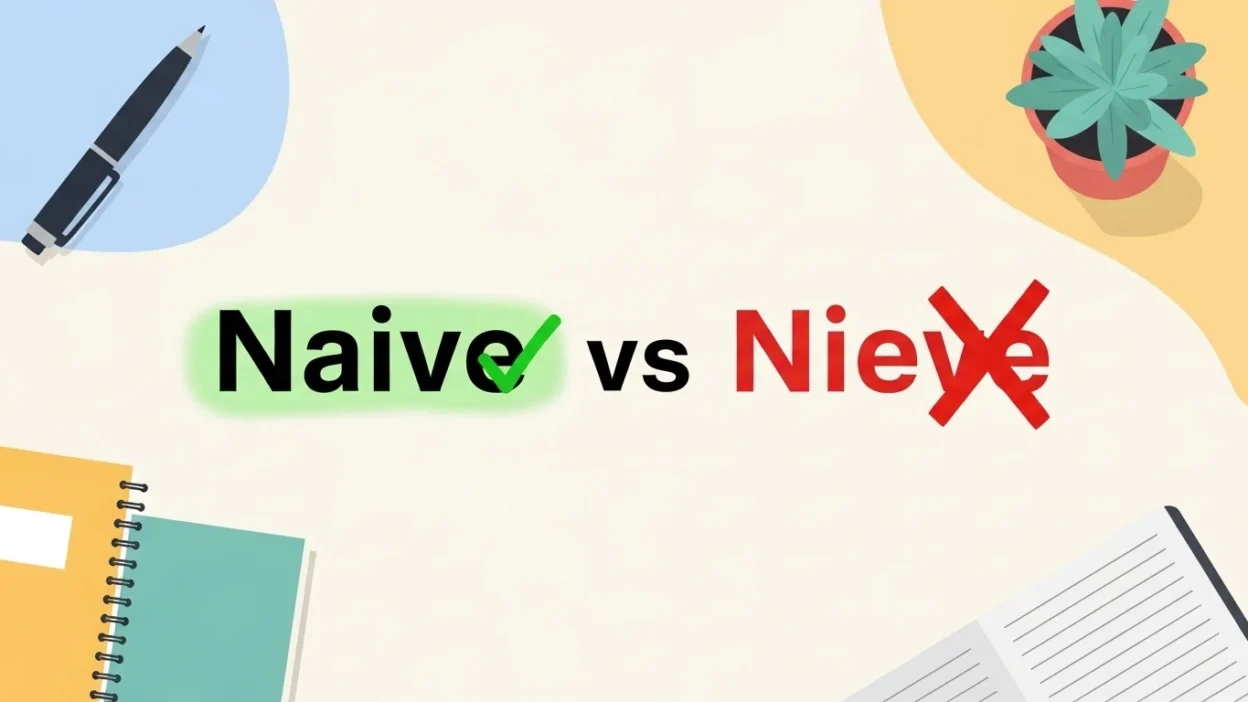
Many learners and even native speakers feel confused when they see the words “naive” and “nieve.” They look very similar, and both seem like they could be correct.
This confusion often happens because English spelling is not always easy, and some words come from other languages.
If you have ever wondered which one is right, you are not alone. The good news is that the answer is simple.
By the end of this article, you will fully understand the difference and never feel unsure again.
Quick Answer
- ✅ Naive = Correct spelling in English
- ❌ Nieve = Incorrect spelling (not an English word)
- 📌 Meaning of naive: someone who is too trusting or lacks experience
- 📌 Use naive in all writing (school, emails, exams, etc.)
Simple Origin and Background
The word naive comes from the French word “naïf.” In French, it means natural, simple, or innocent. Over time, English borrowed this word and started using it in everyday language.
In English, we usually write it as naive (sometimes you may also see “naïve” with dots, but both are acceptable).
The word “nieve” does not come from English. It may look like a real word, but it is actually a misspelling. Some people confuse it because:
- It sounds similar when spoken quickly
- It looks like it could be correct
- It resembles words from other languages
But in English, “nieve” is not correct.
Clear Explanation of the Difference
Let’s make it very simple:
What is “Naive”?
Naive is a real English word. It describes a person who:
- Trusts people too easily
- Does not have much experience
- Believes things without questioning
👉 Example:
- “He is naive and believes everything he reads online.”
This does not always mean something bad. Sometimes, it can mean someone is innocent or pure.
What is “Nieve”?
Nieve is not a correct English word.
If you write “nieve” in an exam, email, or message, it will be considered a spelling mistake.
👉 Example:
- ❌ “She is very nieve.” (Incorrect)
- ✅ “She is very naive.” (Correct)
Comparison Table
| Feature | Naive | Nieve |
| Correct spelling | ✅ Yes | ❌ No |
| Used in English | ✅ Yes | ❌ No |
| Meaning | Innocent, inexperienced | No meaning in English |
| Common usage | Writing, speaking, education | Mistake only |
| Should you use it? | ✅ Always | ❌ Never |
Which One to Use and When
Always use “naive” when you want to describe someone who:
- Is new to something
- Does not have much knowledge
- Trusts others easily
Use “naive” in:
- School essays
- Exams
- Emails
- Social media posts
- Daily conversations
Never use “nieve” because:
- It is not accepted in English
- It will look like an error
- It can confuse your reader
Common Mistakes People Make
Here are some mistakes learners often make:
1. Spelling it as “nieve”
Many people mix up the letters.
❌ Wrong: nieve
✅ Right: naive
2. Forgetting the correct vowel order
The correct order is a i, not i e.
👉 Think: na ive, not ni eve
3. Overthinking the spelling
Some learners try to make it sound “more English” and change it.
But remember:
- English already uses naive
- No need to change it
4. Confusing it with other words
Some people confuse it with similar looking words like:
- “never”
- “nerve”
But these words have completely different meanings.
Everyday Real Life Examples
Let’s see how naive is used in daily life.
1. In Emails
- “I was naive to trust that website without checking reviews.”
- “He seems naive about how business works.”
2. In News or Articles
- “Experts say it is naive to ignore climate problems.”
- “The plan was called naive by critics.”
3. On Social Media
- “I used to be naive, but now I understand better.”
- “Don’t be naive always check the facts!”
4. In Daily Conversations
- “She is too naive to see the danger.”
- “I was naive when I first started my job.”
5. In School or Exams
- “The character is naive and trusts everyone.”
- “It was a naive decision.”
Learning Tips for Students and Beginners
Here are some easy ways to remember the correct spelling:
1. Break the word
Think of it as:
- na + ive
2. Focus on “ai”
The correct spelling has “ai”, not “ie”.
👉 naive = correct
👉 nieve = wrong
3. Practice writing it
Write the word 5–10 times:
- naive
- naive
- naive
This helps your brain remember it.
4. Use it in sentences
Make your own sentences:
- “I was naive before.”
- “He is naive about money.”
5. Read and notice
When reading books or articles, look for the word naive. Seeing it often will make it easier to remember.
FAQ Section
1. Is “nieve” ever correct in English?
No, “nieve” is not correct in English. It is always a spelling mistake.
2. What does “naive” mean?
It means someone who is too trusting or does not have much experience.
3. Can I write “naïve” with dots?
Yes, you can write naïve or naive. Both are correct, but “naive” is more common.
4. Why do people write “nieve”?
Because it sounds similar and the spelling looks possible. But it is incorrect.
5. Is “naive” a negative word?
Sometimes yes, sometimes no. It can mean:
- Negative: lacking experience
- Neutral/positive: innocent or simple
6. How can I remember the correct spelling?
Remember this pattern: ai in the middle → naive
7. Is “naive” used in formal writing?
Yes, it is used in both formal and informal writing.
8. Can beginners use this word easily?
Yes! It is a simple and common word. Just remember the correct spelling.
Conclusion
The confusion between naive and nieve is very common, but the answer is simple:
- Naive is the correct English word
- Nieve is always incorrect
Once you remember the “ai” spelling, you will never make this mistake again. Practice using the word in your daily writing and speaking. Over time, it will feel natural and easy.

Steven Mark is a writer, researcher, and contributor at Meanefy.com, a platform dedicated to exploring word meanings, language nuances, and everyday linguistic curiosities. With a passion for words and clear communication, Steven focuses on making language simple, engaging, and accessible to all readers.