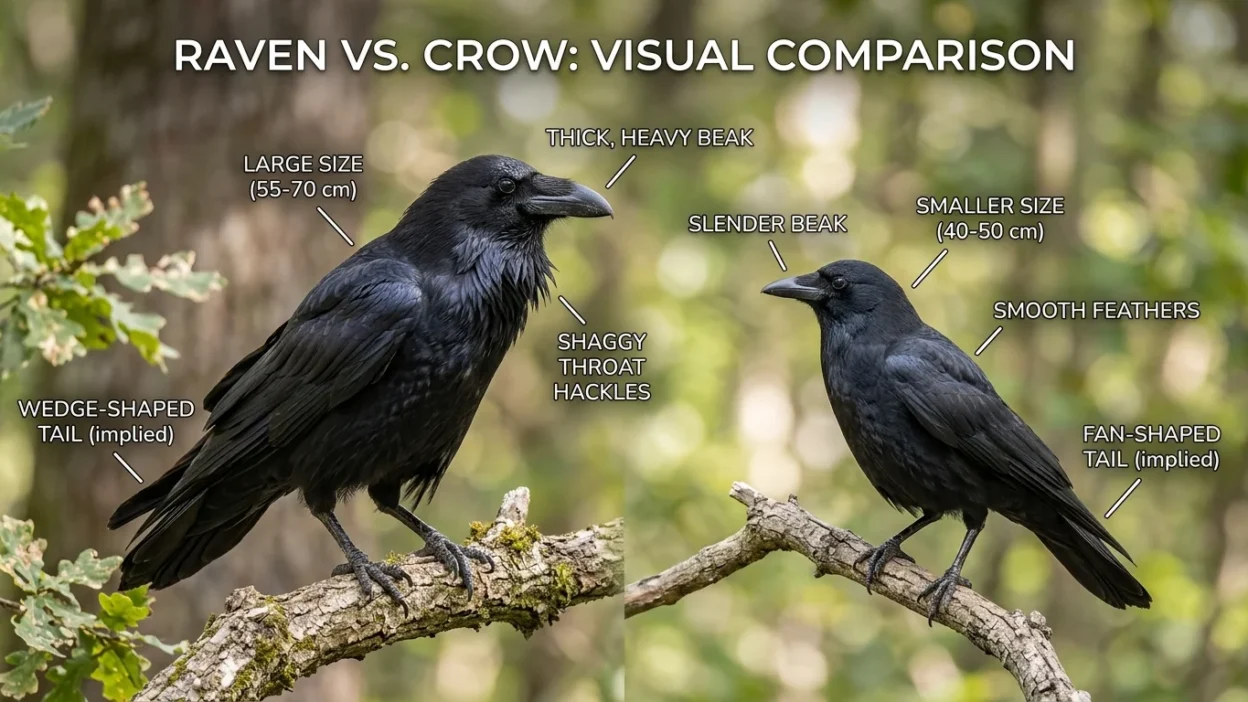
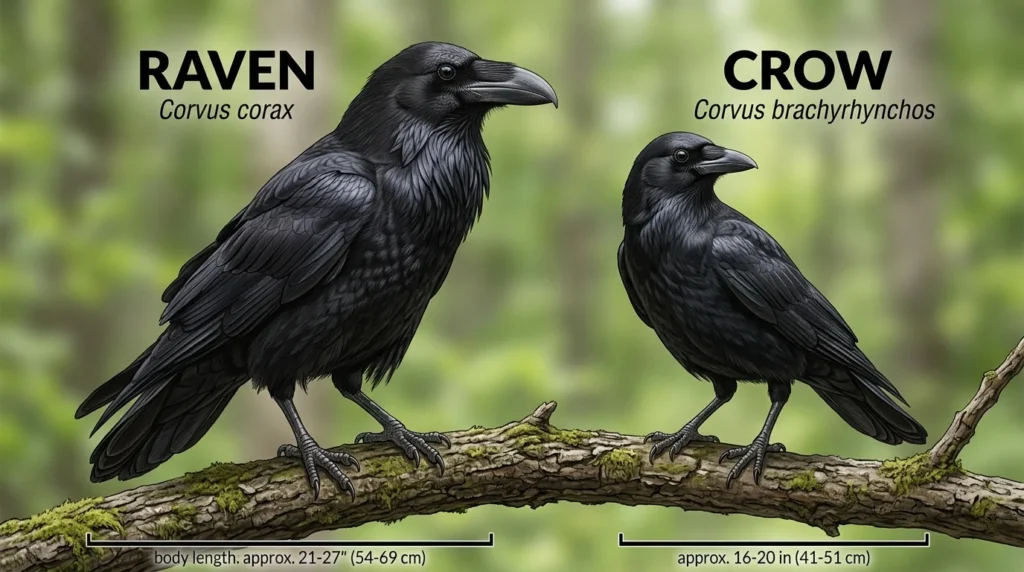
When I first started birdwatching, I used to confuse Crow and Raven because both look like the same black bird from a distance. In real observation, the first clear difference comes from size comparison the Raven is clearly larger, while the Crow feels smaller and more medium sized. Both belong to the corvid family (Corvidae, genus Corvus) and share strong intelligence cognition, showing problem solving, cognition, and tool-like behavior in real nature.
Their species identity becomes clearer when you study flight, wings, wingspan, and body structure. A Raven (Corvus corax) looks more massive, with a stronger bill, thicker neck, and powerful structure, often seen in forests, mountains, and wild areas, while the Crow adapts easily to cities, villages, farmland, and urban life ecosystem. In real life sentences and field observation, I noticed Crows often move in groups and noisy flocks, doing caw caw, while Ravens stay in pairs or act more solitary, using a deep croak or raven call that feels throatier, resonant, and more mysterious in open sky and mountain sky silence.
Quick Answer of Raven or Crow
Here is the simplest way to remember the difference:
- Ravens are usually larger
- Crows are usually smaller
- Ravens have a deeper croaking sound
- Crows make a higher “caw” sound
- Ravens have a thicker beak
- Crows have a slimmer beak
- Ravens often live in wild or quiet places
- Crows are commonly found in cities and neighborhoods
Easy memory tip:
- Raven = bigger and heavier
- Crow = smaller and noisier
Simple Origin and Background of Raven or Crow
Ravens and crows belong to the same bird group called the crow family. This family also includes magpies and jays.
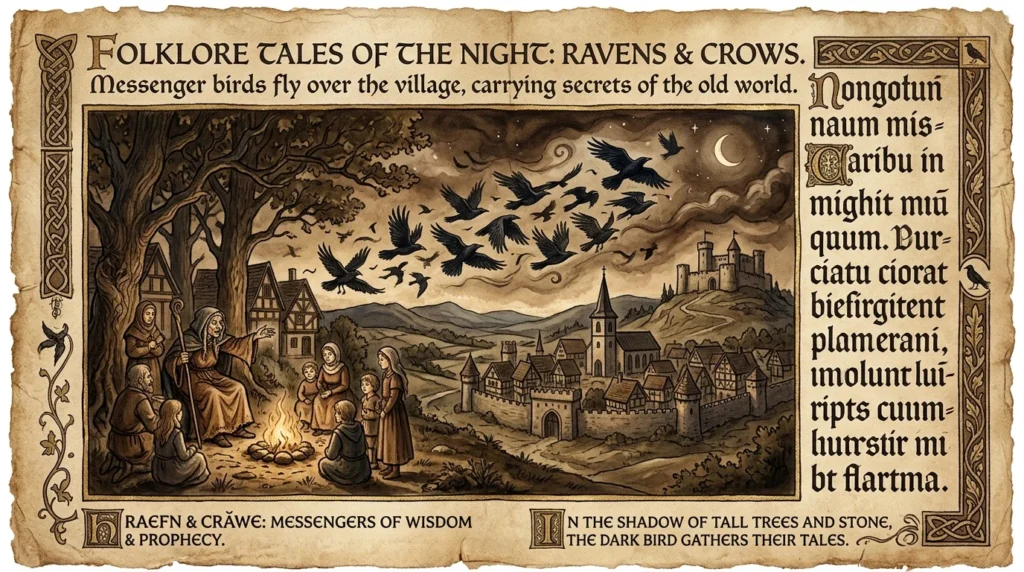
These birds have lived around humans for thousands of years. People often wrote stories and legends about them because they are very intelligent birds.
In many cultures:
- Ravens were connected with mystery and wisdom
- Crows were connected with messages, luck, or change
Both birds can solve problems, remember faces, and even use tools. Scientists consider them among the smartest birds in the world.
Although they are related, ravens and crows developed different habits and appearances over time.
Clear Explanation of the Difference of Raven or Crow
Size Difference
The easiest difference to notice is size.
Ravens are much bigger than crows.
A raven can be almost as large as a hawk, while a crow is closer to the size of a pigeon or small chicken.
Raven
- Bigger body
- Longer wings
- Heavier appearance
Crow
- Smaller body
- Shorter wings
- Slimmer appearance
If you see two black birds together, the larger one is probably a raven.
Sound Difference
Their voices sound very different.
Raven Sound
Ravens make deep sounds like:
- Croak
- Grunt
- Rattle
Their voice sounds rough and low.
Crow Sound
Crows usually make a clear:
- “Caw! Caw!”
Their sound is sharper and louder.
If you hear a deep, rough sound, it is likely a raven.
Beak Difference
A raven’s beak is thicker and more curved.
A crow’s beak is thinner and straighter.
Raven
- Large beak
- Heavy shape
Crow
- Smaller beak
- Narrow shape
Feather Difference
Ravens have messy looking throat feathers called “shaggy feathers.”
Crows usually have smoother feathers.
When a raven calls, the throat feathers often puff out.
Tail Difference
This is one of the best ways to identify them while flying.
Raven Tail
- Tail looks like a diamond or wedge
Crow Tail
- Tail looks like a fan
Bird watchers often use the tail shape to tell them apart.
Flight Style
Ravens glide more often in the air.
Crows flap their wings more continuously.
Raven
- Smooth flying
- More gliding
- Often seen soaring
Crow
- Faster flapping
- More direct flight
Comparison
| Feature | Raven | Crow |
| Size | Larger | Smaller |
| Voice | Deep croak | Sharp caw |
| Beak | Thick and heavy | Slim and smaller |
| Tail Shape | Diamond shaped | Fan shaped |
| Feathers | Shaggy throat feathers | Smooth feathers |
| Flying Style | Glides and soars | Constant wing flaps |
| Common Location | Forests, mountains | Cities, towns |
| Personality | More calm and quiet | More social and noisy |
Which One to Use and When Raven or Crow
When to Say “Raven”
Use “raven” when:
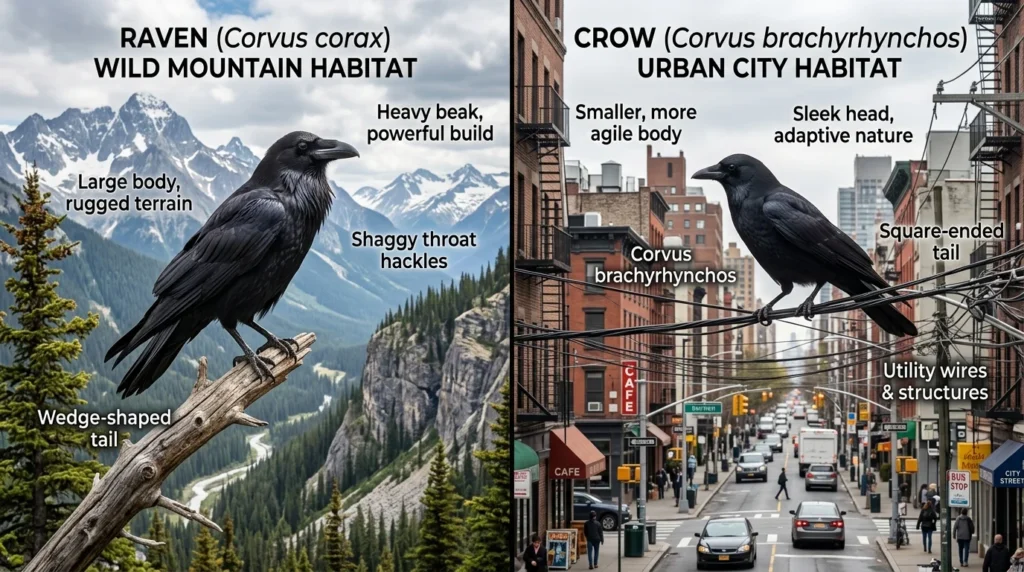
- The bird is very large
- The voice sounds deep
- The tail looks pointed
- The bird is alone or in wild areas
Example:
“A large raven was flying over the mountains.”
When to Say “Crow”
Use “crow” when:
- The bird is medium sized
- The sound is “caw caw”
- Many birds gather together
- The bird is in a city or neighborhood
Example:
“Several crows were sitting on the electric wires.”
In Everyday Conversation
Most people casually call black birds “crows” because crows are more common in towns and cities.
But if you notice a much larger bird with a heavy beak and deep voice, it may actually be a raven.
Common Mistakes People Make for Raven or Crow
Thinking Every Black Bird Is a Crow
This is the most common mistake.
Not every black bird is a crow. Some are ravens, blackbirds, grackles, or other species.
Using Size Alone
Size helps, but it is not always enough.
A far away raven may look small, and a close crow may look large.
It is better to look at:
- Voice
- Tail shape
- Beak
- Flight style
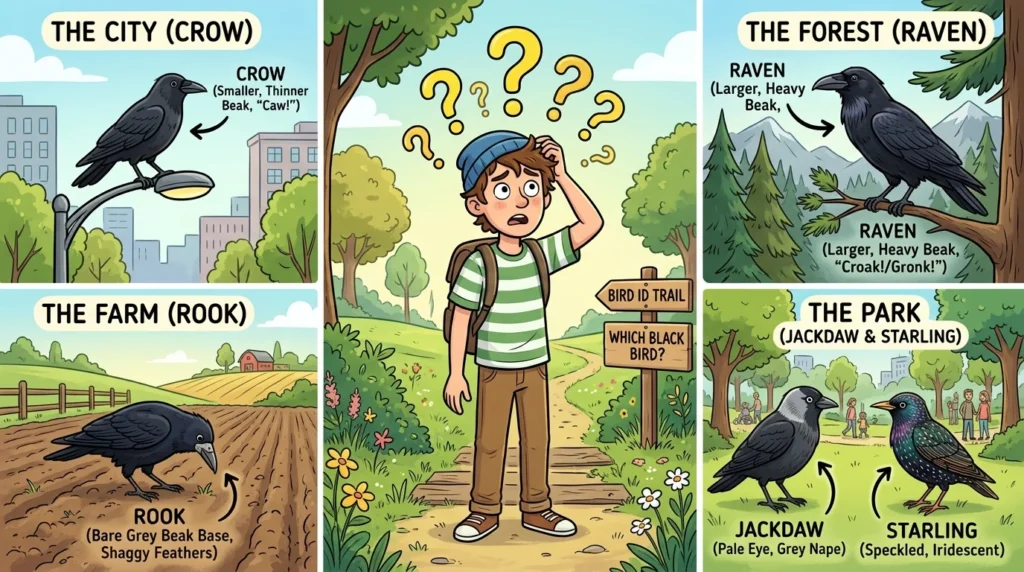
Ignoring the Tail Shape
Many beginners forget to check the tail.
Remember:
- Raven = pointed tail
- Crow = fan shaped tail
Confusing Their Sounds
People sometimes think both birds make the same sound.
But ravens usually sound deeper and rougher than crows.
Everyday Real Life Examples of Raven or Crow
Emails
You might write:
“I saw a crow outside my office window today.”
Or:
“A raven was flying near the mountains during our trip.”
News
News stories may say:
“Crows gathered in large numbers in the city park.”
Or:
“Researchers studied raven intelligence in the wild.”

Social Media
People often post things like:
“This raven looks so mysterious!”
Or:
“The crows outside my house woke me up again.”
Daily Conversations
Friends may say:
- “Was that a raven or a crow?”
- “I think it was a crow because it was smaller.”
- “The bird sounded deep, so maybe it was a raven.”
Short Learning Section for Students and Beginners for Raven or Crow
Here are simple tricks to help you remember the difference.
Easy Memory Tricks
Raven
Think:
- Big
- Deep voice
- Wild places
Crow
Think:
- Smaller
- Loud caw
- Cities and streets
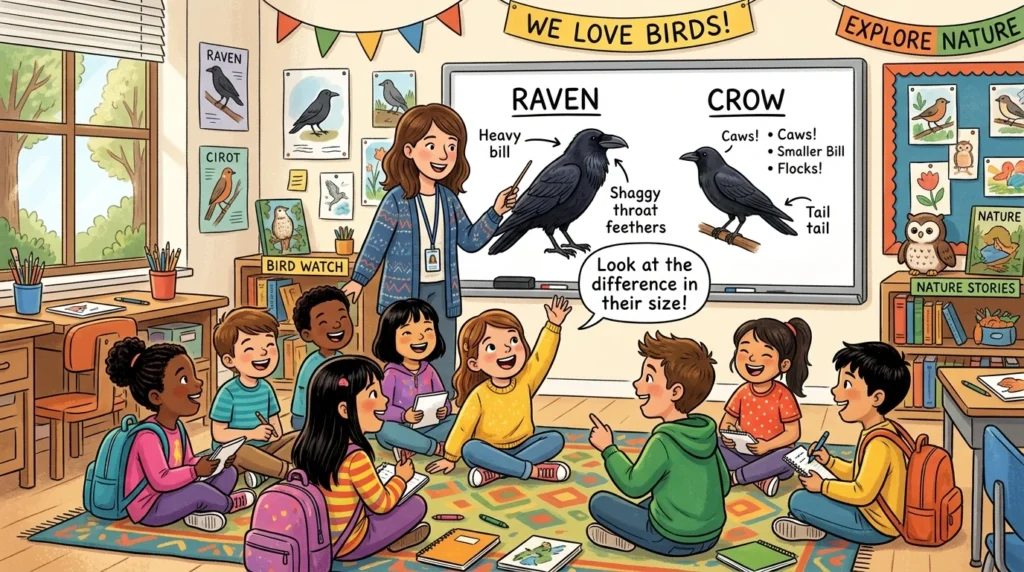
Quick Practice
Try answering these questions:
1. Which bird is usually larger?
Answer: Raven
2. Which bird says “caw”?
Answer: Crow
3. Which bird has a diamond shaped tail?
Answer: Raven
4. Which bird is commonly seen in cities?
Answer: Crow
Beginner Tip
Do not worry if you confuse them at first.
Even many adults cannot tell the difference quickly. The more you observe birds, the easier it becomes.
FAQ
Are ravens and crows the same bird?
No. They are different birds, but they belong to the same bird family.
Which is bigger, a raven or a crow?
A raven is usually much bigger than a crow.
Are ravens smarter than crows?
Both birds are extremely intelligent. Scientists study both because they can solve problems and remember things well.
Can ravens and crows live in the same area?
Yes. In some places, both birds live near each other.
Why are ravens often connected with mystery?
Many old stories and legends used ravens as symbols of mystery, wisdom, or magic.
Do crows attack people?
Sometimes crows protect their nests and may dive near people, but serious attacks are uncommon.
Which bird is more common in cities?
Crows are usually more common in cities and neighborhoods.
How can I quickly tell them apart?
The fastest clues are:
- Size
- Sound
- Tail shape
Conclusion
Ravens and crows may look similar at first, but they have many clear differences once you know what to look for.
Ravens are usually:
- Bigger
- Heavier
- Deeper sounding
- More common in wild places
Crows are usually:
- Smaller
- Noisier
- More social
- Common in towns and cities
The easiest way to remember is:
Ravens are large and deep voiced.
Crows are smaller and make the classic “caw” sound.
With a little practice, you will be able to tell them apart much more easily in everyday life.

Daniel Matthew is a language enthusiast, writer, and contributor at Meanefy.com, where he explores the meanings, origins, and nuances of words and phrases. With a deep passion for language, Daniel aims to make complex concepts simple, engaging, and easy to understand for readers of all ages.