
Many English learners get confused by “stank” and “stunk.” Both words come from the verb “stink,” and both talk about a bad smell. Because they look similar, people often do not know which one is correct.
The good news is that the difference is actually very simple.
Once you understand time in English verbs, you can easily know when to use stank and when to use stunk.
This guide explains everything in very easy English with clear examples from daily life.
Quick Answer
- Stank = simple past tense of stink
- Example: The garbage stank yesterday.
- Stunk = past participle of stink
- Example: The garbage has stunk for days.
Easy Rule
- Use stank alone for past actions.
- Use stunk with helping verbs like:
- has
- have
- had
The Simple Background of the Word
The word “stink” is a very old English word. It has been used for hundreds of years to describe something with a very bad smell.
Like many old English verbs, it changes form:
| Verb Form | Word |
| Base verb | stink |
| Past tense | stank |
| Past participle | stunk |
This pattern is similar to other English verbs:
| Base Verb | Past | Past Participle |
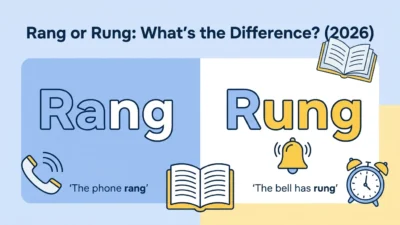
| sing | sang | sung |
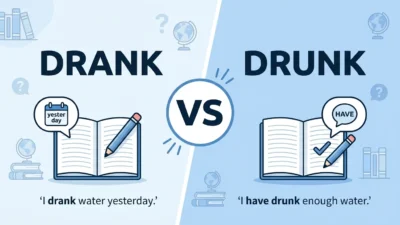
| drink | drank | drunk |
| stink | stank | stunk |
That is why the words look similar.
The Difference Between Stank and Stunk
The main difference is grammar.
Stank = Past Tense
Use stank when talking about something that smelled bad in the past.
Usually, there is no helping verb before it.
Examples
- The socks stank after football practice.
- The kitchen stank because of burnt food.
- His shoes stank all day.
These sentences talk about a completed action in the past.
Stunk = Past Participle
Use stunk with helping verbs such as:
- has
- have
- had
Examples
- The fridge has stunk for weeks.
- My room had stunk before I cleaned it.
- The trash has stunk since Monday.
Here, the action connects to another time or continues over time.
Easy Comparison
| Word | Grammar Use | Helping Verb Needed? | Example |
| stank | Simple past | No | The room stank yesterday. |
| stunk | Past participle | Yes | The room has stunk all week. |
Which One Should You Use?
Use “Stank” When:
- You talk about one past event
- The sentence is simple past tense
- No helping verb is used
Examples
- The fish stank badly.
- His jacket stank after the rain.
- The bathroom stank this morning.
Use “Stunk” When:
- You use has, have, or had
- You talk about something continuing over time
- You use present perfect or past perfect tense
Examples
- The car has stunk ever since the milk spilled.
- The house had stunk before the windows were opened.
- My shoes have stunk lately.
Why People Get Confused
English has many irregular verbs.
These verbs do not simply end in “-ed.”
For example:
- go → went
- eat → ate
- stink → stank
Then the past participle changes again:
- gone
- eaten
- stunk
Many learners think stunk sounds more natural because they hear it often in movies, online videos, and conversations.
Others use stank for every situation because it feels simpler.
Both mistakes are very common.
Common Mistakes People Make
Saying “has stank”
❌ The garbage has stank for days.
✅ The garbage has stunk for days.
Why?
Because after has, you need the past participle.
Using “stunk” without a helping verb
❌ The food stunk yesterday.
Some native speakers say this in casual speech, but traditional grammar prefers:
✅ The food stank yesterday.
Forgetting the base form
Some learners accidentally say:
❌ Yesterday the room stink.
✅ Yesterday the room stank.
Everyday Real Life Examples
Seeing real examples helps the rule become easier.
Daily Conversation
- Your gym bag stank after practice.
- My shoes have stunk all month.
At Home
- The kitchen stank because of old onions.
- The refrigerator has stunk since the power outage.
Social Media Style
- “My car stank after I left food inside.”
- “These socks have stunk for three days 😂”
School Examples
- The science lab stank after the experiment.
- Someone’s lunch had stunk up the classroom.
News Like Examples
- The river stank during the hot summer weather.
- The area had stunk because of waste problems.
Email Style Example
- “Sorry I opened the window. The office stank after lunch.”
- “The hallway has stunk for weeks. Someone should clean it.”
Easy Grammar Trick to Remember
Here is a very simple memory trick.
Think About Helping Verbs
If you see:
- has
- have
- had
then use:
✅ stunk
Examples
- has stunk
- have stunk
- had stunk
No Helping Verb?
Then use:
✅ stank
Examples
- The room stank.
- The socks stank.
- The food stank.
This trick works most of the time and is very easy to remember.
Learning Section for Students and Beginners
A fast way to learn these words is to practice with short sentences.
Fill in the Blank
Try these:
- The trash _____ yesterday.
- The trash has _____ for days.
Answers:
- stank
- stunk
Practice Pattern
Repeat these aloud:
- stink → stank → stunk
- drink → drank → drunk
- sing → sang → sung
English learners often remember patterns better than single words.
Small Study Tip
Do not try to memorize long grammar rules.
Instead:
- Notice the helping verbs
- Listen to real examples
- Practice short sentences daily
That makes learning easier and faster.
Stank vs Stunk in American and British English
Both American English and British English use these forms.
However, in casual speech, many native speakers sometimes say “stunk” as the simple past tense too.
Example:
- “The room stunk.”
You may hear this often in movies or online videos.
Still, in grammar books and formal writing:
- stank = simple past
- stunk = past participle
So learners should follow the standard rule first.
Simple Sentence Practice
Correct Sentences
- The garbage stank.
- The garbage has stunk for days.
- His shoes stank after soccer practice.
- The basement had stunk before cleaning.
Incorrect Sentences
- ❌ The garbage has stank.
- ❌ The shoes stunk yesterday.
(common in speech but less correct in formal grammar)
FAQ
Is “stank” a real word?
Yes. “Stank” is the correct past tense of “stink.”
Example:
- The bathroom stank yesterday.
Is “stunk” correct?
Yes. “Stunk” is the past participle form of “stink.”
Example:
- The room has stunk all week.
Which one is more common?
In casual speech, many people use “stunk” often. But standard grammar still separates the two forms.
Can I say “the room stunk”?
Yes, many native speakers say it in everyday conversation. But formal grammar usually prefers:
- The room stank.
Why does English have two forms?
Many old English verbs change form in different tenses.
Example:
- sing → sang → sung
- stink → stank → stunk
Is “stinked” correct?
No. “Stinked” is not the normal standard form.
Correct forms are:
- stink
- stank
- stunk
How can I remember the difference easily?
Use this simple rule:
- no helping verb → stank
- has/have/had → stunk
Do native speakers make mistakes too?
Yes. Even native speakers sometimes mix them up in casual speech.
Conclusion
The difference between stank and stunk is mainly about grammar tense.
- Stank is the simple past tense.
- Stunk is the past participle.
The easiest way to remember is:
- Use stank alone.
- Use stunk after has, have, or had.
Examples:
- The room stank yesterday.
- The room has stunk for days.
Once you practice a few sentences, the difference becomes very easy. English irregular verbs can feel confusing at first, but small patterns like this help make them simpler and clearer.