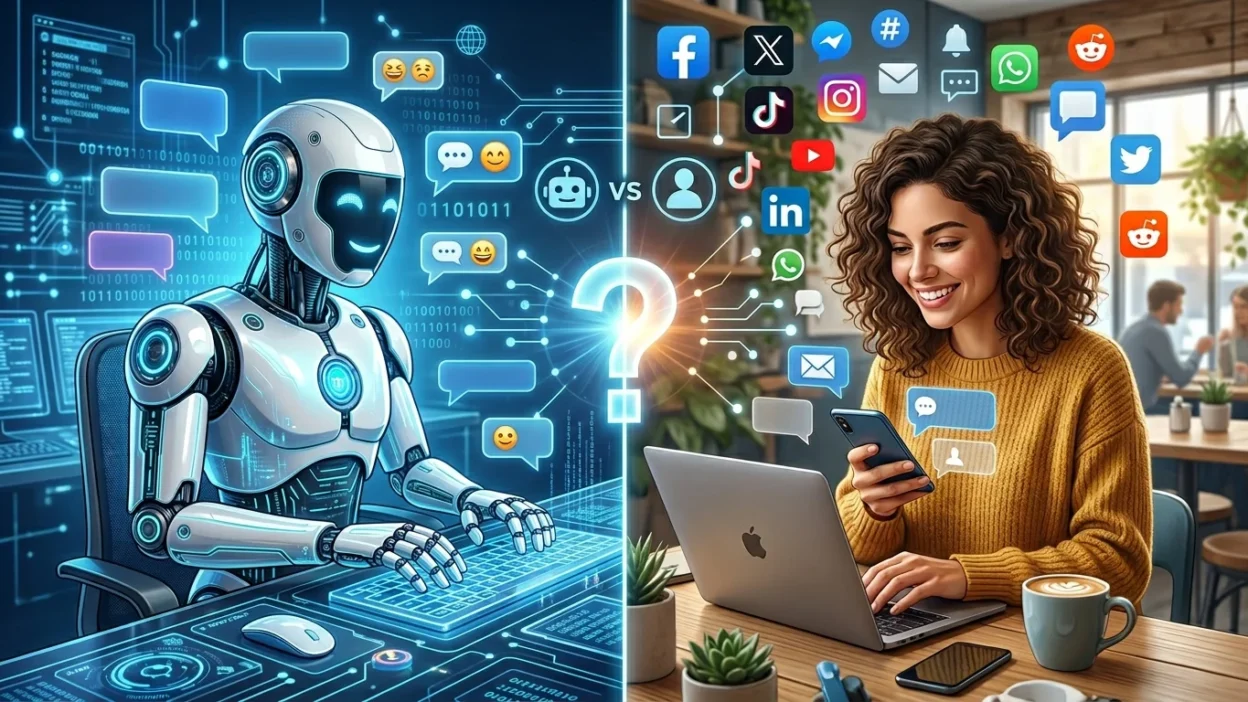
The phrase “bot or not” is very common today. People see it when using social media, online games, chat apps, websites, and customer support services.
The confusion happens because many online accounts now look and act like real people. Some bots can write messages, answer questions, post comments, and even have conversations. Because of this, it is not always easy to know whether you are talking to a human or a computer program.
Many people ask:
- Is this account real?
- Is this message written by a person?
- Am I chatting with a bot?
- How can I tell the difference?
Understanding what “bot or not” means can help you stay informed and make better decisions online.
Quick Answer
- A bot is a computer program that performs tasks automatically.
- A human is a real person who thinks, feels, and makes personal decisions.
- The phrase “bot or not” means trying to figure out whether something online is controlled by a bot or a human.
- Bots can send messages, answer questions, and post content automatically.
- Humans usually show personal opinions, emotions, and unique experiences.
- Some bots are helpful, while others may spread false information or unwanted content.
- It is not always possible to tell immediately if something is a bot or a human.
Origin and Background
The word “bot” comes from the word “robot.”
In the early days of the internet, bots were simple programs that performed repetitive tasks. They could search websites, collect information, or answer basic questions.
Over time, technology improved. Bots became smarter and more advanced. Today, some bots can:
- Chat with users
- Answer customer questions
- Recommend products
- Translate languages
- Create content
- Help with online services
Because bots became more human like, people started asking, “Is this a bot or not?” This simple question became a common way to check whether an online account or message comes from a machine or a real person.
Understanding the Difference
The main difference is simple.
A bot follows instructions created by software developers. It works automatically based on programming and data.
A human uses personal thinking, emotions, experiences, and judgment.
What a Bot Does
A bot may:
- Reply automatically
- Work all day without rest
- Send many messages quickly
- Follow programmed rules
- Complete repetitive tasks
What a Human Does
A human may:
- Express emotions
- Share personal experiences
- Make creative decisions
- Change opinions
- Understand complex social situations
Modern bots can sometimes copy human behavior, which is why identifying them has become more difficult.
Comparison Table
| Feature | Bot | Human |
| What it is | Computer program | Real person |
| Works automatically | Yes | No |
| Has emotions | No | Yes |
| Needs sleep | No | Yes |
| Shares personal experiences | No | Yes |
| Can make independent life decisions | No | Yes |
| Speed of replies | Often very fast | Usually varies |
| Learns from life experiences | No | Yes |
| Follows programming | Yes | No |
| Makes mistakes naturally | Sometimes | Often |
Which One to Use and When
When Bots Are Useful
Bots can be very helpful for:
- Customer support
- Answering common questions
- Booking services
- Sending reminders
- Managing simple tasks
- Providing information quickly
For example, a company may use a bot to answer frequently asked questions at any time of day.
When Humans Are Better
Humans are usually better when situations require:
- Personal advice
- Emotional understanding
- Creativity
- Complex problem solving
- Sensitive discussions
For example, if someone needs support during a difficult situation, talking to a real person is often more helpful than talking to a bot.
Common Mistakes People Make
Many people misunderstand bots. Here are some common mistakes.
Thinking Every Fast Reply Comes from a Bot
A human can also reply quickly. Fast responses alone do not prove something is a bot.
Believing Every Bot Is Bad
Many bots provide useful services. They help users find information and complete tasks faster.
Assuming Every Human Account Is Real
Some accounts may appear human but are actually automated.
Trusting Everything a Bot Says
Bots can make mistakes. Information should always be checked, especially when the topic is important.
Ignoring Warning Signs
Accounts that post the same message repeatedly or behave unusually may be automated.
Everyday Real Life Examples
Emails
You receive a message saying:
“Thank you for contacting us. We will respond soon.”
This is often an automated bot message.
A detailed reply that mentions your specific question is more likely to come from a human.
News
Some organizations use bots to publish breaking updates quickly.
Human reporters usually add explanations, interviews, and detailed analysis.
Social Media
A bot account may:
- Post every few minutes
- Repeat similar content
- Follow many accounts automatically
A human account often shares:
- Personal photos
- Life experiences
- Opinions
- Conversations with friends
Daily Use
When you visit a website and see a chat window that answers simple questions immediately, you may be talking to a bot.
If the conversation becomes more complicated, a human support agent may take over.
Online Games
Some games use bots to fill empty spaces or help players practice.
Human players usually show more unpredictable and creative behavior.
Learning Section for Students and Beginners
Here is a simple way to remember the difference.
Remember This Rule
Bot = Program
Human = Person
A bot follows instructions.
A human uses thinking, emotions, and personal experiences.
Easy Memory Trick
Ask yourself:
“Can this thing think and feel like a real person?”
If the answer is no, it is probably a bot.
Simple Practice Examples
Example 1
A program automatically replies to thousands of messages.
Answer: Bot
Example 2
A student shares a story about their school day.
Answer: Human
Example 3
An account posts the same comment hundreds of times.
Answer: Probably a bot
Example 4
Someone talks about their favorite childhood memory.
Answer: Human
FAQ
What does “bot or not” mean?
It means trying to determine whether an online account, message, or conversation comes from a bot or a real person.
What is a bot?
A bot is a software program that performs tasks automatically without direct human control for every action.
Are all bots harmful?
No. Many bots are helpful and provide customer service, information, reminders, and other useful functions.
Can bots talk like humans?
Yes. Modern bots can hold conversations and generate responses that sound very natural.
How can I spot a bot?
Possible signs include repetitive messages, very high activity, automatic responses, and limited personal details.
Can a bot have feelings?
No. Bots do not have real emotions or personal experiences.
Are bots used on social media?
Yes. Many social media platforms contain both helpful and harmful bots.
Why is it hard to tell the difference today?
Modern technology allows bots to create human like conversations, making them much more difficult to identify than older bots.
Conclusion
The phrase “bot or not” is about deciding whether something online is controlled by a computer program or a real person. A bot is an automated program that follows instructions, while a human is a person who thinks, feels, and acts based on personal experiences.
Although modern bots can sound surprisingly human, they are still different from real people. Understanding these differences helps you communicate more confidently online, recognize automated behavior, and make better decisions when interacting with digital content.