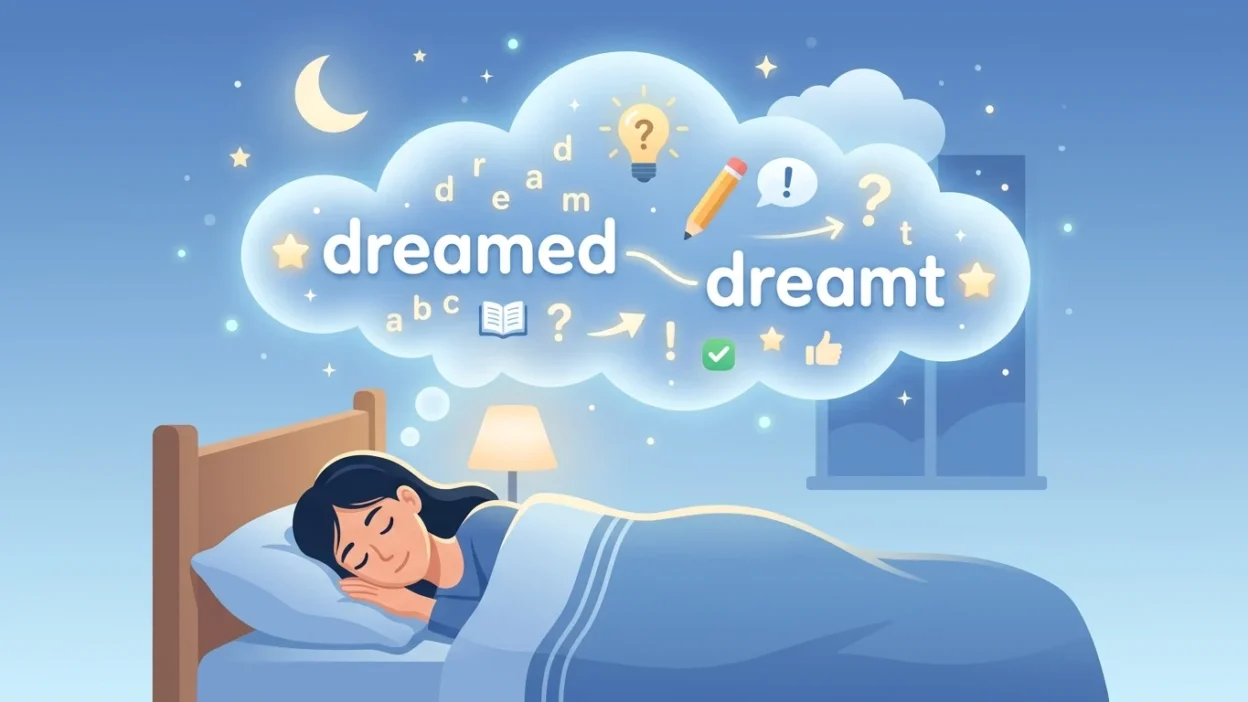
Many English learners get confused about “dreamed” and “dreamt.” Both words come from the verb “dream,” and both are used to talk about dreams in the past.
So which one is correct?
The simple answer is: both are correct.
Still, many students wonder why two different forms exist and when they should use each one. Some people hear “dreamed” in movies and school lessons, while others see “dreamt” in books or British English writing. This can make English feel confusing.
The good news is that the difference is actually very simple. Once you understand it, you will probably never feel confused again.
Quick Answer
- Dreamed and dreamt are both past forms of the verb dream
- Both words are correct in English
- Dreamed is more common in American English
- Dreamt is more common in British English
- They have the same meaning
- You can usually use either one without changing the sentence meaning
Examples:
- I dreamed about flying.
- I dreamt about flying.
Both sentences are correct.
The Simple Background of These Words
English has two kinds of past verbs:
- Regular verbs
- Irregular verbs
Most regular verbs end in -ed in the past tense.
Examples:
- walk → walked
- play → played
- clean → cleaned
The word dreamed follows this regular pattern.
But English also has many older irregular forms. Over time, some verbs kept two versions. That is why dreamt also exists.
Long ago, English spelling and grammar changed many times. Some older forms stayed popular in Britain, while American English became simpler and used more regular forms.
That is why today:
- Americans usually say dreamed
- British speakers often say dreamt
Both forms survived, and both are accepted.
The Difference Between Dreamed and Dreamt
The main difference is not meaning. The real difference is:
- Style
- Region
- Personal preference
Meaning
Both words mean the same thing:
- to see images or stories while sleeping
- to imagine something strongly
Examples:
- She dreamed of becoming a doctor.
- She dreamt of becoming a doctor.
No difference in meaning.
Regional Difference
This is the biggest difference.
In American English
People usually use:
- dreamed
Example:
- I dreamed about my school last night.
This sounds more natural in the United States.
In British English
People often use:
- dreamt
Example:
- I dreamt about my childhood home.
This sounds more natural in the United Kingdom.
Sound and Style
Some writers feel that dreamt sounds more poetic, soft, or literary.
Example:
- He dreamt of distant worlds.
Meanwhile, dreamed sounds more modern and everyday.
Example:
- I dreamed about work again.
But this is only a style feeling. Grammar books accept both.
Comparison
| Feature | Dreamed | Dreamt |
| Correct English? | Yes | Yes |
| Meaning | Same | Same |
| Common in American English | Very common | Less common |
| Common in British English | Common | Very common |
| Verb type | Regular form | Irregular style form |
| Sounds more formal or literary? | Usually no | Sometimes yes |
| Safe for school writing? | Yes | Yes |
Which One Should You Use?
The best choice depends on your situation.
Use “dreamed” if:
- You are learning basic English
- You write for an international audience
- You use American English
- You want the safest and most common form
- You are unsure which one to choose
Example:
- I dreamed about my exam.
This is the easiest choice for most learners.
Use “dreamt” if:
- You prefer British English
- You enjoy traditional English style
- You want a softer or more literary sound
- You often read British books
Example:
- She dreamt of traveling the world.
Important Tip
Do not mix styles too much in the same piece of writing.
For example, if you are writing in American English, stay with:
- dreamed
If you are writing in British English, you can use:
- dreamt
Consistency makes your writing cleaner and easier to read.
Common Mistakes People Make
Many learners make small mistakes with these words. Here are the most common ones.
Thinking One Word Is Wrong
Some students think:
- dreamed = correct
- dreamt = incorrect
This is false.
Both are correct English words.
Using Both Forms Randomly
Example:
- I dreamed about home, and later I dreamt about school.
This is not a grammar mistake, but it can look strange because the style changes suddenly.
Better:
- I dreamed about home, and later I dreamed about school.
Or:
- I dreamt about home, and later I dreamt about school.
Confusing Past Tense and Past Participle
Both words can be:
- past tense
- past participle
Examples:
Past tense:
- Last night I dreamed of the ocean.
- Last night I dreamt of the ocean.
Past participle:
- I have dreamed about that before.
- I have dreamt about that before.
Both are correct.
Wrong Spellings
Incorrect forms include:
- dreampt
- drempt
- dreamted
Only these are correct:
- dreamed
- dreamt
Everyday Real Life Examples
Seeing real examples helps learners understand faster.
Daily Conversation
- I dreamed about my old teacher last night.
- She dreamt about missing her flight.
Text Messages
- I just dreamed the strangest thing!
- I dreamt you were at my birthday party.
Social Media Posts
- Last night I dreamed about living near the beach.
- I dreamt of this moment for years.
School Writing
- Martin Luther King Jr. dreamed of equality.
- The character dreamt of freedom.
News or Interviews
- The athlete said he dreamed of winning a gold medal.
- The singer shared that she dreamt about performing on stage since childhood.
Emails
- I dreamed about our old office yesterday.
- She said she dreamt of starting her own business.
A Simple Learning Section for Students and Beginners
Here is an easy way to remember the difference.
Memory Trick
Think like this:
- Dreamed = more common in America
- Dreamt = more common in Britain
If you cannot decide, use:
- dreamed
It is more common worldwide and easier for beginners.
Practice Sentences
Fill in the blank with “dreamed” or “dreamt.”
- I ______ about flying.
- She ______ of becoming a writer.
- We have ______ about this trip for years.
Answer:
Both words work in all three sentences.
Beginner Tip
English often has two accepted forms.
Other examples include:
American English usually prefers the -ed form.
British English often accepts both forms more equally.
Frequently Asked Questions
Is “dreamt” a real word?
Yes. “Dreamt” is a real and correct English word.
Is “dreamed” more common?
Yes. “Dreamed” is more common, especially in American English.
Do “dreamed” and “dreamt” mean different things?
No. They mean exactly the same thing.
Which form should students use in school?
Usually, “dreamed” is the safest and simplest choice, especially for beginners.
Can I use “dreamt” in American English?
Yes. Americans will still understand it. It is just less common.
Is “dreamt” old fashioned?
Not completely. Some people feel it sounds more traditional or literary, but many people still use it today.
Are both forms accepted in grammar books?
Yes. Modern English grammar accepts both.
Which one sounds more natural in conversation?
That depends on the country and the speaker. In the United States, “dreamed” sounds more natural. In Britain, many people naturally say “dreamt.”
Conclusion
The difference between dreamed and dreamt is actually very small. Both words are correct, both have the same meaning, and both are used by native English speakers.
The main difference is style and region:
- Dreamed is more common in American English
- Dreamt is more common in British English
If you are a beginner or unsure which form to use, choose dreamed because it is simpler and more widely used. But if you like British English or literary writing, dreamt is also perfectly correct.
The most important thing is to stay consistent and use the form that matches your writing style.
Once you know this, the confusion disappears completely.