Many English learners get confused by “spilled” and “spilt.” Both words look correct, and both are used in English. This often makes students wonder:
- Which one is right?
- Are they different?
- Can I use both?
- Do native speakers use one more than the other?
The good news is simple: both words are correct. They have the same meaning. The difference is mainly about style and region.
This guide will explain everything in very easy English so you can understand it clearly the first time.
Quick Answer
- Spilled and spilt are both the past tense of spill
- Both mean: to let liquid or something fall accidentally
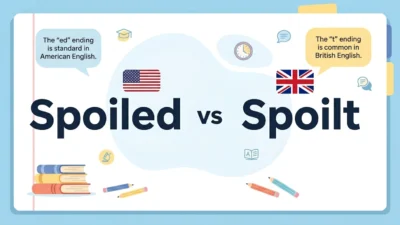
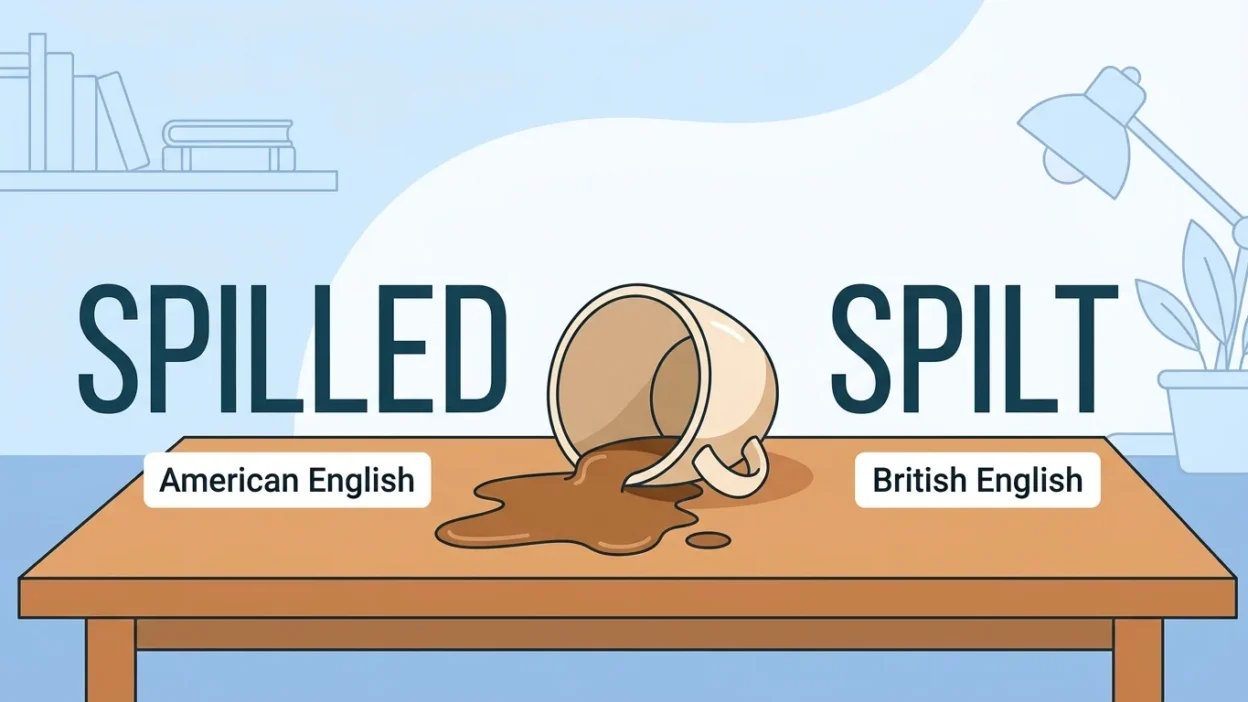
- Spilled is more common in American English
- Spilt is more common in British English
- In most situations, you can use either one
Examples:
- I spilled my coffee.
- I spilt my coffee.
Both sentences are correct.
The Simple Background of These Words
The verb spill has been used in English for hundreds of years.
In older English, many verbs had two past forms:
- one ending in -ed
- one shorter form
For example:
- burned / burnt
- dreamed / dreamt
- learned / learnt
The same thing happened with:
- spilled / spilt
Over time:
- American English started using spilled more often
- British English kept using both forms, especially spilt
That is why we still see both today.
What Does “Spill” Mean?
Before learning the difference, let’s quickly understand the main verb.
Spill means:
- to let something fall accidentally
- usually liquid, food, or small objects
Examples:
- She spilled the milk.
- Water spilled on the floor.
- He spilled rice everywhere.
It can also mean:
- to reveal a secret
Example:
- She spilled the truth.
The Difference Between Spilled and Spilt
The meaning is exactly the same.
The real difference is:
- where people use them
- how formal or modern they sound
“Spilled”
“Spilled” is:
- more common in American English
- more common in modern writing
- often used in schools and business writing
Examples:
- I spilled juice on my shirt.
- The oil spilled onto the road.
- Someone spilled coffee on the table.
“Spilt”
“Spilt” is:
- more common in British English
- slightly more traditional in style
- still very normal in the UK and some other countries
Examples:
- She spilt tea on the carpet.
- Milk was spilt everywhere.
- He spilt water on his phone.
Again, both are correct.
Easy Comparison
| Feature | Spilled | Spilt |
| Meaning | Same | Same |
| Verb form | Past tense and past participle | Past tense and past participle |
| Common in | American English | British English |
| Sounds | More modern | Slightly more traditional |
| Used in schools | Very common | Less common outside the UK |
| Correct? | Yes | Yes |
Which One Should You Use?
The best choice depends on your situation.
Use “spilled” when:
- You are learning American English
- You write for international readers
- You want the safest and most common option
- You are writing school assignments in American style
Example:
- I spilled water on my notebook.
Use “spilt” when:
- You use British English
- Your school follows British spelling
- You live in the UK or similar English speaking regions
Example:
- I spilt tea on the sofa.
If You Are Unsure
Choose “spilled.”
It is more common worldwide and easier for most learners.
Is One More Correct Than the Other?
No.
Neither word is “more correct.”
English has many words like this:
- burned / burnt
- smelled / smelt
- learned / learnt
Different English speaking countries prefer different forms.
So if someone says:
- “You should only use spilled”
or - “Spilt is wrong”
that is not true.
Both forms are accepted English.
Common Mistakes People Make
Thinking “spilt” is a spelling mistake
Many learners think “spilt” is wrong because they see “spilled” more often online.
But “spilt” is a real English word.
Correct:
- She spilt the milk.
Mixing English styles
Some students use American and British English together in the same writing.
Example:
- He spilt coffee and then apologized for the color of his pants.
This mixes British and American style.
It is better to stay consistent.
Using the wrong verb form
Some learners write:
- I spill the milk yesterday.
This is wrong because yesterday needs past tense.
Correct:
- I spilled the milk yesterday.
- I spilt the milk yesterday.
Forgetting the second meaning
“Spill” can also mean revealing information.
Examples:
- He spilled the secret.
- She spilt everything during the interview.
Both are correct.
Everyday Real Life Examples
Here are simple examples from daily life.
At Home
- I spilled soup on the floor.
- My brother spilt juice on the couch.
At School
- Someone spilled water on my homework.
- She spilt paint during art class.
At Work
- I accidentally spilled coffee on my keyboard.
- A worker spilt oil near the machine.
In Emails
- Sorry, I spilled tea on the papers.
- I spilt water on my laptop this morning.
On Social Media
- I just spilled my drink everywhere.
- He spilt noodles all over himself.
In News Style
- Oil spilled into the river.
- Chemicals were spilt on the road.
Pronunciation Help
These words sound slightly different.
| Word | Pronunciation |
| Spill | spill |
| Spilled | spild |
| Spilt | spilt |
“Spilt” has a sharper ending sound.
Short Learning Section for Students and Beginners
Here is an easy way to remember everything.
Step One: Learn the base verb
Present:
- spill
Past:
- spilled / spilt
Examples:
- I spill water sometimes.
- Yesterday I spilled water.
- Yesterday I spilt water.
Step Two: Remember the region
- American English → spilled
- British English → spilt
Step Three: Practice Simple Sentences
Try these:
- I spilled milk.
- She spilled coffee.
- He spilt tea.
- We spilt juice.
Step Four: Stay Consistent
If you start using American English, continue with it.
If you use British English, stay with that style.
Consistency makes your writing cleaner.
Simple Practice Quiz
Choose the correct answer.
Question 1
Yesterday I _____ water on my phone.
- spilled
- spilt
Answer:
Both are correct.
Question 2
Which form is more common in American English?
Answer:
Spilled
Question 3
Which sentence is wrong?
- I spilled milk.
- I spilt milk.
- I spill milk yesterday.
Answer:
I spill milk yesterday.
FAQ
Is “spilt” a real word?
Yes. “Spilt” is a correct English word.
Do Americans use “spilt”?
Sometimes, but “spilled” is much more common in American English.
Which word should students use?
Most students can safely use “spilled,” especially in international or American style English.
Are “spilled” and “spilt” exactly the same?
Yes. They have the same meaning and grammar use.
Is “spilt” old fashioned?
Not exactly. It is still common in British English.
Can I use both in the same article?
It is better not to. Choose one style and stay consistent.
Which form is easier for beginners?
“Spilled” is usually easier because it follows the common “-ed” pattern.
Do both words work for secrets too?
Yes.
Examples:
- He spilled the secret.
- He spilt the secret.
Final Thoughts
The confusion between “spilled” and “spilt” is very common, especially for English learners. The important thing to remember is simple:
- Both words are correct
- Both mean the same thing
- “Spilled” is more common in American English
- “Spilt” is more common in British English
If you want the easiest and safest choice, use “spilled.”
If you follow British English, you can comfortably use “spilt.”
Once you understand the regional difference, the confusion disappears completely.

Daniel Matthew is a language enthusiast, writer, and contributor at Meanefy.com, where he explores the meanings, origins, and nuances of words and phrases. With a deep passion for language, Daniel aims to make complex concepts simple, engaging, and easy to understand for readers of all ages.