Many English learners feel confused when they see two different past forms of the same verb: leaned and leant.
Both words look correct, both are used in books, and both appear in daily writing. This makes people wonder: Which one is right? or Is one of them wrong?
The good news is that there is no serious mistake here. The confusion comes from the way English changes in different countries and how verbs can have more than one correct form. In this article, you will learn everything in a very simple way so you never feel unsure again.
Quick Answer
Here is the simplest explanation:
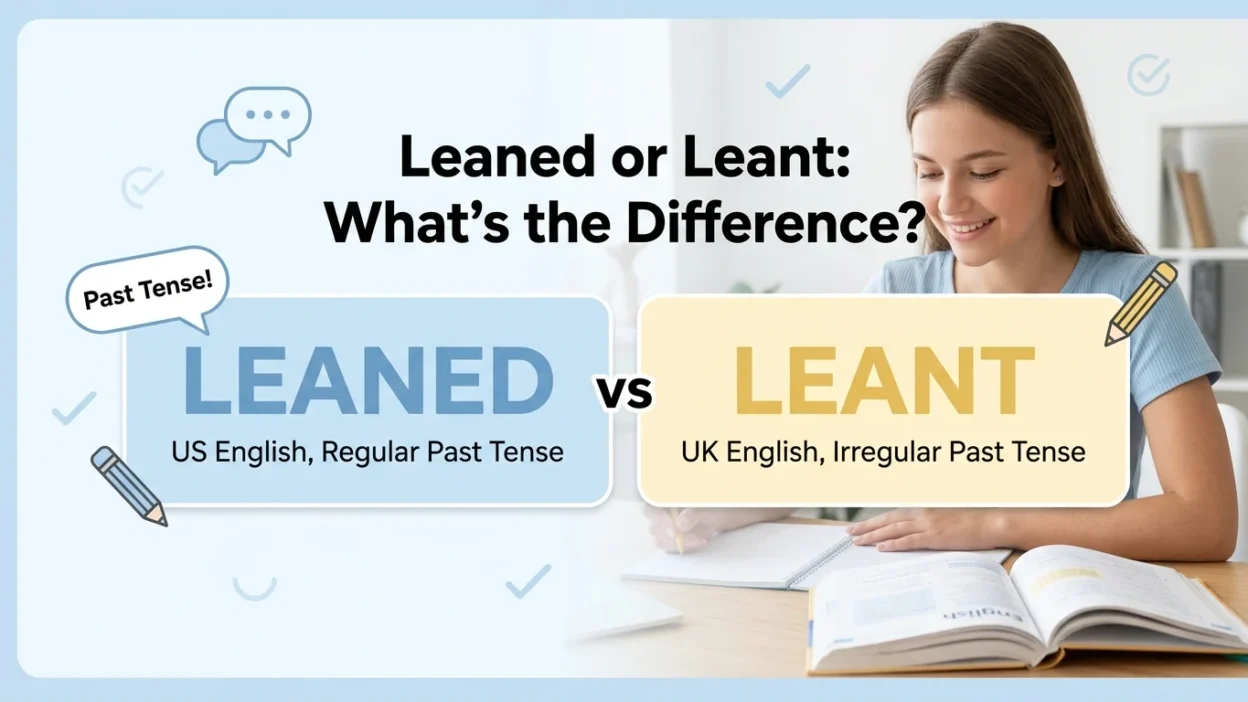
- Leaned is more common in American English
- Leant is more common in British English
- Both mean the same thing
- Both are correct in modern English
- You can use either one, depending on the style you prefer
So, there is no “wrong” choice. It is mostly about location and writing style.
Simple Background
The verb lean means to bend, rest, or tilt something or someone in a direction.
For example:
- You lean on a wall
- A tree can lean after strong wind
- You lean forward when listening carefully
Like many English verbs, “lean” has two possible past forms:
- Leaned (regular form)
- Leant (older or traditional form)
English has changed over time. In some places, people started using regular endings like “-ed” more often. In other places, older forms like “-t” stayed popular. That is why both versions exist today.
Clear Explanation of the Difference
Let’s make it very simple:
Leaned
- Formed by adding “-ed”
- Very common in American English
- Used in schools, books, newspapers, and daily speech in the United States and many other countries influenced by it
Leant
- Older form of the verb
- Common in British English
- Still used in newspapers, books, and daily speech in the United Kingdom and some Commonwealth countries
Important point
Both words are past tense of the same verb. They do not change meaning. The sentence stays the same in meaning no matter which one you choose.
Comparison
| Feature | Leaned | Leant |
| Type | Regular verb form | Older/traditional form |
| Meaning | Past tense of lean | Past tense of lean |
| Common usage | American English | British English |
| Style | Modern, simple | Traditional, formal in some cases |
| Correctness | Correct | Correct |
| Usage in writing | Very common | Still used in some regions |
Which One Should You Use?
The answer depends on your situation:
If you are learning American English
Use leaned because:
- It is more common in American books and media
- It follows regular verb patterns
- It is easier for beginners to remember
If you are learning British English
You can use leant because:
- It is still widely accepted in the United Kingdom
- It appears in British newspapers and literature
- It sounds natural in that style
If you are unsure
Use leaned because:
- It is understood everywhere
- It is the safer choice in global communication
- It follows the standard “-ed” rule
But remember: both are correct.
Common Mistakes People Make
Many learners get confused not because the words are hard, but because of misunderstanding. Here are some common mistakes:
Thinking one is wrong
Some people think “leant” is incorrect. This is not true. It is just less common in some places.
Mixing both in one text
Some learners write both forms in the same paragraph. This is not necessary. Choose one style and stay consistent.
Overthinking the choice
Many students spend too much time worrying about which one is “better.” In reality, both are fine.
Assuming meaning changes
The meaning does not change at all. Only the spelling style changes.
Everyday Real Life Examples
Let’s see how both forms are used in daily life.
Simple conversation
- She leaned against the door while waiting
- She leant against the door while waiting
Both sentences mean exactly the same thing.
Email example
- I leaned forward to hear the speaker clearly
- I leant forward to hear the speaker clearly
News writing
- The building leaned slightly after the storm
- The building leant slightly after the storm
Social media post
- He leaned on the fence and looked at the sunset
- He leant on the fence and looked at the sunset
Story writing
- The child leaned on her mother
- The child leant on her mother
In all examples, the meaning stays exactly the same. Only the style changes.
Short Learning Section for Students
If you are a student learning English, here is a very simple way to remember:
- Think of leaned as the “modern” version
- Think of leant as the “traditional” version
- Both are past tense
- Both are correct
- Choose one style and stay with it in writing
Easy memory trick
- Words ending in “-ed” are usually more common in American English
- Words ending in “-t” sometimes appear in British English traditions
This small trick can help you remember many similar verb pairs, not just this one.
FAQ Section
Is leaned more correct than leant?
No. Both are correct. One is just more common in American English.
Is leant old English?
It is an older form, but still used today, especially in British English.
Can I use both in exams?
Yes, but it is better to stay consistent. If you start with one, keep using it.
Do leaned and leant have different meanings?
No. They mean exactly the same thing.
Which one should beginners learn first?
Most beginners learn “leaned” first because it follows the regular verb rule.
Is leant used in speaking?
Yes, many people in the UK still use it in daily speech.
Will people understand me if I use either one?
Yes. Native speakers understand both forms easily.
Should I worry about using the wrong one?
No. The most important thing is clarity. Both are accepted.
Conclusion
The difference between leaned and leant is very simple once you understand it. They are two correct forms of the same verb. The meaning never changes. The only difference is style and regional preference.
If you want a safe and widely accepted choice, you can use leaned. If you are reading or writing in a British style, leant is also perfectly fine.
Instead of worrying about which one is better, focus on using English naturally and clearly. With practice, both words will feel normal and easy to use.

Anthony Charles is the founder and lead content creator at Meanefy.com, a platform dedicated to exploring word meanings, language nuances, and everyday curiosities. With a passion for language and a keen eye for detail, Anthony aims to make complex words and concepts simple and accessible for readers around the world.