Many English learners get confused between tear and tare because the two words sound almost the same. In spoken English, they can even sound exactly alike in some accents.
The confusion becomes bigger because both words are real English words, but they have very different meanings.
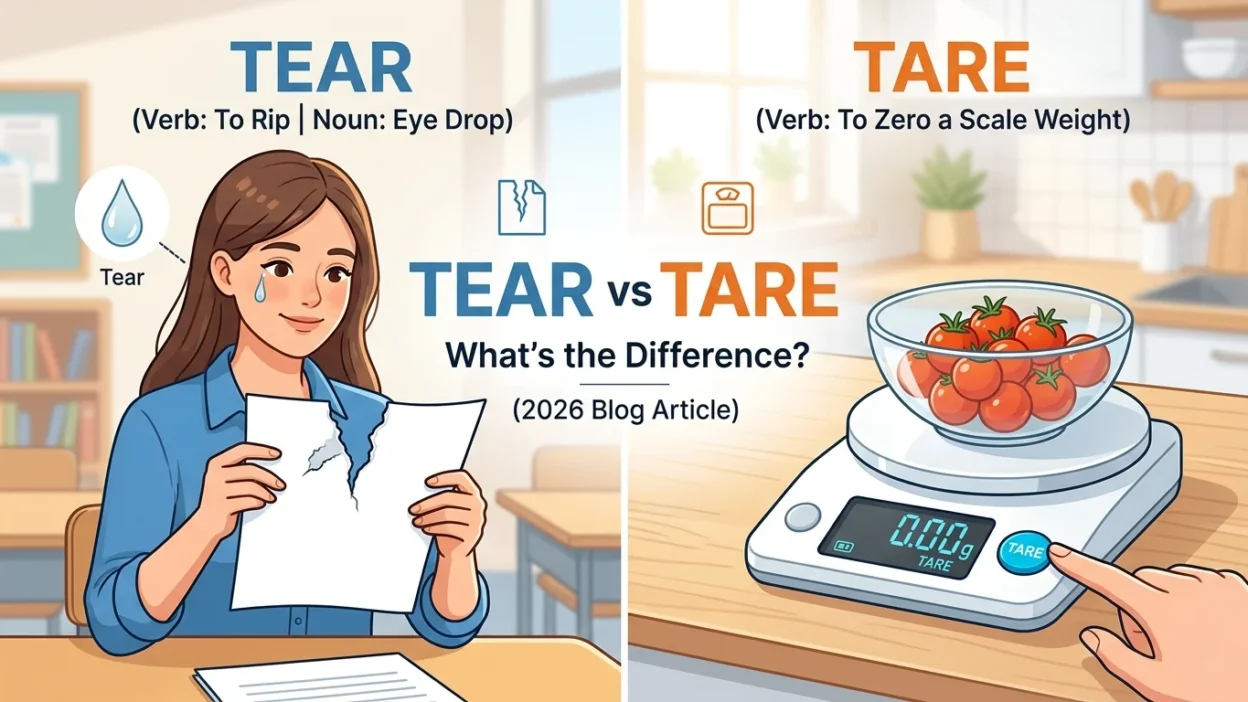
- Tear is usually connected to ripping something or crying.
- Tare is mostly used when talking about weight and measuring.
If you mix them up, your sentence may sound strange or completely wrong. The good news is that the difference is actually very simple once you learn how each word is used in daily life.
This guide explains everything in clear and easy English.
Quick Answer
- Tear = to rip something OR a drop from the eye when crying
- Tare = the weight of an empty container
Simple examples
- “Be careful not to tear the paper.”
- “A tear rolled down her face.”
- “Please subtract the tare weight from the total.”
Easy memory trick
- Tear → related to paper or crying
- Tare → related to weight and measuring
Simple Origin or Background Explanation
The word “tear”
The word tear has been used in English for hundreds of years.
It has two common meanings:
- To pull something apart
- Water from the eyes when someone cries
Examples:
- “Do not tear the book.”
- “She wiped away a tear.”
Even though the meanings are different, both uses are very common in daily English.
The word “tare”
The word tare comes from old trading and measuring language.
People needed a way to measure only the product inside a container, not the container itself.
For example:
- A jar weighs 200 grams
- The empty jar weighs 50 grams
- The 50 grams is the tare
This word is mostly used in:
- cooking
- shipping
- factories
- grocery stores
- science labs
Clear Explanation of the Difference
The biggest difference is the topic each word belongs to.
Tear
Tear is used when talking about:
Ripping or damaging something
Examples:
- “I accidentally tore my shirt.”
- “Do not tear the document.”
- “The bag may tear if it is too full.”
Crying
Examples:
- “A tear fell from his eye.”
- “The movie brought tears to my eyes.”
- “She cried happy tears.”
Tare
Tare is used when talking about weight.
It means:
the weight of an empty container that is not included in the final measurement
Examples:
- “Press the tare button on the scale.”
- “The tare weight is printed on the box.”
- “Remove the tare before calculating the product weight.”
Very simple comparison
- Tear → emotions or damage
- Tare → measurements and scales
Comparison
| Word | Meaning | Common Use | Example |
| Tear | To rip something | Paper, clothes, bags | “Do not tear the page.” |
| Tear | A drop from the eye | Crying, emotions | “A tear rolled down her cheek.” |
| Tare | Empty container weight | Scales, shipping, cooking | “Set the scale to tare.” |
Which One to Use and When
Use “tear” when talking about ripping
Examples:
- tearing paper
- tearing clothes
- tearing plastic
- tearing a package open
Sentences:
- “He tore the letter by mistake.”
- “The fabric can tear easily.”
Use “tear” when talking about crying
Examples:
- sad tears
- happy tears
- tears of joy
Sentences:
- “She had tears in her eyes.”
- “One tear fell down his face.”
Use “tare” when talking about measuring weight
Examples:
- kitchen scales
- food packaging
- delivery boxes
- shipping containers
Sentences:
- “Always remove the tare weight.”
- “Press tare before adding flour.”
Quick reminder
Ask yourself this question:
Am I talking about ripping, crying, or weight?
- ripping/crying = tear
- weight/measuring = tare
Common Mistakes People Make
Mistake 1: Using “tare” for crying
❌ “A tare rolled down her face.”
✅ “A tear rolled down her face.”
Why?
Because crying uses tear, not tare.
Mistake 2: Using “tear” for weight measurement
❌ “The tear weight is 20 grams.”
✅ “The tare weight is 20 grams.”
Why?
Weight measurement uses tare.
Mistake 3: Thinking they are spelling variations
Some learners think:
- tear = American English
- tare = British English
This is incorrect.
They are completely different words with different meanings.
Mistake 4: Wrong pronunciation understanding
Many learners try to pronounce them differently all the time.
In normal English speech, they often sound the same:
- tear
- tare
This is why spelling confusion happens so often.
The meaning depends on the sentence.
Everyday Real Life Examples
Emails
- “Please do not tear the envelope.”
- “The shipping report includes the tare weight.”
News
- “The emotional speech brought tears to many eyes.”
- “Truck drivers must know the tare weight of their vehicles.”
Social Media
- “This movie made me cry tears of joy.”
- “I accidentally tore my favorite jeans.”
- “Press the tare button before measuring ingredients.”
Daily Use
- “Be careful not to tear the bag.”
- “Her eyes filled with tears.”
- “The kitchen scale automatically resets the tare.”
Short Learning Section for Students and Beginners
Easy way to remember “tear”
Think about:
- paper tearing
- clothes tearing
- crying tears
These are emotional or physical actions.
Easy way to remember “tare”
Think about:
- scales
- boxes
- containers
- weight
This word is technical and measurement related.
Mini practice
Choose the correct word:
- “Do not ___ the page.”
- “The scale shows the tare weight.”
- “A ___ came from his eye.”
- “Please press the tare button.”
Answers:
- tear
- tare
- tear
- tare
Simple study tip
Create two mental pictures:
- tear → someone crying or paper ripping
- tare → a kitchen scale
Visual memory helps many learners remember words faster.
FAQ
Is “tear” the same as “tare”?
No. They are different words with different meanings.
- tear = rip or crying drop
- tare = empty container weight
Why do “tear” and “tare” sound similar?
In many English accents, they are pronounced almost the same. That is why learners often confuse them.
What does “tare weight” mean?
“Tare weight” means the weight of an empty container without the product inside.
Can “tear” be a noun and a verb?
Yes.
Noun:
- “A tear fell down her face.”
Verb:
- “Do not tear the paper.”
Is “tare” commonly used in daily conversation?
Not as much as “tear.”
“Tare” is mostly used in:
- cooking
- shipping
- factories
- science
- stores
What is the plural of “tear”?
The plural form is tears.
Example:
- “She cried tears of happiness.”
Do digital scales use the word “tare”?
Yes. Many kitchen and digital scales have a button called “tare.”
It resets the weight to zero after placing a container on the scale.
Which word is more common in English?
Tear is much more common in everyday English because people often talk about emotions and damaged objects.
Conclusion
The difference between tear and tare is simple once you connect each word to its main meaning.
Remember:
- Tear = ripping something or crying
- Tare = empty container weight used in measuring
Even though the words may sound alike, their meanings are completely different.
A good way to avoid mistakes is to focus on the situation:
- emotions or damage → tear
- scales or measurements → tare
With a little practice, you will quickly know which word to use correctly in speaking and writing.

Anthony Charles is the founder and lead content creator at Meanefy.com, a platform dedicated to exploring word meanings, language nuances, and everyday curiosities. With a passion for language and a keen eye for detail, Anthony aims to make complex words and concepts simple and accessible for readers around the world.