
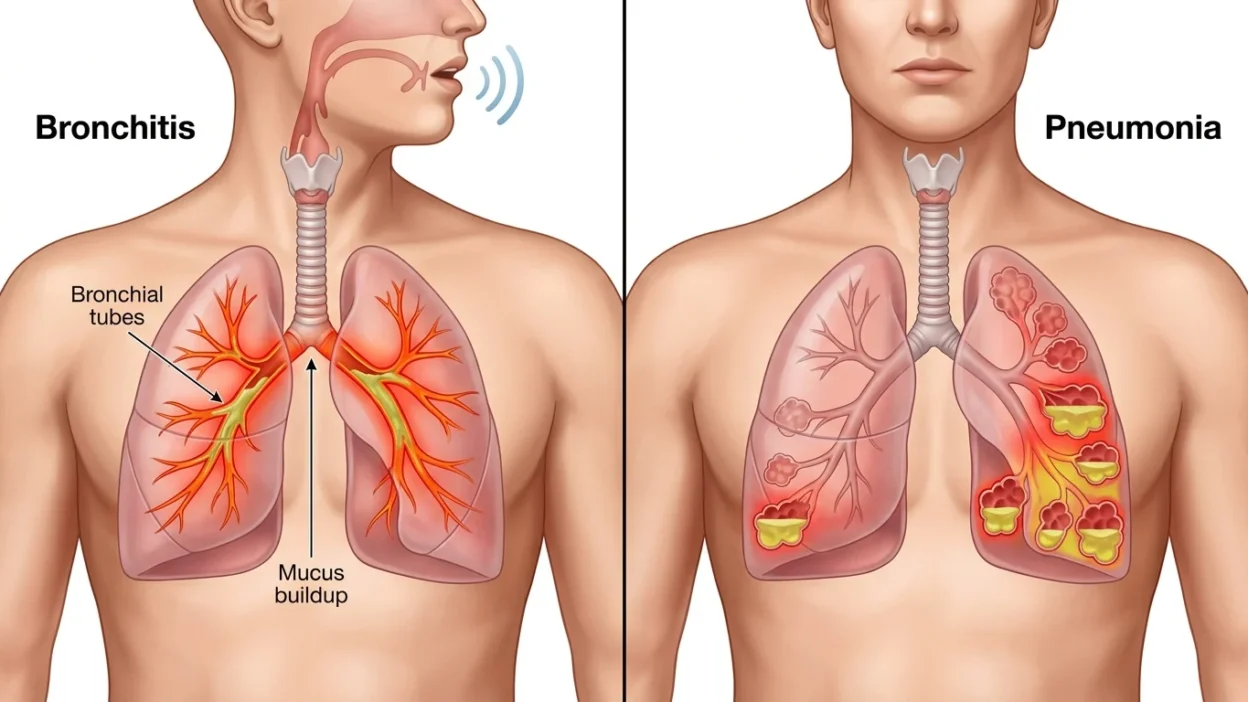
Many people hear the words bronchitis and pneumonia and think they mean the same thing. Both illnesses affect the lungs and breathing system. Both can cause coughing, chest discomfort, and tiredness. Because the symptoms can look similar, it is easy to mix them up.
However, bronchitis and pneumonia are different conditions. They affect different parts of the breathing system and can vary in how serious they are.
Understanding the difference can help you know what symptoms to watch for and when medical care may be needed.
Quick Answer
- Bronchitis is inflammation of the bronchial tubes, which carry air to and from the lungs.
- Pneumonia is an infection that affects the air sacs inside the lungs.
- Bronchitis often causes a long lasting cough with mucus.
- Pneumonia usually causes stronger symptoms, such as fever, chills, and trouble breathing.
- Pneumonia is generally more serious than bronchitis.
- Both conditions may be caused by viruses, bacteria, or other germs.
- A doctor may need tests to tell the difference.
Simple Origin or Background Explanation
To understand the difference, it helps to know how the breathing system works.
When you breathe:
- Air enters through the nose or mouth.
- It travels down the windpipe.
- The air moves through tubes called bronchial tubes.
- The tubes lead into the lungs.
- Tiny air sacs in the lungs take oxygen into the blood.
Bronchitis affects the bronchial tubes.
Pneumonia affects the air sacs inside the lungs.
Because these parts are connected, the symptoms can sometimes feel similar.
Clear Explanation of the Difference
What Is Bronchitis?
Bronchitis happens when the bronchial tubes become swollen and irritated.
This swelling makes the body produce extra mucus. As a result, people often develop a cough that may last for days or even weeks.
Common symptoms include:
- Coughing
- Mucus production
- Mild fever
- Sore throat
- Chest discomfort
- Feeling tired
Bronchitis is often caused by viruses, including the same viruses that cause colds and flu.
What Is Pneumonia?
Pneumonia is an infection in the lungs.
The tiny air sacs inside the lungs may fill with fluid or pus. This makes breathing harder because the lungs cannot move oxygen as easily.
Common symptoms include:
- Strong cough
- Fever
- Chills
- Fast breathing
- Shortness of breath
- Chest pain
- Weakness and tiredness
Pneumonia can be caused by viruses, bacteria, or fungi.
Why Pneumonia Is Usually More Serious
With bronchitis, the main problem is irritation in the air tubes.
With pneumonia, the infection reaches deeper into the lungs. This can reduce the amount of oxygen getting into the body.
For this reason, pneumonia often needs closer medical attention, especially in:
- Babies
- Older adults
- People with weak immune systems
- People with long term health conditions
Comparison Table
| Feature | Bronchitis | Pneumonia |
| Affected area | Bronchial tubes | Air sacs in the lungs |
| Main problem | Inflammation | Infection |
| Common symptom | Cough with mucus | Fever and breathing problems |
| Severity | Often mild to moderate | Often more serious |
| Fever | Mild or none | Often higher |
| Shortness of breath | Sometimes | More common |
| Chest pain | Mild discomfort | Can be stronger |
| Recovery time | Days to weeks | Weeks or longer |
| Need for medical treatment | Sometimes | More often |
| Risk of complications | Lower | Higher |
Which One to Use and When
When Talking About Bronchitis
Use bronchitis when discussing:
- Swollen bronchial tubes
- A lingering cough
- Mucus production
- Mild breathing illness after a cold
Example:
“After my cold, I developed bronchitis and had a cough for several weeks.”
When Talking About Pneumonia
Use pneumonia when discussing:
- Lung infection
- Serious breathing problems
- High fever
- Fluid in the lungs
Example:
“The doctor diagnosed pneumonia after a chest examination and tests.”
When You Are Not Sure
Because symptoms can overlap, it is best not to guess.
A healthcare professional may use:
- Physical examination
- Chest X ray
- Blood tests
- Oxygen level checks
These tests can help identify the correct condition.
Common Mistakes People Make
Thinking They Are the Same Illness
They both affect breathing, but they affect different parts of the respiratory system.
Assuming Every Bad Cough Is Pneumonia
Many coughs come from bronchitis, colds, allergies, or other conditions.
Ignoring Breathing Problems
Shortness of breath should never be ignored, especially if it becomes worse.
Believing Bronchitis Always Needs Antibiotics
Many cases of bronchitis are caused by viruses. Antibiotics do not work against viruses.
Thinking Pneumonia Only Affects Older People
People of all ages can develop pneumonia, although some groups are at higher risk.
Everyday Real Life Examples
In Emails
“I may need a few days off because my doctor says I have pneumonia.”
“My cough is from bronchitis, but I am recovering.”
In News Reports
“Health officials are encouraging vaccination to help prevent pneumonia.”
“Doctors report an increase in bronchitis cases during flu season.”
On Social Media
“I finally got over bronchitis after three weeks of coughing.”
“My grandmother is being treated for pneumonia and is feeling better.”
In Daily Conversations
Person A: “Why are you coughing so much?”
Person B: “The doctor said it’s bronchitis.”
Person A: “Why are you in the hospital?”
Person B: “I have pneumonia and need treatment.”
Short Learning Section for Students and Beginners
A simple way to remember the difference is:
Think About the Location
- Bronchitis = Bronchial tubes
- Pneumonia = Lungs
Think About the Severity
- Bronchitis is often less serious.
- Pneumonia is usually more serious.
Memory Trick
The word pneumonia is often linked with a lung infection.
The word bronchitis is linked with inflammation of the bronchial tubes.
If you remember where each condition occurs, understanding the difference becomes much easier.
FAQ Section
Is bronchitis the same as pneumonia?
No. Bronchitis affects the bronchial tubes, while pneumonia affects the air sacs inside the lungs.
Which is more serious, bronchitis or pneumonia?
Pneumonia is generally more serious because it affects the lungs directly.
Can bronchitis turn into pneumonia?
Sometimes an infection may spread or become more severe, but not every case of bronchitis turns into pneumonia.
Do both conditions cause coughing?
Yes. Coughing is one of the most common symptoms of both illnesses.
Can children get bronchitis and pneumonia?
Yes. Both conditions can occur in children.
Does pneumonia always require hospital treatment?
No. Some people recover at home, while others may need hospital care depending on their age, health, and symptoms.
Can viruses cause both bronchitis and pneumonia?
Yes. Viruses can cause either condition.
How can a doctor tell the difference?
A doctor may use symptoms, a physical examination, chest imaging, and other tests to make a diagnosis.
Conclusion
Bronchitis and pneumonia are often confused because both affect breathing and can cause coughing. The key difference is where the problem occurs. Bronchitis affects the bronchial tubes that carry air to the lungs, while pneumonia affects the air sacs inside the lungs.
Bronchitis is often less serious and mainly causes coughing and mucus. Pneumonia is usually more serious and can cause fever, breathing difficulties, and lung infection symptoms.
Understanding this simple difference can help you recognize the terms correctly and communicate more clearly when discussing respiratory illnesses.