Many English learners and even native speakers get confused between the words “creeped” and “crept.” They look similar and both seem related to the verb “creep,” which means to move slowly and quietly. But when you try to use them in a sentence, things become unclear.
Should you say “I crept into the room” or “I creeped into the room”? Why do people also say “I got creeped out”? Are both words correct or only one?
In this article, we will clear all confusion in very simple English so you can understand the difference easily and use the right word with confidence.
Quick Answer
Here is the simple answer first:
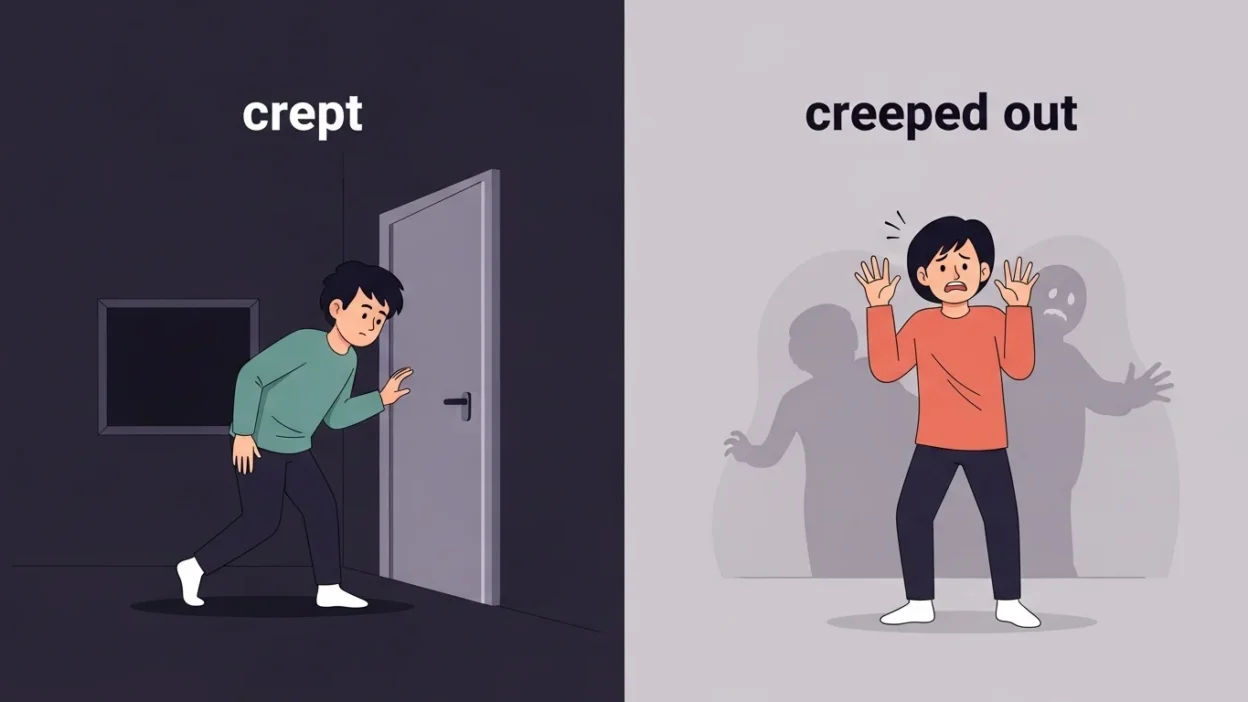
- Crept is the correct past tense of the verb “creep.”
- Creeped is mostly informal and not used as the normal past tense.
- Creeped out is a common expression meaning “felt scared or uncomfortable.”
In most normal English sentences:
- Use crept for movement.
- Use creeped out only for feelings (informal use).
Simple Origin and Background
The verb “creep” has been in English for a very long time. It means to move slowly, quietly, and carefully so no one notices you.
Example:
- A cat creeping in the garden
- A person creeping silently in the dark
In old English grammar rules, the past tense became “crept.” This is the standard and correct form used in writing, books, exams, and formal speech.
Later in modern informal English, people started using “creeped” in some situations, especially in expressions like “creeped out,” which means feeling uneasy or scared.
So now we have:
- A correct grammar form: crept
- A casual expression: creeped out
Clear Explanation of the Difference
Let’s understand both words in the simplest way.
Crept
“Crept” is the past tense and past participle of “creep.”
It is used when someone or something moves slowly and quietly.
Examples:
- She crept into the kitchen at night.
- The cat crept under the table.
- He crept behind the wall to hide.
This is the correct and standard form. You will see it in books, exams, newspapers, and formal writing.
Creeped
“Creeped” is not the normal past tense in standard English.
But it is used in one common expression:
- Creeped out = felt scared, strange, or uncomfortable
Examples:
- That movie creeped me out.
- I was creeped out by the noise.
- The dark room creeped her out.
Outside of this expression, “creeped” is usually incorrect.
Comparison
| Word | Meaning | Correct Usage | Example |
| crept | past tense of creep (movement) | Always correct | He crept into the room |
| creeped | informal; used in “creeped out” | Only in casual phrase | The story creeped me out |
When to Use Each One
To avoid mistakes, follow these simple rules:
Use “crept” when talking about movement
Whenever you describe someone or something moving slowly and quietly:
- Moving into a room
- Walking silently
- Sneaking around
Examples:
- The thief crept into the house.
- The child crept toward the door.
- I crept past my sleeping dog.
Use “creeped out” when talking about feelings
When something makes you feel scared, uncomfortable, or strange:
- Horror movies
- Strange places
- Weird situations
Examples:
- I was creeped out by the empty street.
- She got creeped out in the dark basement.
- That sound really creeped me out.
Avoid using “creeped” alone
Do not say:
- ❌ I creeped into the room
- ❌ The cat creeped silently
Instead say:
- ✔ I crept into the room
- ✔ The cat crept silently
Common Mistakes People Make
Many learners make small mistakes with these words. Let’s look at them so you can avoid them.
Mixing movement and feeling
Some people mix both meanings:
Wrong:
- I creeped into the house
Correct:
- I crept into the house
Using “creeped” as past tense
Wrong:
- He creeped behind the door
Correct:
- He crept behind the door
Confusing “creeped out”
Some learners think “creeped out” is the past tense of movement, but it is not.
Wrong idea:
- “creeped out” means moved slowly
Correct meaning:
- “creeped out” means felt scared or uncomfortable
Overusing informal forms in writing
In exams or formal writing, using “creeped” alone is usually considered wrong. Always use “crept.”
Everyday Real Life Examples
Let’s see how these words are used in real life.
Daily life situations
- I crept into my room so I would not wake my parents.
- The baby crept toward the toy quietly.
- The dog crept under the bed during the storm.
Social media or chat
- That creepy video creeped me out 😨
- The dark picture really creeped me out
- I felt creeped out watching that story
Movies and stories
- The villain crept through the dark hallway.
- The character crept behind the enemy.
- The horror scene creeped me out completely.
News or reports (simple usage)
- The suspect crept into the building at night.
- The reporter described how the animal crept through the forest.
Short Learning Section for Students
Here is a very simple way to remember:
- Creep = present
- Crept = past (movement)
- Creeped out = feeling (informal expression)
Try this trick:
- If someone is moving → use crept
- If someone is scared or uncomfortable → use creeped out
Practice sentences:
- I creep into the room (present)
- I crept into the room (past)
- That movie creeped me out (feeling)
If you remember this pattern, you will not get confused again.
FAQ
Is “creeped” correct English?
“Creeped” is mostly informal. It is not used as the normal past tense. The correct form is “crept.”
What is the past tense of creep?
The past tense is crept.
Why do people say “creeped out”?
“Creeped out” is a common informal phrase that means feeling scared, uncomfortable, or uneasy.
Can I say “I creeped into the room”?
No, this is incorrect. You should say “I crept into the room.”
Is “crept” formal or informal?
“Crept” is correct in both formal and informal English.
What does “creeped out” mean in simple words?
It means you felt scared, strange, or uncomfortable because of something.
Can “creeped” be used alone?
No, “creeped” alone is not normally correct. It is mainly used in the phrase “creeped out.”
Which one should I learn first?
Learn “crept” first because it is the correct past tense. Then learn “creeped out” as a common expression.
Conclusion
The confusion between “creeped” and “crept” is very common, but the solution is simple.
- Crept is the correct past tense for movement.
- Creeped out is a casual expression for feeling scared or uncomfortable.
- Creeped alone is not normally correct in standard grammar.
If you remember just one thing, remember this:
When talking about movement, always use crept.
With a little practice, you will never confuse these words again, and your English will sound more natural and correct.