Many people mix up psoriasis and eczema because both are skin problems. They can cause red skin, itching, dryness, and discomfort. When someone sees flaky or irritated skin, it is easy to think the two conditions are the same.
But psoriasis and eczema are different health conditions. They happen for different reasons, look different in many cases, and may need different treatments.
Learning the difference can help students, beginners, parents, and patients better understand skin health and know when to ask for medical help.
Quick Answer
- Psoriasis is a skin condition where skin cells grow too fast.
- Eczema is a condition that makes the skin sensitive, dry, and itchy.
- Psoriasis often causes thick, silvery scales on the skin.
- Eczema usually causes very itchy, dry, or cracked skin.
- Psoriasis is more connected to the immune system.
- Eczema is often linked to allergies, sensitive skin, or irritants.
- Both conditions are not contagious. You cannot catch them from another person.
Simple Origin or Background Explanation
What Is Psoriasis?
Psoriasis is a long term skin condition. It happens when the body makes new skin cells too quickly. Normally, skin cells grow and replace old cells slowly. In psoriasis, this process becomes much faster.
Because of this, thick patches of skin build up on the surface. These patches may look red, white, silver, or flaky.
Psoriasis can appear on:
- Elbows
- Knees
- Scalp
- Lower back
- Hands
- Feet
Some people also get joint pain with psoriasis. This is called psoriatic arthritis.
What Is Eczema?
Eczema is another long term skin condition. The most common type is called atopic eczema or atopic dermatitis.
Eczema makes the skin weak and sensitive. The skin loses moisture easily and reacts strongly to things like:
- Soap
- Dust
- Heat
- Sweat
- Certain fabrics
- Allergies
This causes itching, dryness, redness, and irritation.
Eczema is very common in children, but adults can have it too.
Clear Explanation of the Difference
Skin Appearance
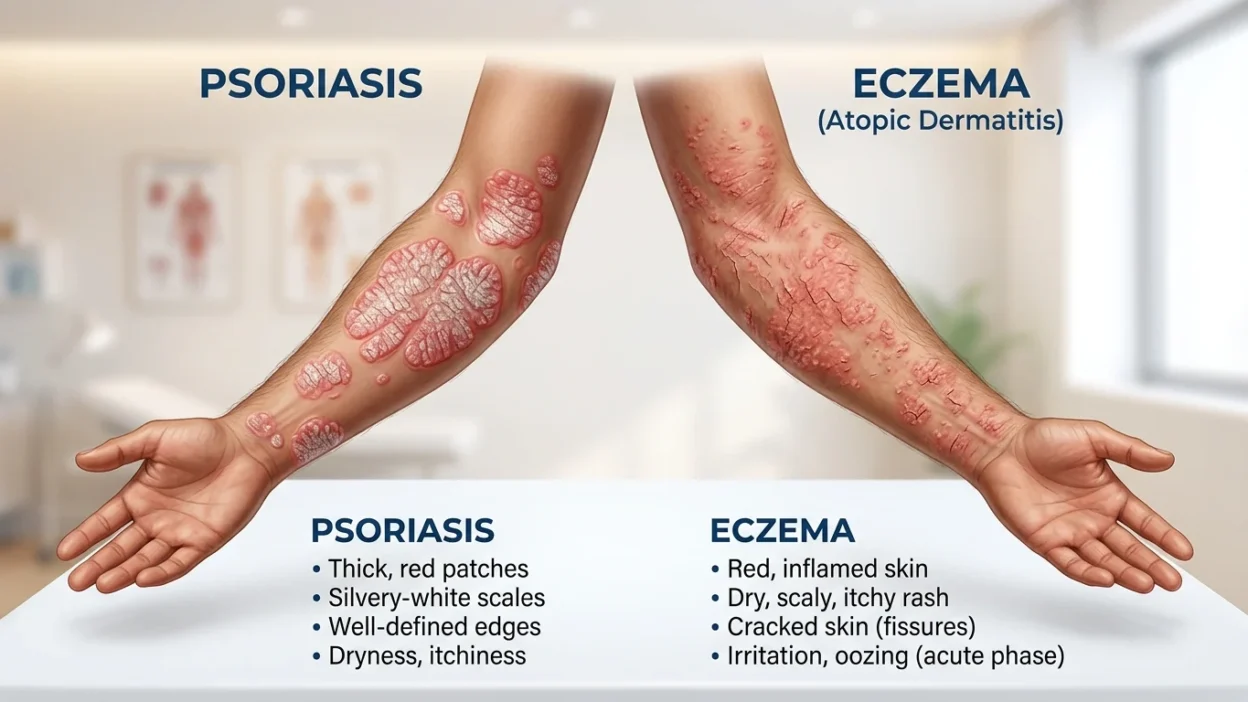
Psoriasis usually causes:
- Thick patches
- Silvery or white scales
- Clear edges around patches
- Dry and cracked skin
Eczema usually causes:
- Soft red patches
- Very itchy skin
- Dry or rough areas
- Sometimes small bumps or fluid
Itching Level
Eczema is usually itchier than psoriasis. Some people with eczema feel strong itching all day or night.
Psoriasis can itch too, but many people mainly notice burning, pain, or thick skin.
Common Body Areas
Psoriasis often appears on:
- Knees
- Elbows
- Scalp
- Nails
Eczema often appears on:
- Hands
- Neck
- Face
- Inside elbows
- Behind knees
Age Difference
- Eczema often starts in childhood.
- Psoriasis usually begins in teenagers or adults.
Causes
Psoriasis is mainly related to the immune system and genetics.
Eczema is often related to skin sensitivity, allergies, environment, and family history.
Comparison
| Feature | Psoriasis | Eczema |
| Main problem | Skin cells grow too fast | Skin becomes sensitive and dry |
| Common symptom | Thick flaky patches | Strong itching |
| Skin texture | Thick and scaly | Dry and rough |
| Color | Red with silver scales | Red or dark irritated skin |
| Common age | Teens and adults | Babies and children |
| Common places | Elbows, knees, scalp | Face, hands, inner elbows |
| Itching | Mild to medium | Often very strong |
| Triggered by | Stress, illness, injury | Allergies, soap, heat |
| Contagious? | No | No |
| Long term condition? | Yes | Yes |
Which One to Use and When
When It Is Probably Psoriasis
It may be psoriasis if:
- The skin looks thick and flaky
- You see silver colored scales
- Patches appear on elbows or knees
- The skin feels painful or burns
- Nail changes appear
When It Is Probably Eczema
It may be eczema if:
- The itching is very strong
- Skin becomes dry after soap or weather changes
- A child has itchy skin patches
- The skin becomes irritated after allergies
- Rashes appear in body folds
Important Reminder
Only a doctor or skin specialist can give a true diagnosis. Some skin conditions look very similar.
Common Mistakes People Make
Thinking They Are the Same Condition
Many people believe psoriasis and eczema are simply two names for one disease. They are not.
Using the Wrong Cream
Some creams help eczema but may not help psoriasis. Using random products without advice can make skin worse.
Ignoring Triggers
People often forget that stress, weather, soap, and allergies can affect skin problems.
Scratching Too Much
Scratching can damage the skin and increase irritation or infection.
Believing They Are Contagious
Neither psoriasis nor eczema spreads from person to person.
Everyday Real Life Examples
Emails
Example 1
“I went to the doctor because I thought my eczema was getting worse, but it was actually psoriasis.”
Example 2
“My child has eczema, so we use gentle soap and skin cream every day.”
News
Example 1
“Doctors are studying new treatments for psoriasis patients.”
Example 2
“Cold weather can make eczema symptoms worse for many people.”
Social Media
Example 1
“I finally found a cream that helps my eczema during winter.”
Example 2
“Living with psoriasis can be stressful, but support groups help.”
Daily Use
Example 1
“My elbows became dry and flaky because of psoriasis.”
Example 2
“Hot showers sometimes make my eczema itch more.”
Short Learning Section for Students and Beginners
Easy Memory Trick
You can remember the difference like this:
- Psoriasis = thick patches and scales
- Eczema = itchy and sensitive skin
Simple Sentence Practice
- “Psoriasis causes thick skin patches.”
- “Eczema makes the skin itchy and dry.”
Beginner Tip
If you forget the difference, focus on the main symptom:
- Thick scales → psoriasis
- Strong itching → eczema
FAQ Section
Is psoriasis worse than eczema?
Not always. Both can be mild or severe depending on the person.
Can a person have both psoriasis and eczema?
Yes. Some people may have both conditions at different times.
Is eczema caused by poor hygiene?
No. Eczema is not caused by being dirty.
Can stress affect psoriasis and eczema?
Yes. Stress can make both conditions worse.
Do psoriasis and eczema go away forever?
They are usually long term conditions. Symptoms may improve and return later.
Are both conditions painful?
Eczema is usually itchier, while psoriasis may feel painful, dry, or burning.
Can weather affect them?
Yes. Cold weather and dry air often make symptoms worse.
Should I see a doctor for skin problems?
Yes, especially if symptoms are severe, painful, spreading, or not improving.
Simple Ways to Care for the Skin
Helpful Habits
- Use gentle soap
- Keep skin moisturized
- Avoid scratching
- Drink enough water
- Manage stress
- Wear soft clothing
Things to Avoid
- Very hot showers
- Strong chemicals
- Harsh skin products
- Too much scratching
- Ignoring symptoms for a long time
Conclusion
Psoriasis and eczema may look similar at first, but they are different skin conditions. Psoriasis usually causes thick, scaly patches, while eczema mainly causes itchy, dry, and sensitive skin.
Understanding the difference helps people choose better care, avoid common mistakes, and know when to get medical advice.
The easiest way to remember is:
- Psoriasis = thick and flaky
- Eczema = itchy and sensitive
With proper care and treatment, many people manage both conditions successfully and live normal, healthy lives.

Anthony Charles is the founder and lead content creator at Meanefy.com, a platform dedicated to exploring word meanings, language nuances, and everyday curiosities. With a passion for language and a keen eye for detail, Anthony aims to make complex words and concepts simple and accessible for readers around the world.