Many people confuse herpes and pimples because both can appear as small bumps on the skin. Sometimes they may look similar at first, especially when they appear around the mouth, face, or other parts of the body.
However, herpes and pimples are very different conditions. They have different causes, symptoms, and treatments. Knowing the difference can help you understand what is happening and decide whether you need medical advice.
This guide explains everything in simple language so students, beginners, and general readers can easily understand the difference between herpes and a pimple.
Quick Answer
- Herpes is caused by a virus.
- A pimple is caused by clogged pores, oil, bacteria, or skin irritation.
- Herpes often appears as small painful blisters grouped together.
- Pimples usually appear as single bumps filled with pus or oil.
- Herpes may cause itching, burning, or tingling before the sores appear.
- Pimples usually do not cause tingling before they form.
- Herpes can spread from person to person.
- Pimples are not contagious and cannot spread to others.
- Herpes may come back again after healing.
- Most pimples disappear and do not return in the exact same spot.
Simple Origin or Background Explanation
What Is Herpes?
Herpes is an infection caused by the herpes simplex virus. There are different types of this virus, but both can cause sores or blisters.
The virus stays in the body after infection. Because of this, symptoms may return from time to time.
Common places where herpes appears include:
- Around the lips
- Inside or around the mouth
- Around the genital area
- Sometimes on nearby skin
What Is a Pimple?
A pimple is a common skin problem. It happens when a pore becomes blocked by:
- Oil
- Dead skin cells
- Dirt
- Bacteria
Pimples can appear almost anywhere on the body, especially where there are many oil glands.
Common locations include:
- Face
- Forehead
- Nose
- Chin
- Chest
- Back
- Shoulders
Clear Explanation of the Difference
Although herpes and pimples may both appear as bumps, there are several important differences.
Appearance
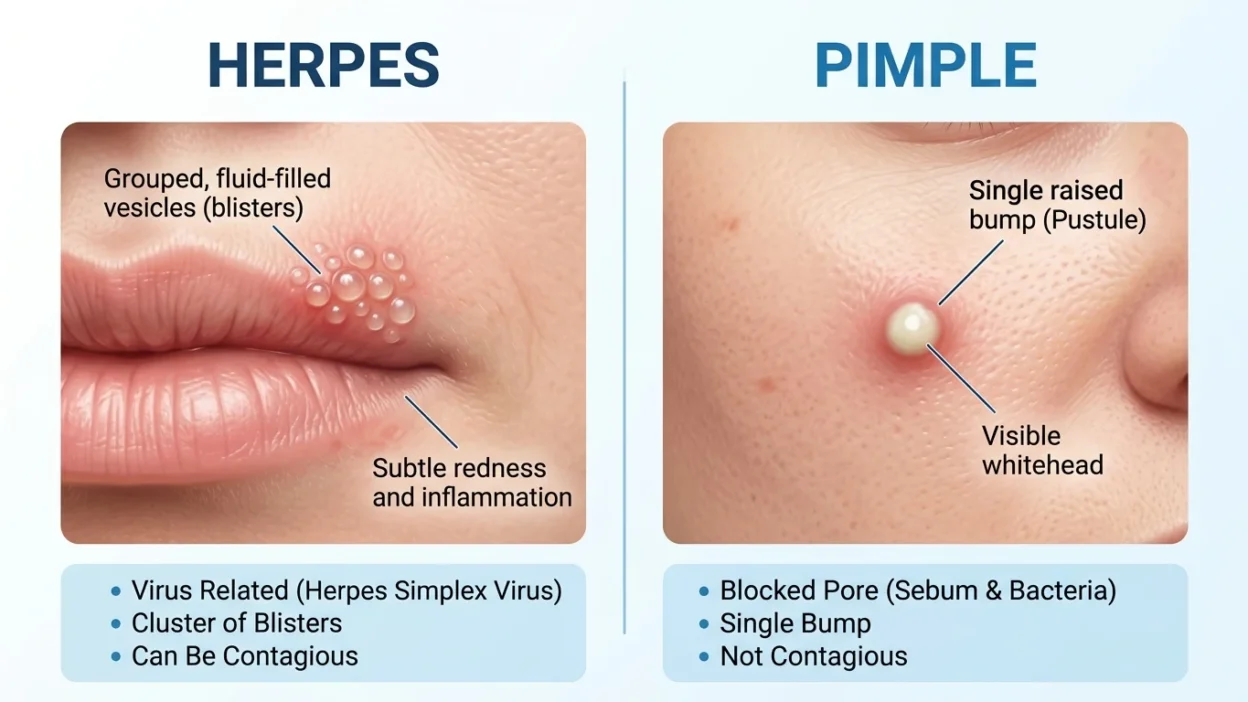
Herpes often begins as tiny blisters. These blisters usually appear in a cluster or group.
A pimple is usually a single raised bump. It may contain white or yellow pus.
Pain Level
Herpes sores are often painful. Many people feel burning, itching, or tingling before the sores appear.
Pimples may feel sore when touched, but they usually do not cause burning or tingling beforehand.
Cause
Herpes is caused by a virus.
Pimples are caused by blocked pores and skin related factors.
Spreading
Herpes can spread through close contact.
Pimples cannot spread from one person to another.
Healing Process
Herpes blisters often break open, form a crust, and then heal.
Pimples usually shrink and disappear without forming clusters of blisters.
Comparison Table
| Feature | Herpes | Pimple |
| Cause | Virus | Blocked pore |
| Appearance | Group of small blisters | Single bump |
| Contagious | Yes | No |
| Pain | Often painful or burning | Usually mild soreness |
| Tingling Before Appearance | Common | Rare |
| Contains | Clear fluid at first | Pus, oil, or trapped material |
| Common Areas | Lips, mouth, genital area | Face, chest, back, shoulders |
| Can Return | Yes | Not usually in the exact same spot |
| Healing Pattern | Blister → sore → crust | Bump gradually shrinks |
Which One to Use and When
When It Is More Likely Herpes
It may be herpes if:
- You notice tingling before sores appear.
- Small blisters appear in a cluster.
- The area feels burning or itchy.
- The sores break open and crust over.
- Similar sores have appeared before in the same area.
When It Is More Likely a Pimple
It may be a pimple if:
- There is a single bump.
- The bump contains white or yellow pus.
- It appears in an oily area of the skin.
- There are other acne spots nearby.
- There is no burning or tingling before it appears.
When to See a Doctor
Consider seeking medical advice if:
- You are unsure what the bump is.
- The sore is very painful.
- Symptoms keep returning.
- The area becomes severely swollen.
- You have a fever or feel unwell.
A healthcare professional can provide a proper diagnosis.
Common Mistakes People Make
Assuming Every Lip Bump Is Herpes
Many bumps near the mouth are actually pimples, skin irritation, or other harmless conditions.
Thinking Every Painful Bump Is a Pimple
Pain alone does not mean something is a pimple. Herpes sores can also be painful.
Popping the Bump Immediately
People often squeeze bumps before knowing what they are. This can irritate the skin and may make the problem worse.
Ignoring Repeated Symptoms
If the same type of sore keeps returning, it is important to pay attention and seek medical advice if needed.
Self Diagnosing From Photos
Pictures online may not accurately match your situation. Different skin conditions can look similar.
Everyday Real Life Examples
In Emails
Correct Example:
“I noticed a small cluster of blisters on my lip and wanted to ask whether it could be herpes.”
Correct Example:
“I have a pimple on my forehead that has been there for three days.”
In News
News reports may discuss herpes as a viral infection that affects many people worldwide.
News articles about acne usually focus on skin health, hormones, or skincare habits.
On Social Media
People often post questions such as:
- “Is this a pimple or a cold sore?”
- “Why do I keep getting bumps near my lip?”
- “How can I tell if this is acne or herpes?”
These questions show how common the confusion is.
In Daily Conversations
Someone might say:
- “I thought it was a pimple, but it turned out to be herpes.”
- “It’s just a pimple from oily skin.”
The correct term depends on the actual cause of the bump.
Short Learning Section for Students and Beginners
Here is a simple way to remember the difference:
Remember the Word “Virus”
If the condition is caused by a virus and appears as grouped blisters, think about herpes.
Remember the Word “Pore”
If the condition starts because a pore becomes blocked, think about a pimple.
Easy Memory Trick
- Herpes = Virus + Blisters
- Pimple = Blocked Pore + Bump
This simple rule helps many beginners remember the difference.
FAQ
Is herpes always painful?
Not always. Some people have mild symptoms, while others experience noticeable pain or burning.
Can a pimple look like herpes?
Yes. In the early stages, some pimples may look similar to herpes sores, which is why people often get confused.
Can herpes appear as only one bump?
Sometimes herpes may start with a small area, but it usually develops into a group of blisters rather than a typical single pimple.
Are pimples contagious?
No. Pimples cannot spread from one person to another.
Can herpes come back after healing?
Yes. The virus remains in the body, so symptoms may return later.
Should I pop a suspicious bump?
It is generally better not to squeeze or pop it until you know what it is.
Can stress affect herpes?
For some people, stress may be linked to future outbreaks.
Can adults and teenagers get both herpes and pimples?
Yes. Both conditions can occur in teenagers and adults.
Conclusion
Herpes and pimples may look similar at first, but they are very different. Herpes is caused by a virus and usually appears as painful clusters of blisters. A pimple is caused by a blocked pore and usually appears as a single bump filled with oil or pus.
The easiest way to remember the difference is this:
- Herpes = viral blisters that can spread
- Pimple = blocked pore that is not contagious
If you are ever unsure about a skin bump, especially if it is painful, keeps returning, or looks unusual, a healthcare professional can help determine the cause. Understanding these basic differences can help you feel more confident and less confused when comparing herpes and pimples.

Anthony Charles is the founder and lead content creator at Meanefy.com, a platform dedicated to exploring word meanings, language nuances, and everyday curiosities. With a passion for language and a keen eye for detail, Anthony aims to make complex words and concepts simple and accessible for readers around the world.