
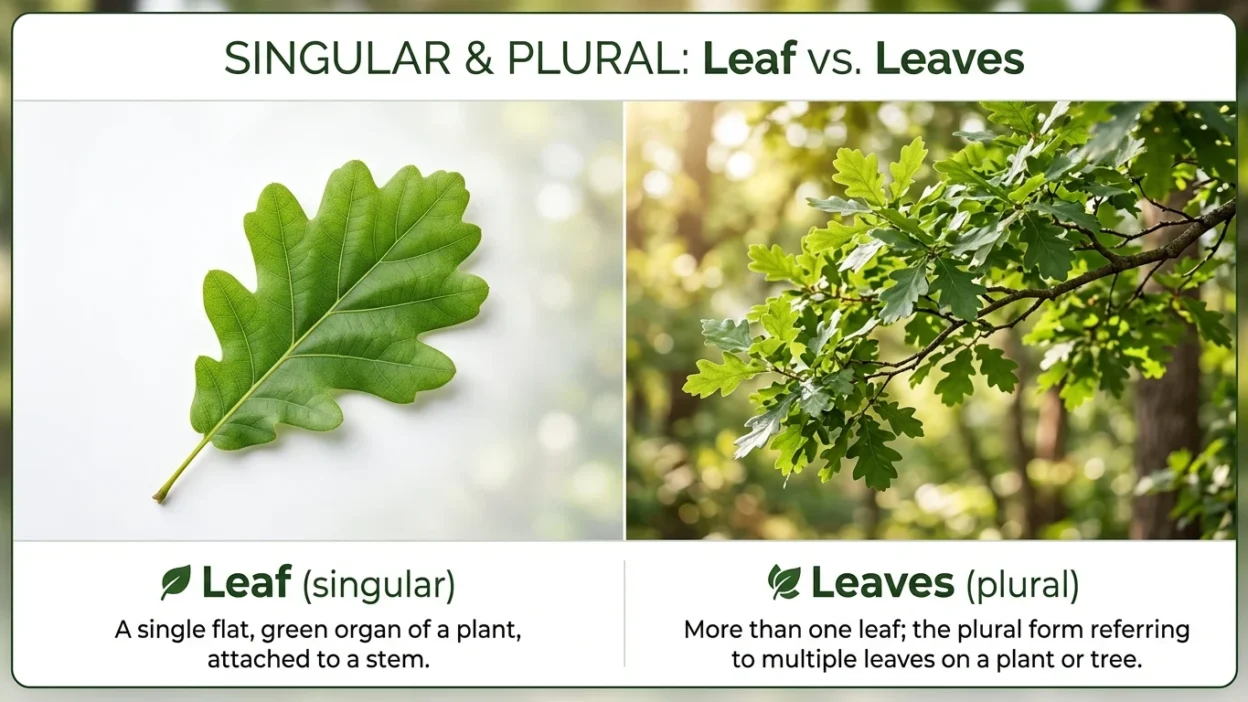
When I first started working with English content, I often saw people mixing Leaves and Leafs, especially in emails, blogs, and even drafts. The simple truth is that Leaves is the correct plural in standard English, while Leafs only appears in special names like Toronto Maple Leafs. This is the core idea behind Leaves or Leafs – Quick Answer, and it clears most confusion immediately.
The real issue begins when people forget the The Core Grammar Rule Behind Leafs or Leaves: the word leaf changes to leaves because of the f to ves rule, not by simply adding “s.” That’s why we say Leaves: The Standard Plural Noun in nature, books, and writing, and avoid Using “leafs” in general writing. Still, you’ll notice Leaves or Leafs in Everyday Examples like social media posts or casual speech, where mistakes often come from Why People Get Confused So Often, especially when they rely on sound instead of Grammar Rules or context.
To understand it properly, you must look at the Meaning and Definition of Each Word. A Leaf becomes Leaves in plural form, which follows a natural The Origin of Leafs or Leaves pattern from Old English and linguistic evolution. This is why we say Leaves in Science and Nature, Leaves in Books and Printing, and follow consistent When to Use Each Word rules across formal writing.
Quick Answer
Here is the simple answer:
- Leaves → Correct plural of “leaf” (trees, plants, nature)
- Leafs → Not used for nature; only used as a name or title
So in normal English:
- One leaf → many leaves ✔️
- One leaf → many leafs ❌ (incorrect for plants)
But:
- Toronto Maple Leafs (a sports team name) ✔️
Simple Origin or Background
The word “leaf” comes from Old English, where many words changed their plural forms differently from modern rules.
In older English, some words did not just add “-s” to become plural. Instead, they changed their vowel sound or spelling.
That is why:
- leaf → leaves
- wife → wives
- life → lives
This type of change is called an “irregular plural.”
Over time, English became simpler, and most words now just add “-s.” But some old words still keep their special plural forms.
“Leaf” is one of those old words.
Clear Explanation of the Difference
Let’s understand both words clearly.
Leaves (Correct Natural Plural)
“Leaves” is the correct plural form when talking about:
- trees
- plants
- flowers
- nature
Examples:
- The tree has green leaves.
- Autumn leaves fall on the ground.
- I collected dry leaves in the garden.
So whenever you talk about real leaves on plants, always use leaves.
Leafs (Special Use Only)
“Leafs” is NOT used in normal English for plants.
But it can appear in:
- Sports team names
- Brand names
- Titles chosen for style
Example:
- Toronto Maple Leafs (a hockey team name)
In this case, “Leafs” is a chosen spelling, not a grammar rule.
So you should NOT use “leafs” in daily English writing.
Comparison Table
| Word | Meaning | Correct Usage | Example |
| Leaf | One part of a plant | Singular | A green leaf |
| Leaves | Plural of leaf | Natural/normal English | The tree has many leaves |
| Leafs | Special name only | Not for nature | Toronto Maple Leafs |
Which One to Use and When
To make it super simple:
Use “leaves” when:
- Talking about plants
- Writing school essays
- Speaking English in daily life
- Describing nature or trees
Use “leafs” when:
- Referring to official names (like sports teams)
- Copying a brand or title that already uses it
Safe rule to remember:
If you are not talking about a name, always use leaves.
This rule will keep your English correct in almost all situations.
Common Mistakes People Make
Many learners mix these two words. Here are the most common mistakes:
Using “leafs” for plants
Wrong: The trees have green leafs.
Correct: The trees have green leaves.
Thinking both are interchangeable
Some people think both forms are correct in daily English. This is not true.
Overthinking irregular plurals
Learners often try to apply one rule to all words. But English has exceptions.
Copying spelling from team names
Seeing “Leafs” in a sports team name and using it in essays is a common mistake.
Everyday Real Life Examples
Let’s see how “leaves” is used in daily life.
In emails
- “Please remove dry leaves from the garden before tomorrow.”
In news
- “Strong wind blew the leaves across the street.”
In social media
- “I love the autumn leaves in this photo 🍂”
In daily conversation
- “The tree in front of my house has big green leaves.”
These examples show that “leaves” is the normal and natural word in English.
Learning Section for Students and Beginners
If you are learning English, here is a simple way to remember:
Think of one leaf, many leaves
- One → leaf
- More than one → leaves
Remember the “F to V” change
Some English words change like this:
- leaf → leaves
- knife → knives
- wife → wives
This pattern helps you understand many irregular plurals.
Practice trick
Try this exercise:
- A single leaf = leaf
- Many leaves = leaves
Repeat it a few times. It helps your brain remember the correct form.
FAQ
Is “leafs” correct in English?
No, “leafs” is not correct for plants. The correct plural is “leaves.”
Why does “leaf” change to “leaves”?
It is an old English rule where some words change spelling instead of just adding “s.”
Can I use “leafs” in writing?
Only if it is part of a proper name like a sports team. Otherwise, do not use it.
What is the singular form of leaves?
The singular form is “leaf.”
Is “leaves” formal or informal?
It is a normal English word used in both formal and informal writing.
Why do some names use “Leafs”?
Some teams or brands choose their own spelling for identity or style.
How can I remember the correct word?
Just remember: nature = leaves, names = leafs.
Is this mistake common?
Yes, many English learners confuse these two words.
Conclusion
The confusion between “leaves” and “leafs” is very common, but the rule is actually simple.
- Use leaves for plants and nature
- Use leafs only for special names
If you remember this one idea, you will never make a mistake again.
English has many irregular words, but once you learn the patterns, it becomes much easier. Keep practicing with real examples, and soon the correct form will feel natural every time you write or speak.

Anthony Charles is the founder and lead content creator at Meanefy.com, a platform dedicated to exploring word meanings, language nuances, and everyday curiosities. With a passion for language and a keen eye for detail, Anthony aims to make complex words and concepts simple and accessible for readers around the world.