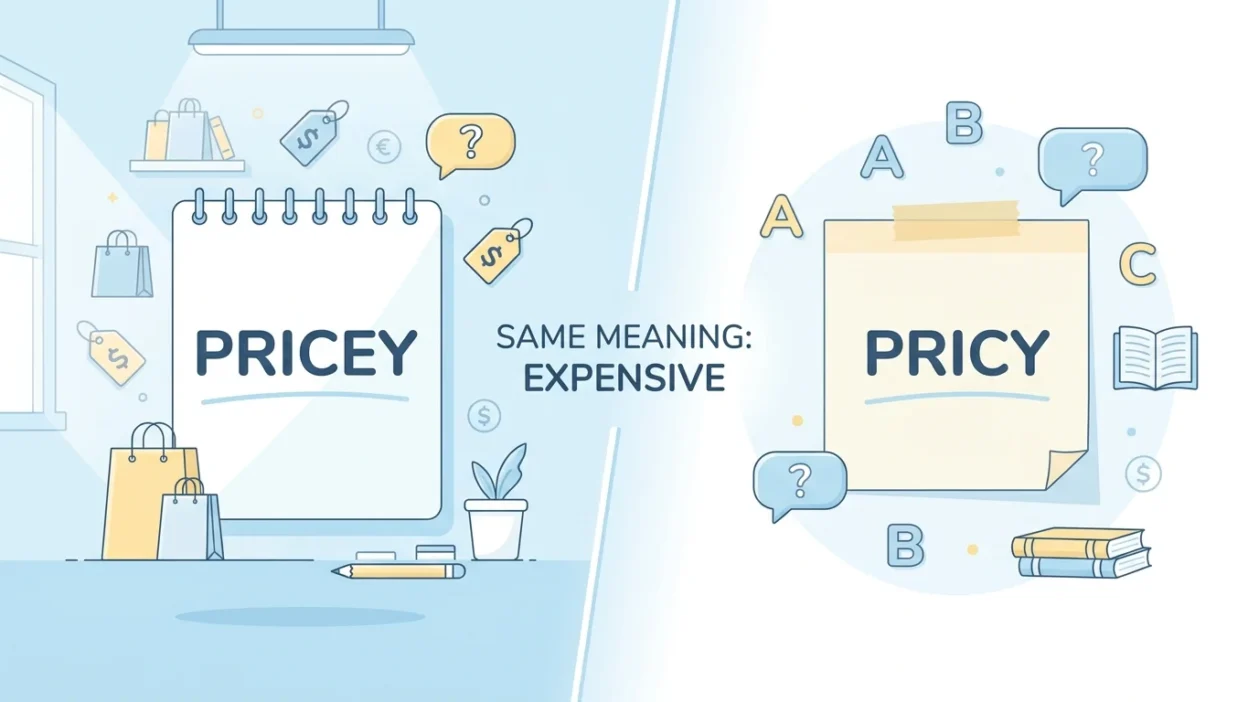
When I first started teaching English to learners, I noticed a simple but repeated confusion around pricey and pricy. Both look like a small spelling issue, but in real writing, it creates a real sense of hesitation. In modern English, the meaning stays the same both mean expensive, costly, or something with a higher cost and money value. Still, dictionaries like Oxford, Cambridge, and Merriam Webster show a clear preference for pricey as the standard, widely accepted form in formal writing and professional communication.
On the other hand, pricy is a variant, less common, and often marked as informal or sometimes even incorrect in strict usage contexts. I’ve seen this especially in emails, essays, and reports, where small typos like pricee, prisey, price y, or pritsy appear because of over reliance on phonetic thinking and spoken language influence. Even online writing, social media, and chat spaces show this variation, where frequency and psychology of fast typing affect clarity and consistency.
In real practice, whether you write about a restaurant, hotel, phone, smartphone, dress, tickets, or even luxury designer bags, the adjective “pricey” helps describe something premium, high end, or above average in cost level. This is why business writing, e commerce product descriptions, and marketing articles prefer pricey for better recognition, ranking, and trust in professional standard communication.
The suffix y rule in grammar shows how price becomes an adjective, following a natural pattern like ice → icy or slime → slimy, but “pricey” becomes a slightly irregular formation due to historical evolution, Latin and French influence, and lexicalized change over time. Many readers, writers, and even native speakers learn through books, articles, websites, and guides that the safest choice is pricey, not pricy, especially when aiming for clarity, correctness, and global usage across United States, British, Canadian, and Australian English. The difference is small, but the acceptance level in formal writing standard is not, which is why editors and publishers usually avoid the less dominant form.
Quick Answer
Here is the simple explanation:
- Pricey is the most common and widely accepted spelling.
- Pricy is also correct, but less common.
- Both words mean: expensive or costly
- “Pricey” is more natural in everyday English.
- “Pricy” is more informal and used less often.
So, if you are unsure, “pricey” is the safer choice.
Simple Origin or Background Explanation
Both words come from the noun “price.” The word “price” means how much something costs.
Over time, English speakers created adjectives (describing words) from “price” to describe things that cost a lot.
- price → price + y → pricey
- price → price + y (short form spelling) → pricy
English does not always follow strict rules when forming adjectives. That is why two spellings exist. Both developed naturally as people spoke and wrote English in different regions.
“Pricey” became more popular in modern English, especially in American and British writing. “Pricy” still exists, but it is less commonly used in books, news, and formal writing.
Clear Explanation of the Difference
Even though both words have the same meaning, there are small differences in how people use them.
Pricey
- Most common form
- Used in both spoken and written English
- Sounds natural and standard
- Used in schools, news, and everyday conversation
Example:
- That restaurant is too pricey for me.
- The phone looks nice but a bit pricey.
Pricy
- Less common spelling
- Still correct, but not widely preferred
- Often seen in informal writing or personal blogs
- Sometimes used in American English, but not strongly preferred
Example:
- This hotel is a little pricy for our budget.
- The jacket feels pricy, but I like it.
Simple idea
Think of it like this:
- Pricey = normal and popular choice
- Pricy = alternate but rare choice
Comparison Table
Here is a simple table to make everything clearer:
| Feature | Pricey | Pricy |
| Meaning | Expensive | Expensive |
| Spelling usage | Very common | Less common |
| Formal writing | Accepted | Less preferred |
| Spoken English | Very natural | Understandable |
| Safety for learners | Best choice | Okay but rare |
| Overall usage | Standard form | Alternative form |
Which One to Use and When
If you are a student or English learner, choosing the correct word can feel stressful. But here is a simple guide:
Use “pricey” when:
- You are writing essays or homework
- You are speaking in exams or interviews
- You are writing emails or formal messages
- You want to sound natural and correct
You can use “pricy” when:
- You are chatting casually with friends
- You are writing informal notes or personal posts
- You want a shorter or different spelling style
Best advice
If you are not sure, always use pricey. It is safer and more widely accepted.
Common Mistakes People Make
Many learners make small mistakes with these words. Here are the most common ones:
Thinking one word is wrong
Some people believe “pricy” is completely incorrect. That is not true. It exists, but it is less common.
Overthinking the spelling
Learners sometimes spend too much time deciding between the two. In reality, both are understandable.
Using in very formal writing
Even though both words are adjectives, learners sometimes use “pricy” in formal essays. This can look unusual. “Pricey” is better for formal writing.
Mixing meanings
Some learners think “pricey” means something is “good quality.” But it only means expensive, not good or bad.
Everyday Real Life Examples
Let’s see how these words appear in daily life. This will help you understand how real speakers use them.
In Emails
- “The training course is a bit pricey, but it is very helpful.”
- “We may skip this option because it looks too pricy for our budget.”
In Social Media
- “That new phone is so pricey 😅”
- “Love this bag, but it’s kinda pricy for me right now.”
In News or Articles
- “Housing in the city has become very pricey in recent years.”
- “Travel costs are getting more pricey during holidays.”
In Daily Conversation
- “This café is nice, but it’s a bit pricey.”
- “I don’t want to buy it; it looks too pricy.”
In real life, you will see “pricey” much more often than “pricy.”
Short Learning Section for Students and Beginners
If you are learning English, here is a simple way to remember:
Easy Memory Trick
- Price + y = Pricey (popular choice)
- Pricy = short form (less common)
What you should remember
- Both words mean the same thing
- “Pricey” is safer and more standard
- “Pricy” is okay but not often used
- No need to worry too much people will understand you either way
Practice Tip
Try making your own sentences:
- This phone is pricey.
- That shop is too pricey for me.
- The hotel looks pricy, but nice.
Practice helps you remember faster.
FAQ
Is “pricy” correct English?
Yes, “pricy” is correct, but it is less common than “pricey.”
Which spelling is more popular?
“Pricey” is much more popular in modern English.
Do they have different meanings?
No. Both mean something is expensive or costly.
Can I use “pricy” in writing?
Yes, but it is better for informal writing. For formal writing, use “pricey.”
Why are there two spellings?
English does not always follow strict rules. Both forms developed naturally over time.
Which word should learners use?
Learners should mostly use “pricey” because it is more standard.
Will people understand “pricy”?
Yes, native speakers will easily understand it.
Is “pricey” negative?
Not always. It only means expensive, not good or bad.
Conclusion
The confusion between “pricey” and “pricy” is very common, but the truth is simple. Both words mean the same thing: something that costs a lot of money. The only real difference is how often people use them.
“Pricey” is the most common and safe choice for everyday English, writing, and speaking. “Pricy” is also correct but used less often and usually in informal situations.
If you remember just one thing, remember this: use “pricey” when you are not sure. It will always sound natural, clear, and correct in almost every situation.

Daniel Matthew is a language enthusiast, writer, and contributor at Meanefy.com, where he explores the meanings, origins, and nuances of words and phrases. With a deep passion for language, Daniel aims to make complex concepts simple, engaging, and easy to understand for readers of all ages.