
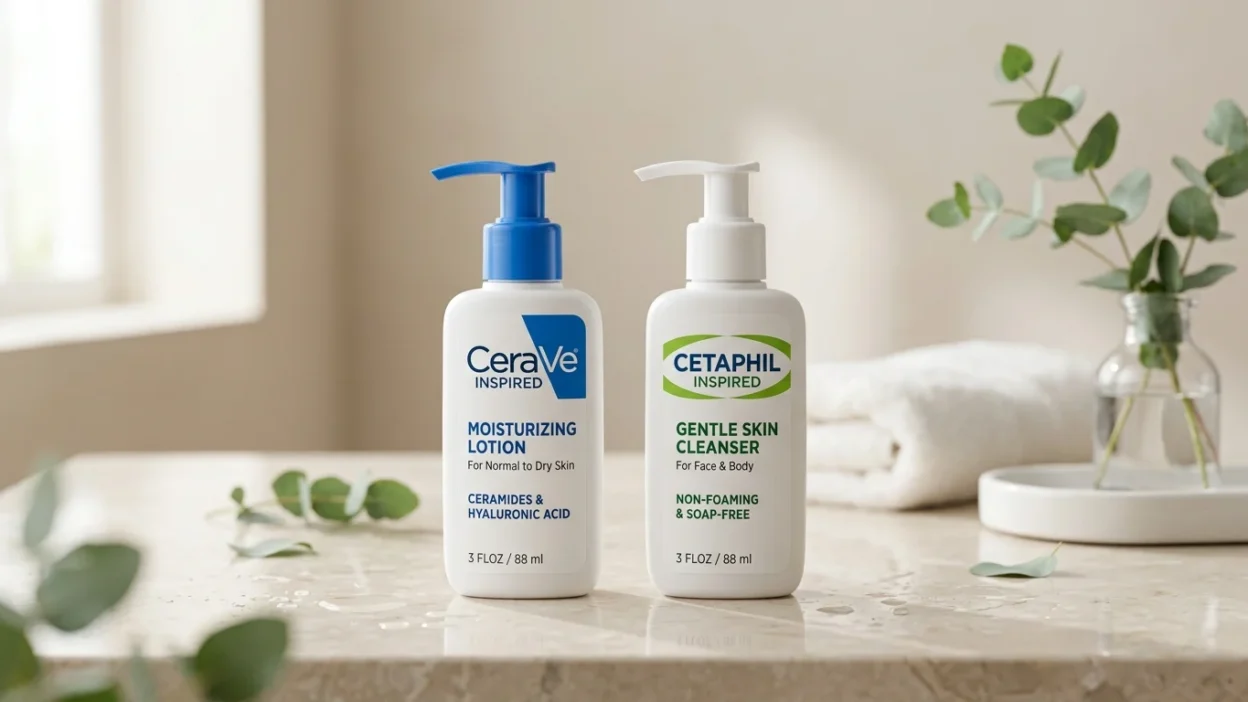
When I look at CeraVe or Cetaphil, I see two very different approaches built around the same goal: strong barrier repair and better skin comfort. In my experience testing both during seasonal changes like winter winds and humid days, CeraVe feels more like a structured system built with ceramides, hyaluronic acid, and niacinamide that focus on deep hydration and rebuilding the skin cell barrier and lipid barrier.
Its MVE Technology (MultiVesicular Emulsion) supports a 24 hour release through a controlled hydration delivery system, which helps with moisture retention, water binding, and long lasting moisturization without feeling heavy. This is where its core philosophy shows: stronger repair through active ingredients, clinical grade ingredients, and skin renewal guided by dermatology and clinical data.
On the other hand, Cetaphil follows a different path rooted in simplicity and minimal irritation, almost like a calming shield for hyper sensitive skin, rosacea prone skin, and eczema prone skin. It uses glycerin, panthenol (vitamin B5), hydrating glycerin, and purified water with a more minimalist chemistry approach, focusing on moisture retention, irritation free care, and non comedogenic support. From my observation, it works best for reactive skin, flare up control, and everyday skin comfort, especially when the goal is soothing actives over deep structural change.
Both brands are dermatologist tested, widely used in drugstore skincare, and backed by strong skin experience, community insights, and evolving skincare trends, but the real difference lies in whether your skin needs rebuilding through lipid repair or simply steady, gentle balance supported by emollients and a breathable, low trigger formula.
Quick Answer: Simple summary
Here is the fastest way to understand the difference:
- CeraVe
- Best for repairing skin barrier
- Contains ceramides (helps skin stay strong)
- Often better for dry, rough, or damaged skin
- Feels a bit richer on the skin
- Cetaphil
- Best for very gentle cleansing
- Very light and simple formula
- Often better for sensitive or easily irritated skin
- Feels lighter and smoother
In short:
- If your skin feels dry or damaged → CeraVe may help more
- If your skin feels very sensitive → Cetaphil may feel safer
Simple origin and background
Both brands were created to help people with skin problems, especially sensitive skin.
CeraVe
CeraVe was developed with help from skin experts. The main idea was to create products that help repair the skin barrier. The skin barrier is like a shield that protects your skin from dust, pollution, and dryness.
CeraVe products often include:
- Ceramides (natural skin fats)
- Hyaluronic acid (helps hold water in skin)
Cetaphil
Cetaphil is also designed for gentle skincare. It has been used for many years and is known for being very mild.
Cetaphil focuses on:
- Simple formulas
- Very low irritation risk
- Light cleansing without harsh ingredients
So both brands aim to protect your skin, but they do it in slightly different ways.
Clear explanation of the difference
The main difference between CeraVe and Cetaphil is their approach to skincare.
CeraVe approach
CeraVe focuses on repairing and strengthening the skin.
It tries to:
- Fix dry or damaged skin
- Rebuild the skin barrier
- Keep moisture inside the skin for longer
This is why CeraVe often feels a bit thicker or more nourishing.
Cetaphil approach
Cetaphil focuses on gentle cleaning and comfort.
It tries to:
- Clean the skin without irritation
- Keep skin calm and soft
- Avoid heavy or strong ingredients
This is why Cetaphil often feels lighter and more basic.
Comparison Table (easy to scan)
| Feature | CeraVe | Cetaphil |
| Main goal | Repair skin barrier | Gentle cleansing |
| Skin feel | Rich and moisturizing | Light and soft |
| Best for | Dry, rough, damaged skin | Sensitive, easily irritated skin |
| Key ingredients | Ceramides, hyaluronic acid | Mild cleansing agents |
| Texture | Slightly thick | Very light |
| Daily use | Yes | Yes |
| Irritation risk | Low | Very low |
Which one to use and when
Choosing between them depends on your skin needs.
Use CeraVe if:
- Your skin feels dry after washing
- You have rough patches
- Your skin looks dull or tired
- You need extra moisture
CeraVe works like a repair cream for your skin. It helps rebuild and protect.
Use Cetaphil if:
- Your skin gets red easily
- You feel burning or itching with products
- You want something very simple
- You are starting skincare for the first time
Cetaphil works like a soft cleanser that keeps your skin calm.
Can you use both?
Yes, many people do.
For example:
- Cetaphil for face washing
- CeraVe moisturizer for hydration
This combination is common because it balances gentle cleaning and strong hydration.
Common mistakes people make
Many beginners make simple mistakes when choosing between these two brands.
Thinking one is “bad”
Both are good. There is no “bad” product here. The problem is only mismatch with skin type.
Switching too fast
Some people try one product for only 2–3 days and stop. Skin needs time to adjust, usually 1–2 weeks.
Using too many products at once
Mixing too many skincare products can confuse your skin and cause irritation.
Ignoring skin type
Not all skin is the same. Dry skin and oily skin need different care.
Everyday Real Life Examples
Example in daily routine
Ali has dry skin. After washing his face, his skin feels tight. He uses CeraVe moisturizer, and his skin feels better because it keeps moisture locked in.
Sara has very sensitive skin. Most face washes make her skin red. She uses Cetaphil cleanser because it is very gentle and does not irritate her skin.
Example in social media advice
On social media, people often say “this is the best skincare product.” But what works for one person may not work for another.
For example:
- One friend says CeraVe is perfect
- Another friend says Cetaphil is better
Both can be correct because their skin is different.
Example in daily life
Think of skincare like clothing:
- CeraVe is like a warm jacket (good for protection and dryness)
- Cetaphil is like a light t shirt (good for comfort and simplicity)
You choose based on weather (your skin condition).
Short learning section for students and beginners
Here are simple points to remember:
- Skin needs gentle care, not strong treatment every time
- Dry skin needs moisture
- Sensitive skin needs calm and simple products
- No product works the same for everyone
- Always observe how your skin reacts
If you remember these points, choosing between CeraVe and Cetaphil becomes easy.
FAQ: Simple questions and answers
Is CeraVe better than Cetaphil?
Not always. CeraVe is better for dry or damaged skin, but Cetaphil is better for very sensitive skin.
Can I use CeraVe every day?
Yes. It is made for daily use and is gentle for most people.
Can Cetaphil remove acne?
It does not directly treat acne, but it cleans the skin gently, which helps prevent irritation.
Which one is better for beginners?
Cetaphil is often easier for beginners because it is very simple and light.
Can I use both together?
Yes. Many people use Cetaphil for cleansing and CeraVe for moisturizing.
Which one is cheaper?
It depends on the country and product type, but both are usually affordable skincare brands.
Do these products work for all skin types?
They work for many skin types, but not every single person will get the same result.
Conclusion
CeraVe and Cetaphil are both good skincare brands, but they are not the same.
CeraVe focuses on repairing and protecting the skin with stronger moisture support. Cetaphil focuses on gentle cleansing and very light care for sensitive skin.
The best choice depends on your skin needs:
- Dry or rough skin → CeraVe
- Very sensitive skin → Cetaphil
There is no need to rush or feel confused. Skin care is personal, and the right product is the one that feels comfortable and safe for your skin over time.