You’re sitting at home in COVID or Allergies confusion mode, trying to decode every sneeze, cough, or tired breath. I’ve seen this pattern many times in clinic settings where COVID-19, seasonal allergies, flu, influenza, Influenza B, influenza A, and influenza C all blur together because the body reacts through the same respiratory system.
Whether it’s a common cold, cold, or colds caused by rhinovirus or other viruses, the respiratory illness often starts with symptom onset, either rapid onset, gradual onset, or something that rapidly develops after exposure time. What makes it harder is the shared immune response, where allergy, allergies, and immune overreaction to pollen, tree pollen, grass pollen, dust mites, mold, or pet dander mimic infections like SARS-CoV-2 or other respiratory viruses.
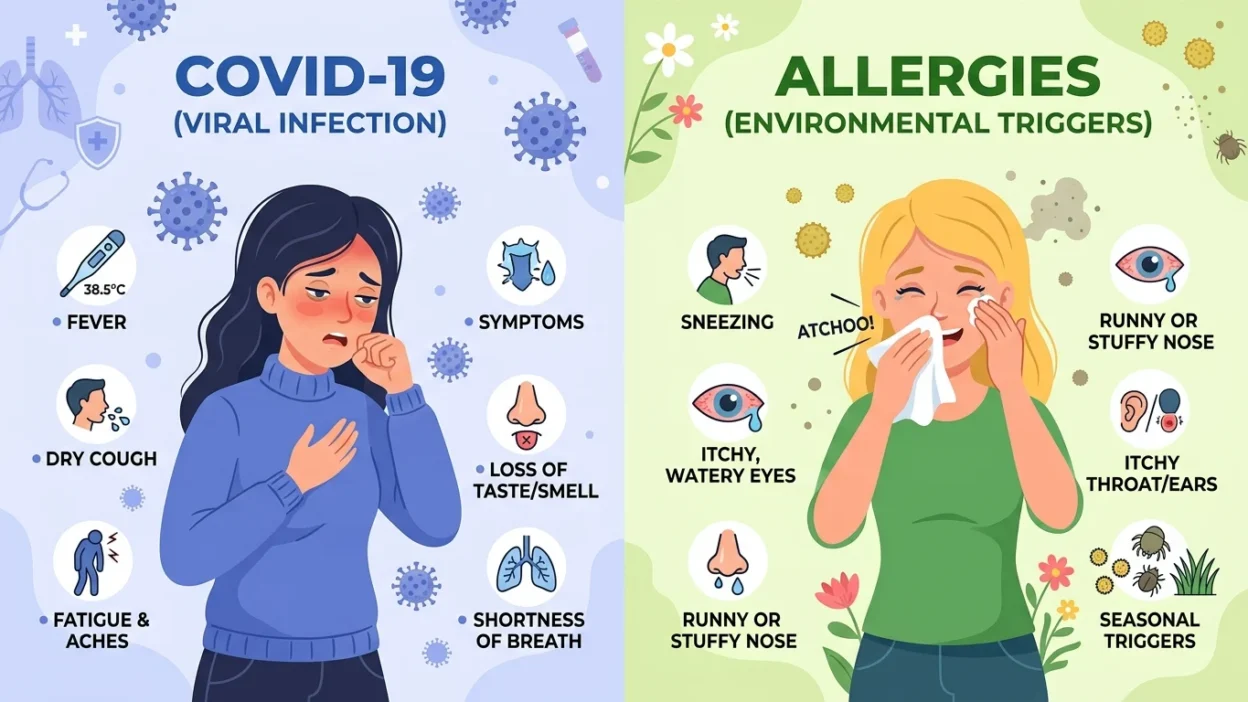
From experience, the real confusion comes when symptoms overlap: fever, no fever, chills, itchiness, itching, especially itchy eyes, itchy nose, itchy ears, plus runny nose, stuffy nose, congestion, and clear discharge or watery nasal discharge. Both infection and viral infection can bring fatigue, headache, cough, or even dry cough, while allergies lean more toward postnasal drip and irritation of the nose, throat, and eyes. Add shortness of breath, chest tightness, or wheezing patterns, and the overlap becomes even more confusing, especially during cold season, flu season, winter, and high humidity when viral spread patterns, transmission, virus transmission, and contagiousness increase.
That’s why tools like a symptom chart, comparison table, COVID-19 test, or guidance from a healthcare professional (like CDC, Mayo Clinic, or WHO) help with diagnosis, confirmation, and reducing infection risk. If symptoms persist, antihistamines, decongestants, nasal sprays, or allergy testing can guide treatment, while antiviral medications, Tamiflu, Paxlovid, or remdesivir may be needed for infection cases, always alongside proper prevention measures, handwashing, masking, ventilation, and infection control.
Quick Answer: Simple Difference Between COVID and Allergies
Here is the easiest way to understand it:
- COVID is an infection caused by a virus
- Allergies are the body’s reaction to harmless things like dust or pollen
Key quick points:
- COVID spreads from person to person
- Allergies do NOT spread from person to person
- COVID may cause fever and body pain
- Allergies usually cause itching, sneezing, and watery eyes
- COVID can make you feel very weak
- Allergies are usually long term but not dangerous like infections
Simple Background: What Are COVID and Allergies?
COVID (Coronavirus infection)
COVID is a disease caused by a virus. It spreads when an infected person coughs, sneezes, talks, or breathes near others. The virus enters your body and affects your lungs and breathing system.
COVID became known worldwide in 2019–2020 and changed daily life for many people.
Allergies
Allergies happen when your immune system reacts to harmless things. These things are called allergens.
Common allergens include:
- Dust
- Pollen (from flowers and trees)
- Animal hair
- Smoke
- Some foods
Your body thinks these are harmful, even when they are not.
Clear Explanation of the Difference
COVID and allergies may look similar, but they are very different inside your body.
COVID is an infection
- Caused by a virus
- Can spread to others
- Affects your whole body
- May cause fever and serious illness
Allergies are a reaction
- Not caused by a virus
- Not contagious
- Mostly affects nose, eyes, and skin
- Usually improves when you avoid triggers
Main idea:
COVID is something you catch from others, but allergies are something your body reacts to inside your environment.
Comparison Table: COVID vs Allergies
| Feature | COVID | Allergies |
| Cause | Virus infection | Body reaction to allergens |
| Spread | Yes, from person to person | No |
| Fever | Common | Rare |
| Sneezing | Sometimes | Very common |
| Cough | Common and dry | Mild or none |
| Body pain | Common | Not common |
| Itchy eyes | Rare | Very common |
| Duration | Few days to weeks | Can last weeks or months |
| Treatment | Rest, medicine, medical care | Avoid allergens, antihistamines |
Which One Is It and When?
It is not always easy to know at home, but there are some simple signs that can help.
It may be COVID if:
- You have fever and chills
- You feel very tired suddenly
- You lose taste or smell
- You have strong body pain
- You were near someone sick recently
It may be allergies if:
- You sneeze a lot but feel okay otherwise
- Your eyes are itchy and watery
- Your nose runs in a clear, watery way
- Symptoms happen in dust, spring, or around pets
- No fever is present
Important note:
If you are unsure, it is always better to rest and get a medical test or advice.
Common Mistakes People Make
Many people get confused because of these mistakes:
- Thinking every cough means COVID
- Ignoring fever and assuming it is just allergies
- Using allergy medicine for COVID symptoms
- Not noticing loss of taste or smell
- Self diagnosing without checking symptoms carefully
A simple rule is: fever and body pain often point to infection, not allergies.
Everyday Real Life Examples
In daily life
Imagine you wake up in the morning and start sneezing. Your eyes are itchy, and your nose is running. You still feel normal energy. This is likely allergies.
Now imagine you wake up feeling weak, tired, and warm with fever. You also have a dry cough. This may be COVID or another infection.
In social media
People often post:
- “I have flu like symptoms, is it COVID or allergies?”
- “Why am I sneezing so much in spring?”
These posts show how common confusion is. But symptoms alone are not always enough to decide.
In emails or messages
Sometimes people write:
- “I can’t come to work today, I have fever and cough.”
- “I think it is just my allergies acting up.”
This shows how people try to explain their condition based on how they feel, but they may still be unsure.
In news or daily conversations
You may hear:
- “Many people are getting sick this season”
- “Pollen levels are high this week”
Both can affect how people feel, but in different ways.
Learning Section for Students and Beginners
Here is a simple way to remember:
Think like this:
- COVID = “caught from others”
- Allergies = “reaction from inside”
Easy memory tips:
- Fever + body pain = think infection (like COVID)
- Itchy eyes + sneezing = think allergies
- Spreads between people = COVID
- Does not spread = allergies
Simple practice idea:
Next time you feel sick, check:
- Do I have fever?
- Are my eyes itchy?
- Did I meet someone sick?
This helps you understand your symptoms better.
Frequently Asked Questions
What is the main difference between COVID and allergies?
COVID is a virus infection, while allergies are your body’s reaction to harmless things.
Can allergies turn into COVID?
No, allergies do not turn into COVID. They are completely different conditions.
Do both cause sneezing?
Yes, both can cause sneezing, but allergies cause it more often.
Can COVID cause itchy eyes?
It is rare. Itchy eyes are more common in allergies.
How do I know if I need a test?
If you have fever, body pain, or recent exposure to sick people, a test is helpful.
Can I have both COVID and allergies at the same time?
Yes, it is possible to have both, which can make symptoms more confusing.
Which one is more serious?
COVID can be more serious because it is an infection. Allergies are usually not dangerous but can be uncomfortable.
Conclusion
COVID and allergies can look similar at first, but they are very different conditions. COVID is an infection caused by a virus and can spread from person to person. Allergies are the body’s reaction to things like dust or pollen and do not spread.
The easiest way to understand the difference is to look at your symptoms. Fever, body pain, and strong tiredness usually point to COVID or another infection. Sneezing, itchy eyes, and a runny nose without fever usually point to allergies.
If you are ever unsure, the safest choice is to rest, observe your symptoms, and seek medical advice or testing. Understanding the difference helps you stay calm and take the right action in daily life.

Daniel Matthew is a language enthusiast, writer, and contributor at Meanefy.com, where he explores the meanings, origins, and nuances of words and phrases. With a deep passion for language, Daniel aims to make complex concepts simple, engaging, and easy to understand for readers of all ages.