Many English learners get confused when they see the words “spit” and “spat.” These two words look simple, but they can be tricky because they are connected to the same action, yet they are used in different ways.
Some people think both words mean the same thing. Others are not sure which one is present tense and which one is past tense. In everyday English, this confusion is very common, especially for beginners and learners.
The good news is that the difference is actually very simple. Once you understand it clearly, you will never mix them up again. This article will explain everything in very easy English with examples, so you can learn it quickly and use it correctly in real life.
Quick Answer
Here is the simple explanation in short points:
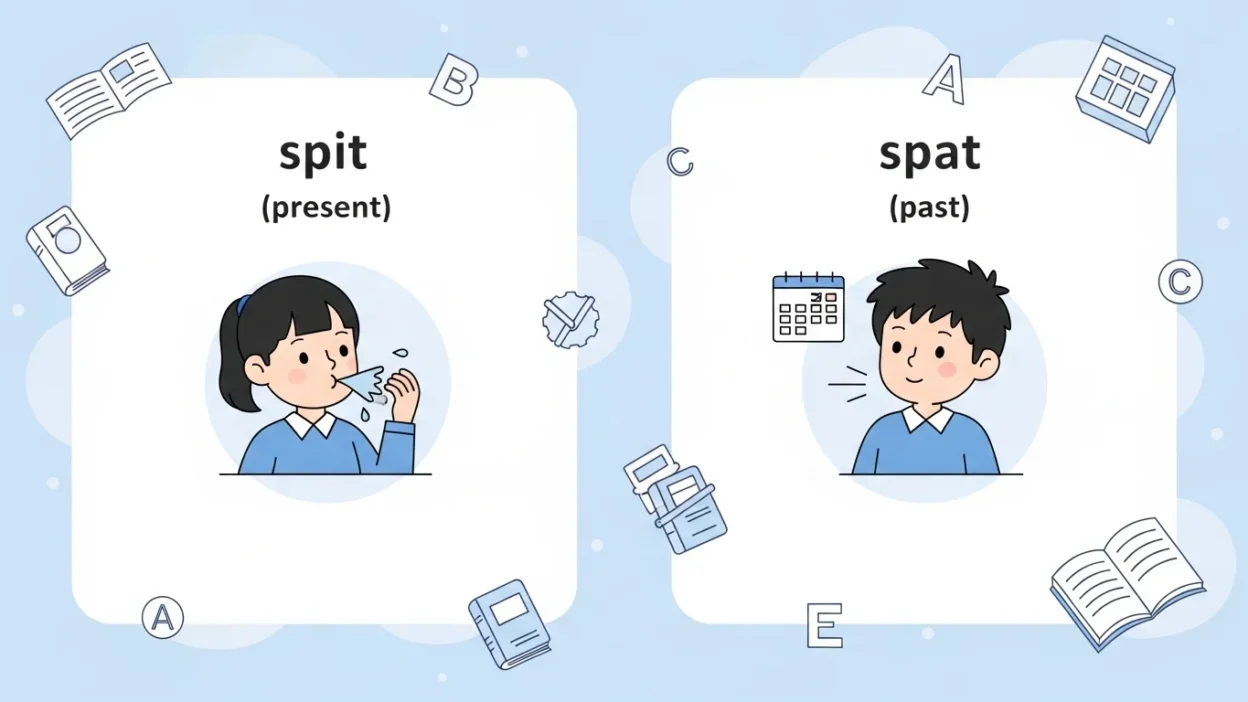
- Spit is the present form (happening now or in general)
- Spat is the past form (happened before)
- Both words come from the same action: to throw saliva out of the mouth
- In some cases, “spat” can also mean a small fight or argument
- “Spit” is also sometimes used as a noun (like saliva)
If you remember just this, you already understand the main difference.
Simple Origin or Background
The words “spit” and “spat” come from old English. In English grammar, many verbs change form when we talk about the past.
For example:
- go → went
- eat → ate
- speak → spoke
In the same way:
- spit → spat (past form)
Over time, English speakers also started using “spat” in another way. It began to mean a small quarrel or short argument, especially between people.
So now, “spat” has two common uses:
- Past tense of spit
- A small argument (informal use)
This is why learners sometimes feel more confused.
Clear Explanation of the Difference
Let’s break it down in a very simple way.
Spit
“Spit” is used when:
- Someone is doing the action now
- Someone does it regularly
- It is used in general sentences
Examples:
- He spits on the ground.
- Don’t spit here.
- I spit out the water because it was hot.
It can also be a noun:
- There is spit on the floor. (meaning saliva)
Spat
“Spat” is used when:
- The action already happened in the past
- It is the past form of spit
- It can also mean a small argument
Examples:
- He spat on the floor yesterday.
- She spat out the bitter medicine.
- They had a small spat over money.
So remember:
- Spit = now or general
- Spat = past or small fight
Comparison
Here is a simple table to help you see the difference clearly:
| Feature | Spit | Spat |
| Time | Present or general | Past |
| Main meaning | To release saliva from mouth | Past action of spit |
| Grammar form | Base verb | Past tense verb |
| Other meaning | Saliva (noun use) | Small argument |
| Example | He spits regularly | He spat yesterday |
This table shows that both words are related but used in different situations.
Which One to Use and When
Choosing between “spit” and “spat” is easy if you think about time.
Use spit when:
- Talking about now
- Talking about habits
- Giving instructions
Examples:
- Don’t spit on the road.
- He spits when he talks too fast.
Use spat when:
- Talking about something in the past
- Reporting an event that already happened
Examples:
- He spat in anger yesterday.
- She spat out the food because it was cold.
Also remember the second meaning:
Use spat (as a noun) when talking about a small argument:
- They had a spat and stopped talking.
Common Mistakes People Make
Many learners mix these words. Here are common mistakes:
Using “spit” for past actions
Wrong:
- He spit on the floor yesterday.
Correct:
- He spat on the floor yesterday.
Using “spat” for present actions
Wrong:
- She spat every day.
Correct:
- She spits every day.
Confusing the “argument” meaning
Wrong thinking:
- Spat always means spit in past form.
Correct understanding:
- Spat can also mean a small fight or disagreement.
Forgetting verb tense rules
Many learners forget that English verbs change with time. “Spit” is not an exception.
Everyday Real Life Examples
Let’s see how these words are used in daily life.
Conversation example
- A: Why is the floor dirty?
- B: Someone spat here earlier.
At school
- The teacher said, “Don’t spit in class.”
News-style sentence
- The player spat on the ground after drinking water.
Social media style
- “He always spits when he talks fast 😅”
Small argument example
- My friends had a small spat, but now they are fine again.
These examples show how both words appear in normal life.
Learning Section for Students and Beginners
Here is a simple way to remember:
Step one: Think about time
- Now → spit
- Before → spat
Step two: Remember one sentence
- “Spit is present, spat is past.”
Step three: Practice daily
Try making your own sentences:
- I spit…
- Yesterday I spat…
Step four: Use real situations
Think about your day:
- Did you see someone spit today?
- Did anything spat happen in the past?
Practice makes the difference clear.
FAQ
What is the main difference between spit and spat?
“Spit” is present tense, and “spat” is past tense.
Is spat always the past of spit?
Mostly yes, but it can also mean a small argument.
Can spit be used as a noun?
Yes, spit can mean saliva in informal English.
Is it correct to say “he spit yesterday”?
No, the correct form is “he spat yesterday.”
Why does spat have two meanings?
Because English words sometimes develop extra meanings over time.
Can I use spit in formal writing?
It is better to avoid it unless necessary. In formal writing, context matters.
Is spat used in everyday English?
Yes, both meanings are common in daily conversation.
Conclusion
The confusion between “spit” and “spat” is normal, but the difference is actually very simple once you understand it.
- “Spit” is used for present actions or general habits.
- “Spat” is used for past actions or sometimes a small argument.
If you remember the time rule, you will never mix them again. Practice a few sentences every day, and soon it will feel natural.
English becomes easy when small differences like this are clearly understood.

Anthony Charles is the founder and lead content creator at Meanefy.com, a platform dedicated to exploring word meanings, language nuances, and everyday curiosities. With a passion for language and a keen eye for detail, Anthony aims to make complex words and concepts simple and accessible for readers around the world.