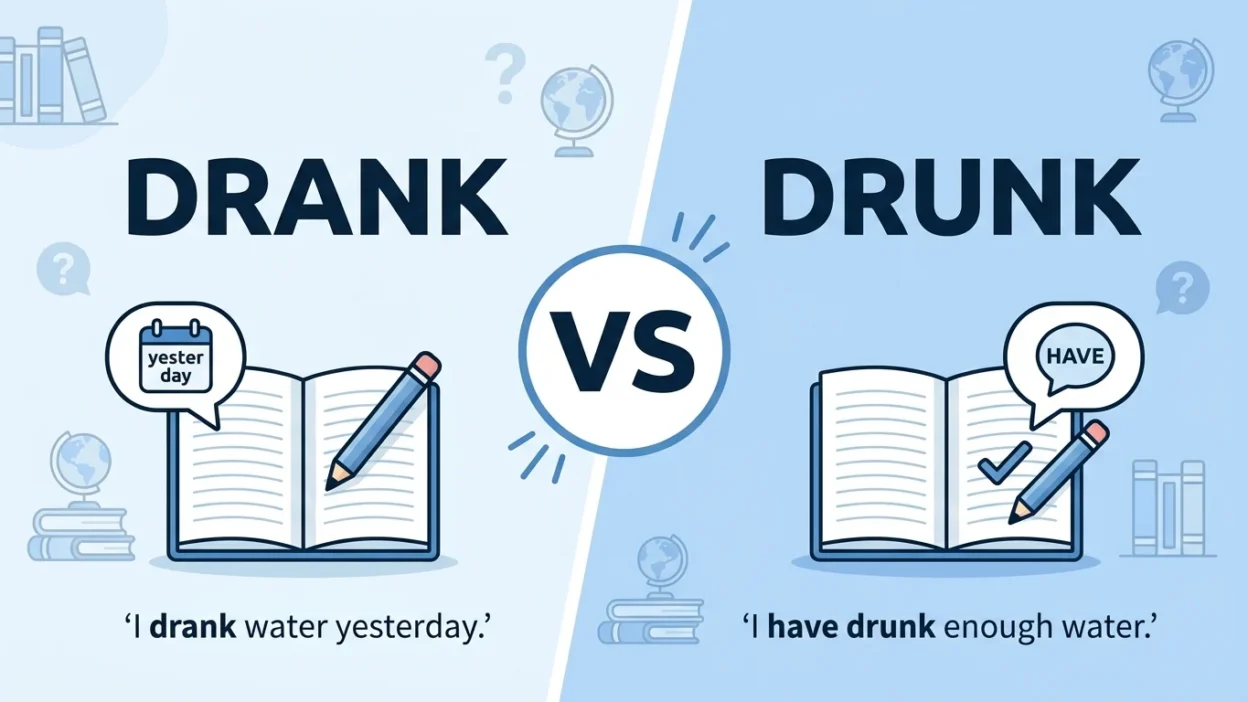
People often get confused about drank and drunk because both words come from the verb drink. They look similar, sound similar, and are both connected to the same action. Many students, ESL learners, and even native English speakers sometimes use the wrong one in sentences.
The good news is that the difference is actually very simple once you understand how English verb forms work. After reading this guide, you will clearly know when to use drank and when to use drunk.
Quick Answer
- Drank = simple past tense of drink
- Example: I drank water yesterday.
- Drunk = past participle of drink
- Usually used with:
- have
- has
- had
- Example: I have drunk enough water today.
- Usually used with:
- Easy trick:
- If there is have/has/had, use drunk
- If there is no helping verb and you talk about the past, use drank
Simple Background of the Words
The words drank and drunk both come from the old English verb drink.
English verbs often change form depending on time. This is very common with irregular verbs.
Here are the three main forms:
| Verb Form | Word |
| Base form | drink |
| Past tense | drank |
| Past participle | drunk |
This pattern is similar to other English verbs:
| Base Verb | Past Tense | Past Participle |
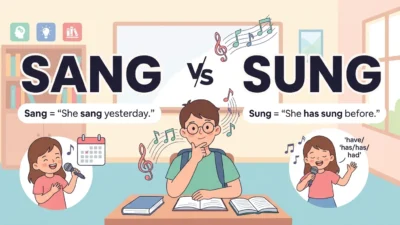
| sing | sang | sung |
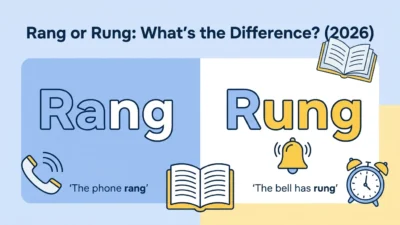
| ring | rang | rung |
| begin | began | begun |
So, drink → drank → drunk follows a normal irregular verb pattern in English.
Clear Explanation of the Difference
The main difference is about grammar and sentence structure.
Drank
Drank is the simple past tense.
Use it when talking about something that happened in the past.
Examples:
- I drank coffee this morning.
- She drank juice at lunch.
- They drank tea after dinner.
In these sentences, the action is finished.
Drunk
Drunk is the past participle.
It usually needs a helping verb such as:
- have
- has
- had
Examples:
- I have drunk two bottles of water.
- She has drunk all the milk.
- They had drunk before the movie started.
Without a helping verb, drunk is usually incorrect in standard English grammar.
Incorrect:
- I drunk coffee yesterday.
Correct:
- I drank coffee yesterday.
Comparison
| Feature | Drank | Drunk |
| Type of word | Past tense | Past participle |
| Main use | Finished past action | Used with helping verbs |
| Common helping verbs | None | have, has, had |
| Example | I drank tea. | I have drunk tea. |
| Grammar role | Main verb | Part of verb phrase |
| Very common in daily speech? | Yes | Yes |
Which One to Use and When
Choosing the correct word becomes easy if you follow a few simple rules.
Use “Drank” When
- You talk about a finished action in the past
- There is no helping verb
- The sentence is simple past tense
Examples:
- We drank lemonade yesterday.
- He drank too much soda.
- My friends drank coffee before class.
Use “Drunk” When
- You use have, has, or had
- You talk about experiences or completed actions connected to another time
Examples:
- I have drunk enough water today.
- She has drunk all the juice.
- They had drunk before arriving home.
Easy Memory Trick
Think like this:
- drink → drank = past
- have/has/had + drunk = completed action
This small trick helps many learners remember the difference quickly.
Common Mistakes People Make
Many learners mix these two words because they sound alike.
Here are the most common mistakes.
Mistake: Using “Drunk” Alone
Incorrect:
- I drunk milk yesterday.
Correct:
- I drank milk yesterday.
Reason:
There is no helping verb.
Mistake: Using “Drank” After “Have”
Incorrect:
- I have drank coffee.
Correct:
- I have drunk coffee.
Reason:
After have/has/had, use the past participle.
Mistake: Confusing “Drunk” as an Adjective
The word drunk can also describe a person affected by alcohol.
Example:
- He is drunk.
Here, drunk is not a verb. It is an adjective.
This creates extra confusion for learners.
Mistake: Copying Informal Speech
In casual speaking, some people say:
- I drunk it already.
You may hear this in everyday conversation, but it is not standard grammar.
For correct English writing, use:
- I drank it already.
- I have drunk it already.
Everyday Real Life Examples
Seeing real examples helps the difference become clear.
Daily Conversation
- I drank water after the game.
- She has drunk three cups of tea today.
- We drank coffee at the café.
In Emails
- I drank the medicine you suggested.
- I have drunk enough water since morning.
On Social Media
- Just drank the best smoothie ever!
- I’ve drunk so much coffee today.
In News Style Writing
- The athlete drank water during the break.
- The patient had drunk contaminated water.
At School
- The students drank juice at lunch.
- The children had drunk all the milk before class started.
Learning Section for Students and Beginners
Here is a very simple way to practice.
Step One: Learn the Three Forms
Say them aloud:
- drink
- drank
- drunk
Repeat several times.
Step Two: Learn the Pattern
- Yesterday = drank
- Have/has/had = drunk
Examples:
- Yesterday I drank tea.
- I have drunk tea today.
Step Three: Practice Short Sentences
Fill in the blanks.
- I ___ coffee yesterday.
- Answer: drank
- She has ___ enough water.
- Answer: drunk
- They had ___ juice before dinner.
- Answer: drunk
- We ___ lemonade at the party.
- Answer: drank
Step Four: Make Your Own Examples
Create simple sentences about:
- water
- tea
- coffee
- juice
- milk
This helps your brain remember naturally.
FAQ
Is “drank” correct English?
Yes. Drank is the simple past tense of drink.
Example:
- I drank tea yesterday.
Is “drunk” correct English?
Yes. Drunk is the past participle form of drink.
Example:
- I have drunk enough water.
Can I say “I drunk water”?
In standard English grammar, this is incorrect.
Correct sentence:
- I drank water.
Why do some people say “I drunk”?
Some people use informal or regional speech patterns. You may hear it in conversation, but it is not considered standard grammar.
What helping verbs are used with “drunk”?
Usually:
- have
- has
- had
Examples:
- She has drunk tea.
- They had drunk coffee.
Is “drunk” only about alcohol?
No. It can refer to any liquid.
Examples:
- I have drunk water.
- She has drunk juice.
But drunk can also describe a person affected by alcohol.
Example:
- He is drunk.
Which word is more common in daily speech?
Both are common, but they are used differently.
- Drank is common for past actions.
- Drunk is common with helping verbs.
How can I remember the difference easily?
Use this rule:
- No helping verb → drank
- Have/has/had → drunk
Conclusion
The difference between drank and drunk becomes very easy once you know their grammar roles.
- Drank is the simple past tense.
- I drank water yesterday.
- Drunk is the past participle.
- I have drunk water today.
A simple memory trick can help:
- Past action alone → drank
- Have/has/had → drunk
With a little practice, you will start using both words naturally and correctly in speaking and writing.

Daniel Matthew is a language enthusiast, writer, and contributor at Meanefy.com, where he explores the meanings, origins, and nuances of words and phrases. With a deep passion for language, Daniel aims to make complex concepts simple, engaging, and easy to understand for readers of all ages.